JOHN DAVIS – pink park rose – Svejda
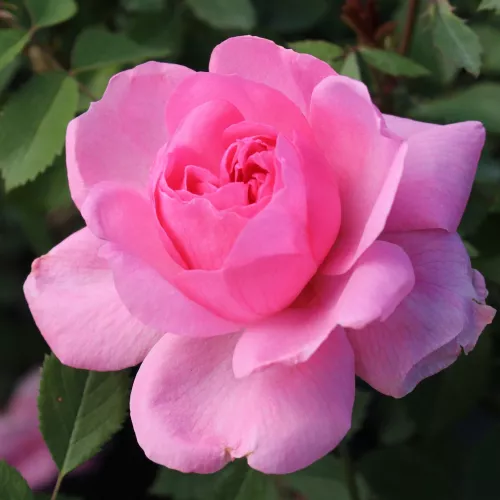
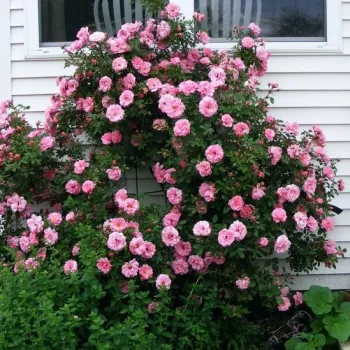
Along a breezy Cornish terrace or Devon veranda, JOHN DAVIS brings a relaxed coastal charm: arching canes clothed in dense, glossy foliage and clusters of mid‑pink, cup‑shaped blooms that repeat from early summer well into autumn for lasting colour. Bred in Canada to shrug off bitter winters down to around –40 °C, it anchors reliably even in exposed gardens with persistent onshore winds and needs only sensible watering and drainage to cope gracefully when the weather turns wild and salty, breezy and wet. Its naturally self‑cleaning flowers help you keep maintenance simple, while the own‑root form builds a deep, resilient framework for long‑term renewal. Over the first three years it concentrates on roots, then strong shoots, before settling into its full ornamental rhythm with generous flowering and a light, spicy fragrance. Equally at home weaving along a fence, softening a pergola or forming a wind‑filtering screen by a shingle path, it works efficiently in modest spaces when planted with compatible companions and grown in a 40–50‑litre or larger container, creating an easy‑care, subtly romantic coastal retreat for everyday family relaxation.
Usage options
| Target area | Reasoning |
|---|
| Small coastal family garden screen |
The tall, arching habit and dense, mid‑green foliage of JOHN DAVIS form a soft, living screen that filters wind and frames family seating areas without dominating a modest plot, ideal for a simple yet effective coastal privacy solution for beginners. |
| Climbing rose for pergolas and arches |
Its flexible, trailing canes are easy to tie in along pergolas or arches, where the continuous clusters of mid‑pink, very double blooms create a welcoming entrance or sheltered tea corner with minimal shaping work suited to hobby‑gardeners. |
| Fence and boundary planting |
Planted at the recommended hedge spacing, JOHN DAVIS clothes a fence line with repeat‑flowering colour and glossy foliage, giving long‑season structure while the own‑root framework quietly strengthens year after year, rewarding patient coastal‑style homeowners. |
| Large container or veranda feature |
In a minimum 40–50 litre container with good drainage, its upright yet arching growth adds height and movement to a veranda or terrace, bringing long‑lasting flowers and scent within arm’s reach for busy urban balcony‑owners. |
| Cold‑exposed, frost‑prone sites |
With hardiness down to about –40 °C and proven performance in severe continental winters, this shrub rose offers reassuring reliability in chilly, wind‑open British locations, reducing the risk of winter losses for climate‑conscious gardeners. |
| Low‑effort flower display near seating |
Good self‑cleaning means most spent blooms drop away unaided, so the plant keeps a fresh appearance with far less deadheading, keeping maintenance light for those who want flowers close to a bench or patio but limited time, such as busy‑families. |
| Family‑friendly scented corner |
The medium, spicy fragrance is noticeable without being overpowering, making it a pleasant companion beside an outdoor dining table or children’s play lawn where occasional hips and softly fading pink flowers can be safely enjoyed by curious visitors. |
| Wind‑exposed coastal border with grasses |
Well‑anchored roots and a sturdy shrub framework help it cope in windy beds alongside sea kale or ornamental grasses, offering a reliable flowering backbone even where strong gusts and moist, salt‑tinged air are common, reassuring coastal veranda owners. |
Styling ideas
- Soft‑pink veranda arch – Train JOHN DAVIS over a slim arch in a large container, underplant with lavender for scent and grey foliage – perfect for time‑pressed veranda owners.
- Coastal wind‑screen ribbon – Run a loose row along a shingle path, weaving between sea kale and blue fescues – ideal for coastal‑style family gardens.
- Romantic fence backdrop – Let its canes drape along a sunny fence, fronted by clustered bellflowers for a layered pink‑and‑blue border – suited to relaxed cottage‑garden enthusiasts.
- Shaded tea corner – Use its partial shade tolerance beside a north‑east wall with Japanese wormwood at its feet – appealing to urban gardeners with cooler courtyards.
- Frost‑proof feature shrub – Give it pride of place in a lawn island bed where hardiness and own‑root resilience ensure long‑term structure – reassuring for gardeners in colder regions.
Technical cultivar profile
| Parameter | Data |
|---|
| Name and registration |
JOHN DAVIS – park shrub rose; Hybrid Kordesii group, shrub type; ARS exhibition name JOHN DAVIS, part of the Park – shrub rose collection used as a vigorous landscape and garden climber. |
| Origin and breeding |
Bred by Felicitas Svejda in Canada (1977) from Rosa ‘Kordesii’ × (‘Red Dawn’ × ‘Suzanne’); introduced by Agriculture and Agri‑Food Canada after 1986 for hardy, reliable landscape use. |
| Awards and recognition |
Recognised with the Texas A&M University Earth‑Kind North excellence rating in 2007, highlighting strong landscape performance and adaptability under low‑input management conditions. |
| Growth and structural characteristics |
Strong, climbing to arching shrub reaching about 200–280 cm high and 150–220 cm wide; dense, mid‑green, glossy foliage; moderately thorny stems and good natural self‑cleaning habit. |
| Flower morphology |
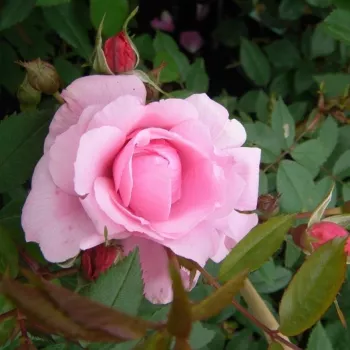
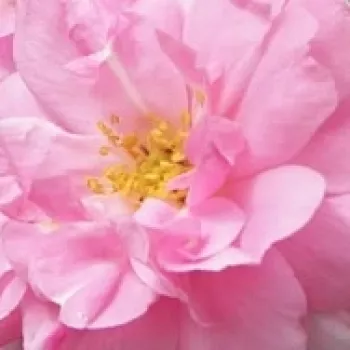
Medium‑sized, very double, cupped flowers with 40+ petals, borne in clusters on lateral shoots; remontant with a particularly abundant second flush, giving an extended display through the season. |
| Colour data and phenology |
Flowers open deep mid‑pink, soften to pastel pink, then pale with outer petals nearly white; ARS colour pink, RHS 58C and 62B; colour retention moderate with decorative staged fading on the plant. |
| Fragrance and aroma |
Medium‑strength fragrance with a lightly spicy character; scent noticeable at close range around seating areas; double blooms moderately attractive to pollinators due to reduced stamen accessibility. |
| Hip characteristics |
Occasional small, ellipsoid red hips, around 8–12 mm diameter; decorative rather than heavy‑bearing, adding modest seasonal interest without significantly impacting flowering energy. |
| Resistance and winter hardiness |
Winter hardy to approximately –40 to –37 °C (RHS H7, Swedish zone 6, USDA zone 3a); disease resistance medium to powdery mildew and black spot, very sensitive to rust, needing regular monitoring. |
| Horticultural recommendations |
Best as a specimen, hedge, pergola or fence rose; plant 130–220 cm apart; tolerates partial shade; needs regular protection in rust‑prone areas plus watering during prolonged heat and dry spells. |
JOHN DAVIS offers tall, long‑season pink flowering, reliable cold‑hardy structure and self‑cleaning convenience on a durable own‑root framework, making it a thoughtful choice for relaxed coastal and family gardens you can enjoy with confidence.