JOSEPH'S COAT – yellow-red climbing rose - Armstrong & Swim
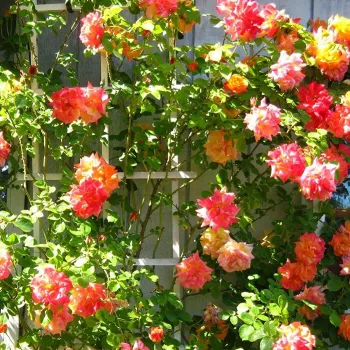
Breathe in the saltwind feeling of JOSEPH'S COAT as its ever-changing colours glow against a veranda wall or shingle fence, creating a bright, “girly” coastal retreat without demanding specialist expertise. This large-flowered climber is grown on its own roots in a handy 2‑litre pot, giving you a reliable, long-lived framework that settles in steadily – roots in the first year, stronger shoots in the second, and full ornamental value by the third. Trained on a pergola, arch, or balcony rail, it brings a light, refreshing mood even where gardens are small and exposed, quietly coping with blustery weather and helping your planting feel securely anchored in place despite lively seaside breezes. Its medium self-cleaning habit and modest disease tolerance keep maintenance for busy owners, while its remontant flowering pattern ensures repeat flushes of blooms across the UK season.
Usage options
| Target area | Reasoning |
|---|
| Coastal veranda windbreak |
Trained along balustrades or trellis, this climber forms a colourful, semi-transparent screen that takes blustery weather in its stride, giving gentle shelter for outdoor seating and tea on bright days – a calming choice for coastal-style beginners and busy owners. |
| Compact family garden pergola |
Its medium height for a climber suits modest UK gardens, covering a pergola without overwhelming the space, while repeat flowering keeps the structure lively through the season – ideal for hobby gardeners and time-poor households. |
| Fence or wall-trained feature |
Moderate spread and good framework formation make it easy to fan out along fences or sunny house walls, giving long-term structure with seasonal colour shifts rather than short-lived bedding – reassuring for homeowners seeking enduring value. |
| Large container on sheltered balcony |
In a 40–50 litre container with good drainage, it builds a stable root system and can be tied to a slim obelisk or rail, bringing vertical interest where ground space is scarce – a smart solution for urban veranda users and flat dwellers. |
| Colour-highlight planting with grasses |
The continuously changing yellow–orange–red petals play beautifully against silvery Festuca or sea kale foliage, giving a seaside feel without complex design work – attractive for design-conscious but non-specialist gardeners. |
| Lightly shaded coastal side path |
Tolerant of partial shade, it still flowers reliably along east- or west-facing paths, benefiting from a spot that offers some protection while coping well with breezy, changeable weather – practical for UK side gardens and narrow plots. |
| Low-maintenance long-term framework rose |
As an own-root climber, it can regenerate from the base after pruning or weather damage, supporting a long lifespan and stable ornamental value with moderate care – reassuring for those wanting investment planting and minimal fuss. |
| Seasonal cut flowers for the home |
Medium, double, clustered blooms cut well for informal jugs indoors, their fresh, mild fragrance and shifting colours echoing the garden without requiring a specialist cutting patch – pleasing for home decorators and casual arrangers. |
Styling ideas
- Beach-porch arch – Train JOSEPH'S COAT over a simple wooden arch with sea kale and Festuca at the base to frame a shingle path – for coastal veranda lovers wanting a soft windbreak.
- Harbour-fence glow – Run it along a pale-painted fence with Irish moss edging for a luminous sunset band of colour – for families turning small gardens into relaxed seaside corners.
- Balcony-sundowner – Grow it in a 50 litre pot with a slim obelisk, underplanted with lavender for evening scent – for urban residents seeking an easy, vertical focal point.
- Girly-tea nook – Let it cloak a compact pergola above café chairs, combined with groundcover honeysuckle for a soft, private seating pocket – for those who enjoy low-effort, romantic spaces.
- Warm-hued gateway – Flank a garden entrance with paired climbers and barren strawberry at their feet for a welcoming, colour-changing entrance – for homeowners wanting year-on-year structure without complex planting.
Technical cultivar profile
| Characteristic | Data |
|---|
| Name and registration |
Large-flowered climbing rose marketed as JOSEPH'S COAT, an Armstrong & Swim introduction; ARS exhibition name Joseph's Coat; commercial type climber / rambling rose within the climbing rose collection. |
| Origin and breeding |
Bred in the United States in 1963 by Dr David L. Armstrong and Herbert C. Swim from ‘Buccaneer’ × ‘Circus’; introduced and initially distributed by Armstrong Roses in 1964. |
| Awards and recognition |
Recognised early in its career with a National Rose Society Trial Ground Certificate in 1963, followed by a prestigious Gold Medal at the Bagatelle (Paris) trials in 1964. |
| Growth and structural characteristics |
Vigorous climbing habit, typically 2.4–4 m high with 1–1.8 m spread; moderately dense, glossy dark green foliage on densely thorned canes, forming a substantial framework when trained. |
| Flower morphology |
Medium-sized, double flowers with 26–39 petals, cup-shaped and produced in clusters; remontant, with a particularly generous second flush that extends its season of ornamental display. |
| Colour data and phenology |
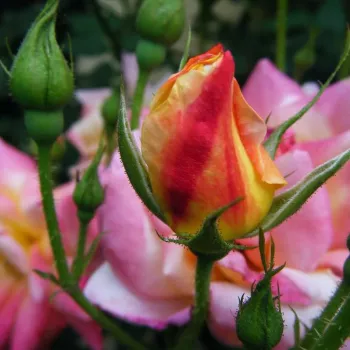
Multicoloured yellow-red bloom, shifting from vivid yellow, orange and red to softer peach, golden and copper tones; closed buds are red-orange with yellow tinge, edges later turning fiery red. |
| Fragrance and aroma |
Presents a mild, fresh and crisp fragrance, noticeable at close range without being overpowering, complementing seating areas where a light, unobtrusive scent is preferred. |
| Hip characteristics |
Occasionally produces small, spherical rose hips 8–13 mm across, in a bright orange-red colour, adding incidental late-season interest without dominating the plant’s overall appearance. |
| Resistance and winter hardiness |
Rated H7, hardy to about −32 to −29 °C (USDA 4b), with medium resistance to powdery mildew, black spot and rust; heat-loving but benefits from watering in prolonged droughts. |
| Horticultural recommendations |
Suitable for pergolas, arches, fences and walls, and for specimen or cut flower use; prefers sun to partial shade, with planting distances from 1.5–2.5 m depending on training and density. |
JOSEPH'S COAT offers long-lasting, colour-shifting climbs, manageable care and dependable repeat blooms on a resilient own-root framework, making it a thoughtful choice for gardeners seeking enduring coastal-style structure and charm.