JOSIANE PIERRE-BISSEY – apricot-pink bedding polyantha rose - Ducher
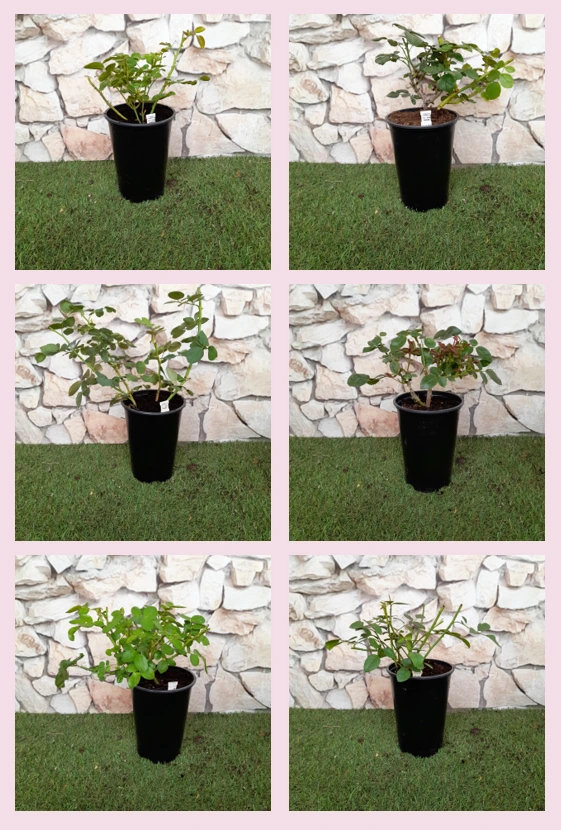
Imagine returning from a windswept Cornish beach to sip tea behind a living rose windbreak: JOSIANE PIERRE-BISSEY forms a compact, bushy hedge of peach‑pink clusters that shrug off blustery days and sea‑air exposure, offering steady cover and colour. Its strongly remontant habit ensures continuity of bloom from early summer well into autumn, so even smaller gardens and verandas gain a long, gentle season of flowers. As an own‑root plant it builds quiet resilience, settling in for a long life and recovering well if cut back or weather‑battered. In a roomy 40–50 litre container or in a narrow shingle strip it gives reliable structure without dominating the space, fitting neatly into family gardens where you prefer simple routines over complicated pruning. Over three seasons you will see roots establishing, then stronger shoots, then full ornamental impact, so your planting feels like a calm, unfolding story rather than a project that demands constant attention – an easy, soothing coastal‑inspired retreat for everyday life.
Usage options
| Target area | Reasoning |
|---|
| Small coastal veranda container (40–50 litres) |
Compact height and bushy growth make this rose ideal for a single large pot on a breezy veranda, giving shelter, privacy and soft colour without overgrowing the space; perfect for a low‑effort evening corner for beginners. |
| Family front garden bed by the path |
Regular repeat flowering in clustered heads brings a welcoming succession of peach‑pink blooms along a front path, with minimal deadheading needed to keep borders smart; ideal for time‑pressed homeowners. |
| Low informal hedge along a shingle drive |
The dense, mid‑green foliage and branching habit knit into a low screen that gently filters wind and defines boundaries, suiting exposed drives in coastal towns where you want structure without harsh fencing for gardeners. |
| Mixed border with sea kale and grasses |
Its stable size and long flowering season provide a calm backbone among sea kale, Festuca and lavender, so beds look composed from early summer to autumn without replanting, well suited to design‑conscious coastal-lovers. |
| Long‑term planting in heavy but improved clay |
Once established, the own‑root system anchors the plant convincingly in typical British clay soils, provided you give basic drainage, rewarding that preparation with many seasons of steady performance for patient planners. |
| Wildlife‑aware family bed |
Though mainly ornamental, its clusters of hips add late‑season interest and modest food for birds, extending value beyond flowering and helping children notice seasonal change in a gentle way tailored to curious families. |
| Low‑maintenance “girly” patio scheme |
The soft peach‑pink, porcelain tones and cup‑shaped blooms create an easy romantic look in small patios, working hard aesthetically even with simple care routines, attractive to style‑focused but busy urbanites. |
| Three‑year coastal border plan |
Planted once and left to settle, it quietly builds roots in year one, stronger framework in year two and full clustered flowering by year three, matching a relaxed, future‑oriented approach appreciated by thoughtful beginners. |
Styling ideas
- Shingle-Romantic – Plant in a loose row through pale shingle with sea kale and Festuca to echo soft beach tones and moving grasses – suited to coastal-style lovers wanting graceful structure with little fuss.
- Veranda-Haven – Use one or two large 40–50 litre containers by a balustrade, underplanted with trailing thyme, to create a sheltered tea corner – ideal for beginners setting up their first patio garden.
- Front-Garden-Ribbon – Thread a sinuous ribbon of bushes along a front path, edged with low lavender, for a welcoming, perfumed entry – appealing to homeowners who prefer easy-care but polished kerb appeal.
- Family-Mix – Combine with Rudbeckia, Hypericum ‘Hidcote’ and Artemisia for a soft, wildlife-aware border that looks good for months – perfect for families wanting colour without constant replanting.
- Clay-Garden-Anchor – In improved clay beds, space plants in small groups to form stable, long-lived clumps that hold the design together – for planners who value reliability over high-maintenance novelty.
Technical cultivar profile
| Parameter | Data |
|---|
| Name and registration |
Polyantha bedding rose marketed as JOSIANE PIERRE-BISSEY, from the Bedding rose collection; shrub‑type border rose, with no separate registered cultivar name published to date. |
| Origin and breeding |
Bred by Fabien Ducher at Roseraie Ducher, Lyon, France; parentage unknown. Introduced and first distributed in France in 2011, primarily as an ornamental bedding and border shrub rose. |
| Growth and structural characteristics |
Bushy, compact shrub rose reaching about 70–95 cm high and 50–75 cm wide, with dense, mid‑green, slightly glossy foliage and moderate prickliness; naturally forms rounded, well‑filled bedding clumps. |
| Flower morphology |
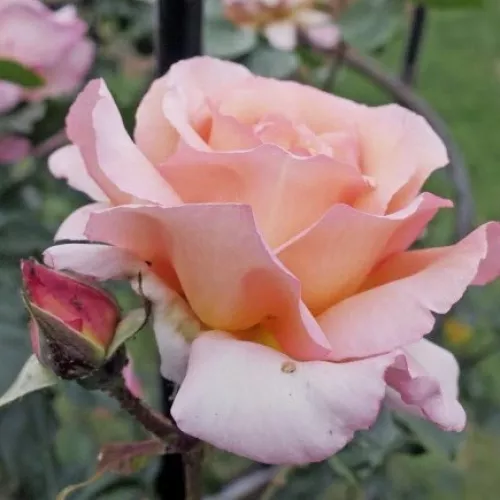
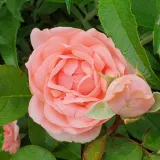
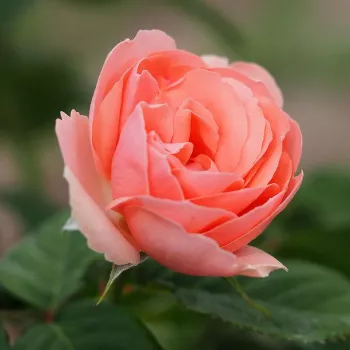
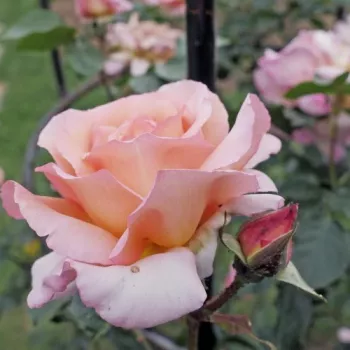
Fully double, cup‑shaped blooms with roughly 26–39 petals, produced in clustered inflorescences of medium size, strongly remontant with a generous second flush that extends seasonal display in beds or containers. |
| Colour data and phenology |
Peach‑pink with a light pink rim; warm peach‑cream centres opening to soft peach‑pink, then fading to powder pink and cream, maintaining a generally even, pastel appearance with good colour retention across the season. |
| Fragrance and aroma |
Fresh, fruity fragrance with a mild intensity; scent is noticeable close to the plant on still days but remains restrained overall, complementing rather than overpowering seating areas and family use near doors or paths. |
| Hip characteristics |
Produces small, spherical orange‑red hips about 6–9 mm across, usually in moderate quantities after flowering, adding autumn and early winter interest and some incidental value for birds and wildlife. |
| Resistance and winter hardiness |
Medium general disease resistance, with powdery mildew, black spot and rust rated medium; hardy approximately to −21 to −18 °C (RHS H7, Swedish zone 3, USDA 6b) under typical garden conditions. |
| Horticultural recommendations |
Best for beds, low hedges, containers and some cutting. Plant 35–65 cm apart depending on use, in well‑drained soil; average feeding and occasional pest and disease checks maintain health and flowering. |
JOSIANE PIERRE-BISSEY offers compact coastal-friendly growth, long repeat flowering and steady, own-root longevity, making it a reassuring choice if you would like an easy, enduring rose for everyday enjoyment.