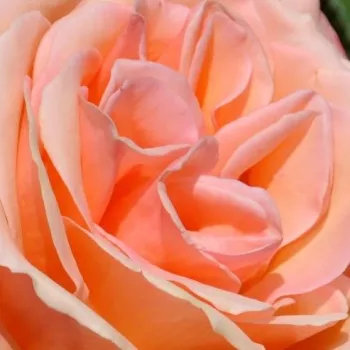
JOYFULNESS – apricot hybrid tea rose – Tantau
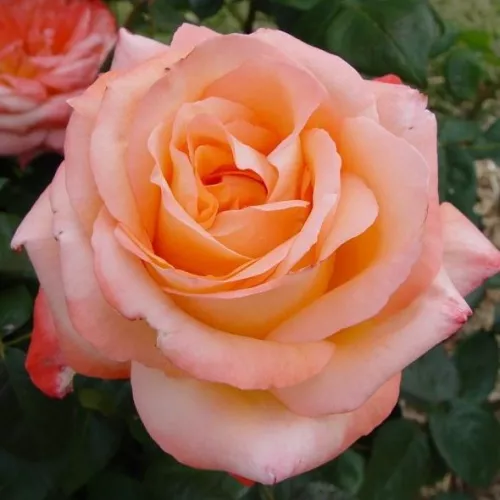
On a breezy coastal afternoon, JOYFULNESS brings a softly glowing, pastel-peach focus to your veranda or family garden, combining refined hybrid-tea blooms with an approachable temperament that suits busy, non-expert gardeners. Its upright habit and moderately dense, dark green foliage help it stand firm in exposed gardens, offering reassuring structure where shingle, salt-tinged air and brisk winds are part of everyday life. As an own-root rose, it settles in steadily, building a dependable lifespan and the ability to regenerate from the base if winter or weather ever causes damage. Give it a sunny, reasonably sheltered spot with simple, well-managed drainage, and it will respond with remontant, medium-scented flowers ideal for casual cutting and evening tea on the veranda. Over time you will see roots in year one, stronger shoots in year two and, by year three, full ornamental impact that feels as natural as collecting seashells between summer showers.
Usage options
| Target area | Reasoning |
|---|
| Coastal veranda pots (40–50 litres) |
Larger containers give this upright hybrid tea enough depth for anchoring roots and steady moisture, so it copes better with salt-tinged breezes while still flowering freely; ideal for relaxed coastal-style settings for the beginner. |
| Feature rose in a small front garden |
Its moderately tall, upright habit and pastel-peach blooms create an immediate focal point without overwhelming a modest space, giving structured elegance with just occasional pruning and deadheading for the busy homeowner. |
| Mixed border with ornamental grasses |
Set into a sunny border with good drainage, its dark green foliage and refined blooms pair naturally with sea kale or blue fescues, bringing long-season colour that ties shingle or coastal themes together for the style-conscious gardener. |
| Cutting patch for home bouquets |
Solitary, cupped flowers on upright stems are easy to harvest for vases, and the fresh, fruity fragrance offers indoor enjoyment without needing a large rose garden, suiting the practical, space-aware collector. |
| Low-maintenance family back garden |
Moderate disease resistance and own-root resilience mean that, once established, it largely holds its shape and ornamental value with simple watering and seasonal checks, reassuring anyone short on time yet fond of roses for the busy family. |
| Informal hedge or line along a path |
Planting at hedge distance creates a loose, elegant line of peach-toned blooms and glossy foliage that gently screens and guides movement, especially where regular trimming is possible, attractive to the layout-focused planner. |
| Sunny, wind-prone corners of the garden |
Its upright framework and moderately dense foliage make it suitable where regular breezes are expected, provided the soil drains well and watering is watched during dry spells, matching typical UK coastal plots for the pragmatic owner. |
| Standard rose on a sheltered patio |
Grafted as a standard, its remontant flowering and medium scent form a scented canopy over seating areas, with own-root stock below offering long-term stability and recovery after harsh winters for the comfort-loving neighbour. |
Styling ideas
- ShingleVeranda – Set JOYFULNESS in a 50-litre pot on shingle with sea kale and blue Festuca for a soft, breezy seaside feel – ideal for coastal veranda enthusiasts.
- PastelBorder – Combine it with lavender and lamb’s ear in a sunny border, letting its peach blooms play against silver foliage – perfect for informal cottage-garden lovers.
- ElegantEntry – Flank a front path with two plants underplanted with low Carex morrowii for year-round texture – suited to homeowners wanting simple formality.
- TeaCorner – Place one near a bench in a large pot, where its fruity scent enhances evening tea and quiet reading – attractive to balcony and patio relaxers.
- SoftScreen – Use a loose row with Japanese euonymus to create a gentle privacy screen that stays interesting beyond the main bloom flush – ideal for small-family gardens.
Technical cultivar profile
| Property | Data |
|---|
| Name and registration |
Hybrid tea rose registered as TANsinnroh, marketed as Joyfulness Hybrid tea rose TANsinnroh; ARS exhibition name Joyfulness for cut-flower and show use. |
| Origin and breeding |
Bred by Mathias Tantau Jr. in Germany, 1961; introduced by Rosen Tantau after 1984 and registered with the American Rose Society in 1984 for international garden and exhibition use. |
| Growth and structural characteristics |
Upright habit, 120–160 cm high and 100–140 cm wide, with moderately dense, slightly glossy dark green foliage and relatively sparse prickles, forming a refined yet robust garden presence. |
| Flower morphology |
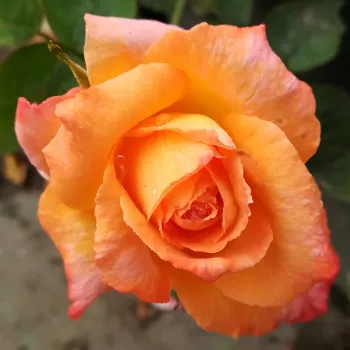
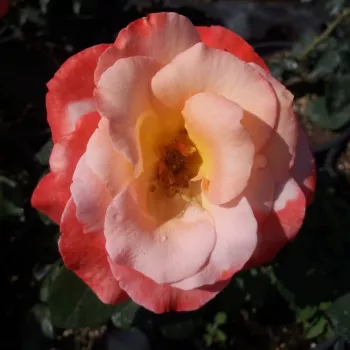
Double, 26–39-petalled, small-sized (about 0.5–1.5 in) solitary blooms, distinctly cupped with a medium-high-centred form, remontant with an abundant second flush in favourable conditions. |
| Colour data and phenology |
Soft peachy-yellow base with pale pink tones, buds warm yellowish-peach; colours lighten in strong sun, with creamy straw margins and a softly pink-tinted centre as flowers mature. |
| Fragrance and aroma |
Medium-strength, clearly noticeable scent with a fresh, fruity character; primarily ornamental due to double blooms partly concealing stamens and offering limited resources for pollinating insects. |
| Hip characteristics |
Hip set generally limited because of double blooms and regular deadheading; when present, hips are ellipsoid, about 12–16 mm in diameter, and mature to a decorative red colour. |
| Resistance and winter hardiness |
Hardy to approximately −21 to −18 °C (RHS H7, USDA 6b, Swedish zone 3); moderate disease resistance, generally resistant to powdery mildew and black spot, with moderate rust susceptibility. |
| Horticultural recommendations |
Prefers sunny positions with well-drained soil; planting distances vary from 95–180 cm depending on use, with square or hexagonal layouts enabling hedging, solitary or border applications. |
JOYFULNESS Hybrid tea rose TANsinnroh offers refined pastel blooms, remontant flowering and a resilient own-root constitution for long-lived garden structure; consider it if you want lasting elegance without demanding care.