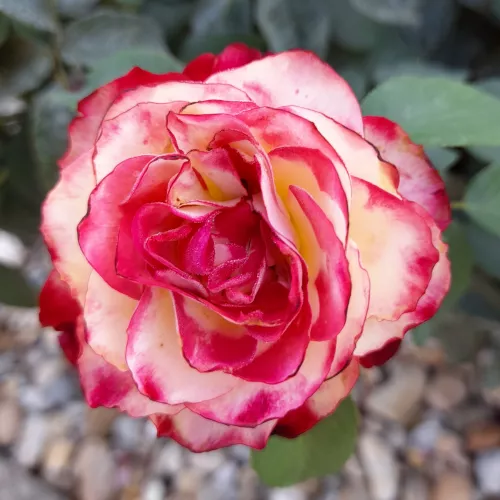
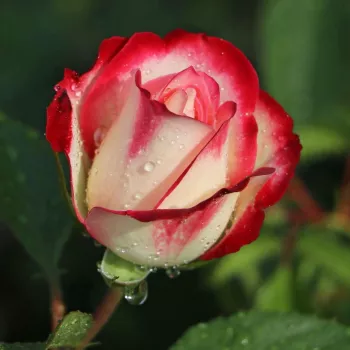
JUBILE DU PRINCE DE MONACO® – cream-red bedding floribunda rose
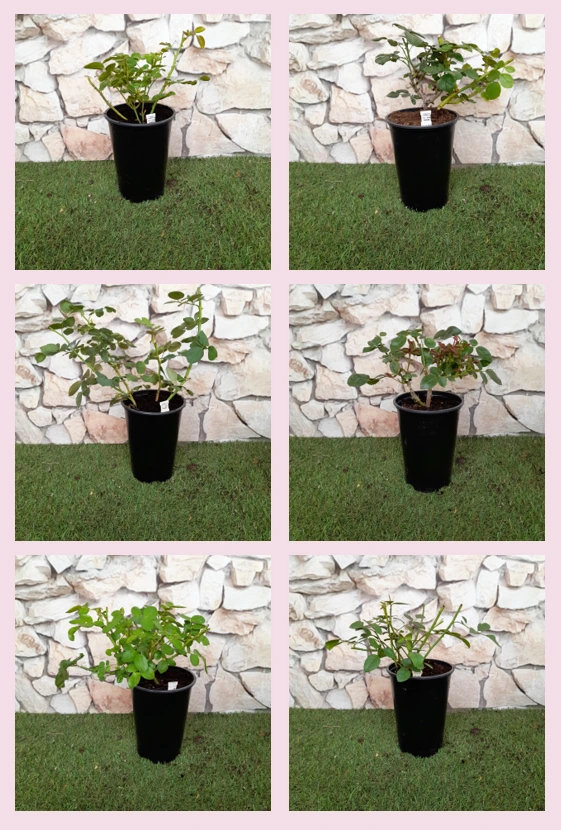
Imagine a sheltered coastal veranda where you can enjoy afternoon tea, protected by a low rose windbreak that copes calmly with blustery weather and salty air. JUBILE DU PRINCE DE MONACO® brings a neat, bushy habit and clusters of large, cream-and-red blooms that repeat through the season, giving steady colour without demanding complex maintenance. Its naturally good self-cleaning means spent flowers fall away tidily, so beds and pots look cared-for even when you are busy elsewhere. In our own-root 2-litre form, it establishes steadily for long-term longevity, settling roots in the first year, building shoots in the second, and showing its full ornamental impact by the third, while managing coastal rain and wind through a well-anchored, compact frame.
Usage options
| Target area | Reasoning |
|---|
| Coastal veranda windbreak in large containers |
The compact, bushy habit forms a low, reliable screen that suits balcony or veranda edges, especially in coastal settings where a modest but steady barrier to breeze is welcome; plant in 40–50 litre tubs to anchor it well for beginners. |
| Small front garden feature by the doorstep |
Its distinctive cream-and-red bicolour clusters create an immediate focal point in compact spaces, offering strong visual interest from pavement level without overwhelming a modest frontage, ideal for those wanting maximum effect from a single planting for homeowners. |
| Long-season colour strip along a shingle path |
Remontant flowering with generous second flushes keeps beds lively for months, echoing beachside brightness beside gravel or shingle paths where consistent colour matters more than constant attention for coastal-lovers. |
| Low-maintenance family flower bed with children’s play area nearby |
Good self-cleaning means many spent blooms drop on their own, reducing deadheading chores and keeping borders looking neat even when life is busy, a practical choice near lawns and play spaces for busy-families. |
| Mixed coastal-style border with grasses and perennials |
The dense, matt green foliage and rounded form provide structure among Festuca, sea kale or dwarf Heuchera, while the bright flowers add contrast in breezy conditions, complementing a design that handles coastal rain and wind through a well-anchored, compact frame for stylists. |
| Statement rose in a large terrace pot |
Suited to sunny patios where a single rose must perform for months, its regular clusters and tidy bush shape give a contained yet showy presence when grown in a 40–50 litre container with good drainage for urban-gardeners. |
| Long-lived structural planting in a family bed |
The own-root form supports gradual regeneration from the base, so even after harder pruning or weather damage the plant can grow back evenly, offering a stable, long-term element in a mixed family border for long-term-planners. |
| Informal cutting patch near a seating area |
The large, double, cup-shaped flowers on clusters are easy to snip for small jugs indoors, while the bush keeps presenting new buds through the season, letting you cut regularly without stripping the plant for cut-flower-enthusiasts. |
Styling ideas
- Shingle-Chic Border – tuck among sea kale and Festuca along a gravel path for a relaxed, beach-house feel – ideal for coastal-style lovers wanting colour with minimal fuss
- Veranda Tea Corner – group three in large tubs behind a bistro set to form a soft wind-buffer – perfect for beginners creating a sheltered nook for afternoon tea
- Cream-and-Crimson Ribbon – plant a short, low row beside the drive for a neat, colourful welcome – suited to homeowners seeking easy kerb appeal
- Play-Friendly Island Bed – use as the flowering core of a rounded bed with low Heuchera and ornamental grasses – good for families who like structure without daily upkeep
- Patio Feature Pot – place a single specimen in a 50 litre container against a sunny wall – best for urban gardeners wanting one dependable, long-flowering rose
Technical cultivar profile
| Aspect | Data |
|---|
| Name and registration |
JUBILE DU PRINCE DE MONACO® (MEIsponge), shrub / floribunda bedding rose, also known as Cherry Parfait™; ARS exhibition floribunda, part of the Bedding rose collection. |
| Origin and breeding |
Bred by Alain A. Meilland, Meilland International SA, France, 2000; parentage ‘Meichoiju’ × (‘Meidanu’ × ‘Maeman’); introduced after 2002 with US registration in 2002. |
| Awards and recognition |
Highly decorated: AARS winner (USA) plus medals and certificates from Saverne, Madrid, Buenos Aires, Baden‑Baden, Genova and Orléans between 2000 and 2002. |
| Growth and structural characteristics |
Bushy, compact shrub 65–95 cm high and 60–95 cm wide, with dense, matt, medium-green foliage and moderate thorns; forms regular, rounded bushes suitable for bedding use. |
| Flower morphology |
Large, double, cup-shaped blooms with 26–39 petals, produced in clusters; remontant with abundant repeat flowering providing generous second flushes through the season. |
| Colour data and phenology |
Cream-white to creamy base with vivid carmine to cherry-red edging; ARS WBl, RHS 155D/53A; colour holds well, only gently lightening in strong sun as red edges soften to pink. |
| Fragrance and aroma |
Fresh, mild fruity fragrance; not overpowering near seating or doors. Double flowers largely conceal stamens, so mainly ornamental and relatively modest for pollinator attraction. |
| Hip characteristics |
Occasionally produces small, spherical red hips about 8–12 mm in diameter, adding a light decorative touch in late season without dominating the plant’s overall appearance. |
| Resistance and winter hardiness |
Hardy to about −21 to −18 °C (RHS H7, USDA 6b, Swedish zone 3). Very susceptible to black spot, mildew and rust, so benefits from regular, preventative plant protection. |
| Horticultural recommendations |
Best in full sun with well-drained soil and regular watering in dry spells; plant 50–90 cm apart depending on use; in coastal or urban sites, ensure good airflow and timely care. |
JUBILE DU PRINCE DE MONACO® offers compact structure, long-season bicolour flowering and dependable own-root regrowth, making it a thoughtful choice if you would like a durable, distinctive rose for a family garden or veranda.