KODÁLY ZOLTÁN – purple-pink bedding polyantha rose - Márk
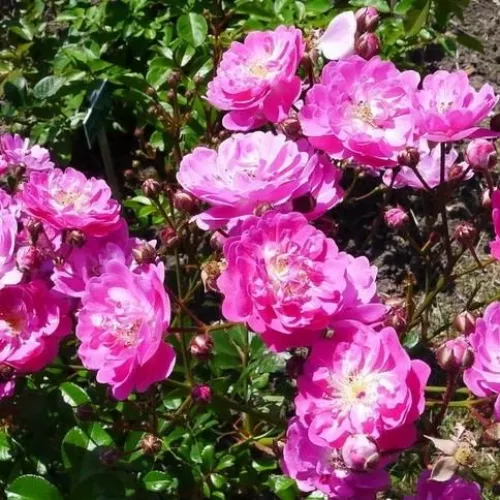
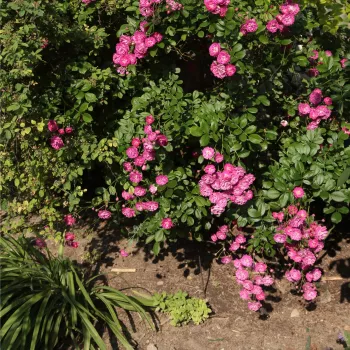
Imagine late afternoon light over a Cornish veranda: shells in your pocket, tea in hand, and a low hedge of crimson blooms gently moving in the breeze, giving your seating area a subtle windbreak and softening the view. KODÁLY ZOLTÁN settles calmly into coastal family gardens, its bushy, compact habit naturally resisting the bluster of exposed sites while still remaining refined enough for a small front garden or shingle terrace. In a roomy container of at least 40–50 litres it anchors well, making water management simple and helping roots cope with heavier soils, while its remontant flowering keeps beds colourful from early summer well into autumn. The velvety purple-pink clusters open in succession, so you enjoy a long season of blossom with little fuss, underpinned by medium disease resistance and a quietly spicy fragrance. As an own-root plant it is bred for long life and steady regeneration, typically building roots in the first year, strong shoots in the second, and full ornamental value by the third, offering lasting reliability for relaxed gardeners.
Usage options
| Target area |
Reasoning |
| Coastal shingle front garden bed |
The compact, bushy shrub shape stands up well to breezy, open approaches and keeps its refined purple-pink colour even under unsettled coastal light. Medium disease resistance and drought-tolerant behaviour support easy care for a small, exposed plot, ideal for the busy beginner. |
| Low, flowering wind-filter hedge by a veranda |
Planted at around 50 cm intervals, its dense foliage and uniform height create a soft, flowering screen that takes the edge off wind without feeling heavy. The continuous clusters of double blooms add colour all season while remaining simple to maintain for the family homeowner. |
| Statement container on a sheltered coastal balcony |
In a 40–50 litre pot the root system anchors firmly and copes better with drying winds, giving reliable flowering on compact growth where space is tight. Own-root vigour means strong regeneration after any weather damage, reassuring for the urban veranda owner. |
| Mixed small bed with sea kale and ornamental grasses |
The fine texture of Festuca and the architectural leaves of sea kale frame the velvety purple-pink clusters, emphasising their colour without crowding the plant. Remontant flowering keeps interest between companion peaks, suiting the design-conscious gardener. |
| Family play-area border edging |
The modest height and bushy outline form a neat edging that defines paths and lawns without blocking sight lines. Its repeat flushes of small, cupped blooms bring long-lasting colour with only occasional pruning, practical for the busy parent. |
| Small front garden feature rose |
Used singly at around 90 cm spacing, it forms a rounded, glossy green shrub covered in richly coloured clusters, giving a composed focal point even in tight plots. The medium maintenance level remains manageable for the time-pressed householder. |
| Urban rose bed with cranesbill and bearded iris |
Geranium and Iris germanica weave around its base, their looser forms contrasting with the compact rose and extending the season of interest. The rose’s steady remontant habit and medium disease resistance keep the display tidy for the city hobby-gardener. |
| Long-season park or communal garden planting |
Square or hexagonal mass planting builds a low, harmonious sea of purple-pink colour that reads well from a distance and repeats all summer, while its bushy form and drought-tolerant character support reliable performance in sites that must cope with variable weather for the public-space caretaker. |
Styling ideas
- Seaside-border – Combine with sea kale and blue Festuca on shingle or gravel to echo a coastal strandline, using the rose as a low, colourful anchor – for coastal-style lovers.
- Veranda-ribbon – Plant a narrow line along decking or a balcony rail, using containers at regular intervals to create a soft purple-pink wind-filter – for owners of breezy verandas.
- Village-front – Pair with bearded iris and cottage perennials in a small front bed, the compact shrub giving structure beneath taller seasonal blooms – for cottage-front homeowners.
- Family-corner – Edge a sitting or play corner with a short row, letting the clusters of flowers provide cheerful colour without towering over children – for young families.
- Urban-pocket – Use a single large pot by a doorway, underplanted with cranesbill, to deliver colour and fragrance where soil is limited – for flat dwellers and busy professionals.
Technical cultivar profile
| Parameter |
Data |
| Name and registration |
KODÁLY ZOLTÁN is a polyantha bedding rose by Márk, used as a shrub or bed rose; it commemorates composer Zoltán Kodály and is marketed by PharmaRosa as a verified, premium bronze cultivar. |
| Origin and breeding |
Bred by Hungarian rosarian Márk Gergely, with breeding work dated to 2006; parentage and breeding institution are unknown, with distribution initiated by PharmaRosa Ltd. and exact registration dates not recorded. |
| Awards and recognition |
Recognised at the Gera rose trials in Germany with a Bronze medal in 2007, confirming garden performance and ornamental value under independent, central European trial conditions soon after introduction. |
| Growth and structural characteristics |
Forms a low, bushy shrub 55–75 cm high and 65–95 cm wide, with dense, glossy mid‑green foliage and moderate prickles, lending itself to edging, small hedges and mass bedding in family gardens and urban spaces. |
| Flower morphology |
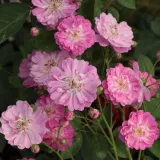
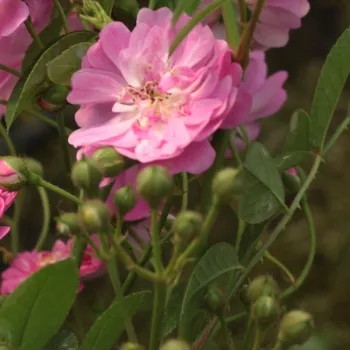
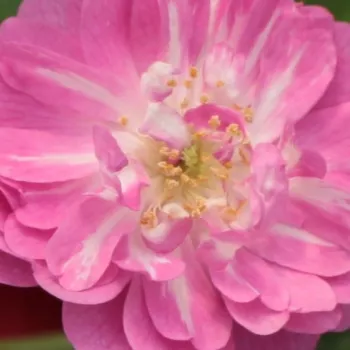
Produces small, cupped, double blooms with 26–39 petals in tight clusters; flowers are remontant with an especially abundant second flush, providing prolonged bedding colour on compact growth throughout the season. |
| Colour data and phenology |
Flowers open deep crimson‑pink with lilac and violet tints, coded RHS 71A–71B, fading only moderately toward rosy crimson with mauve edges; colour retention is very good, keeping beds vibrant between deadheading rounds. |
| Fragrance and aroma |
Displays a clearly perceptible, medium-strength floral-spicy scent that complements the rich colour; while mainly ornamental, it adds a subtle aromatic layer around seating areas without overwhelming nearby plantings. |
| Hip characteristics |
Sets relatively few hips, which are small spherical red fruits around 7–10 mm; where produced, they add modest late-season interest without significantly detracting from the plant’s flowering capacity. |
| Resistance and winter hardiness |
Rated to around –23 to –21 °C, corresponding to RHS H7 and USDA zone 6a; disease resistance to black spot, mildew and rust is medium, supporting acceptable performance with standard preventive care in most UK gardens. |
| Horticultural recommendations |
Best at 50–55 cm spacing for hedging or mass planting and 90 cm as a specimen; prefers well-drained soil, benefits from occasional plant protection, and suits beds, parks and urban green spaces with regular but moderate care. |
KODÁLY ZOLTÁN offers compact, bushy growth, long-season purple-pink flowering and dependable medium resistance in an own-root form that matures steadily over the years, making it a thoughtful choice for relaxed, coastal-inspired gardens.