L'AMI DES JARDINS™ – Générosa® hybrid tea for coastal charm
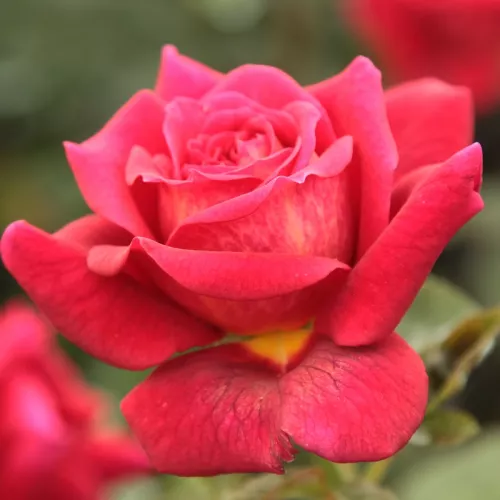
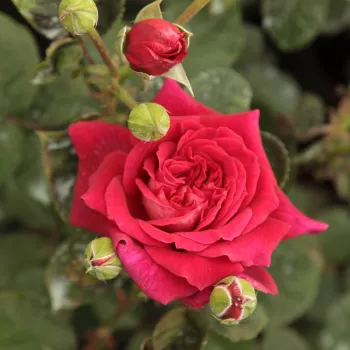
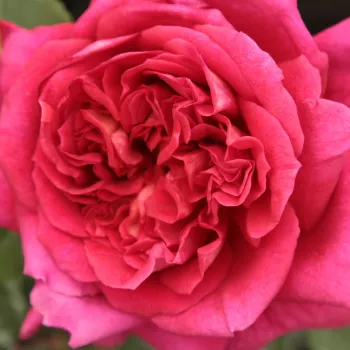
Imagine stepping onto your veranda after a windy walk on the beach: L'AMI DES JARDINS™ wraps you in raspberry-red blooms that glow against dark green foliage, offering a quietly luxurious focal point without fussy care routines. Bred as a hybrid tea with a relaxed, bushy habit, it fits naturally into compact family gardens where space is precious but impact still matters. The medium, fruity fragrance recalls summer pudding and sea-breeze tea breaks, while a good level of heat and drought tolerance lets it cope calmly with exposed sites where strong weather quickly tests plants’ reliability in British coastal gardens. Planted in a quality 40–50 litre container or shingle bed with sharp drainage, its own-root vigour and regenerative lifespan support steady development: first strengthening roots, then building shoots, and by the third season delivering confident ornamental value. Use it as a “girly” coastal accent among silvery grasses and sea kale, where its repeated summer flowering and moderately pollinator-friendly clusters bring colour, movement and a refreshing, salty-sunny mood with minimal effort.
Usage options
| Target area | Reasoning |
|---|
| Coastal veranda container (40–50 L) |
A sturdy 40–50 litre pot on a sheltered veranda lets this bushy hybrid tea show off its raspberry-red flowers at eye level while keeping roots protected and well drained, ideal where strong weather quickly tests plants’ reliability in British coastal gardens for the relaxed balcony owner beginner |
| Small front-garden specimen |
As a single specimen by the front path, its compact height and moderately dense foliage frame the doorway without dominating, offering repeat summer colour and a welcoming, fruity scent well suited to the busy-but-style-conscious homeowner |
| Low flowering hedge along shingle or gravel |
Planted at hedge spacing, the bushy habit knits into a low, informal barrier that softens parking areas or shingle strips, with waves of raspberry-red blooms bringing structure and privacy for families wanting easy-order coastal gardening |
| Mixed border with sea kale and ornamental grasses |
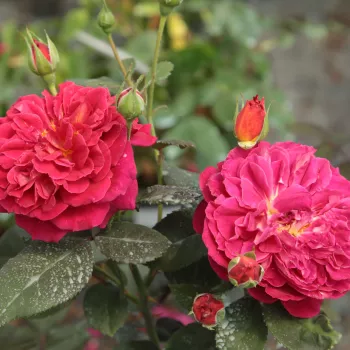
In a mixed border, its rich red-and-gold flowers contrast beautifully with bluish Festuca, sea kale and airy perennials, while medium maintenance needs suit those preferring seasonal, not weekly, intervention for design-conscious garden enthusiasts |
| Cutting patch for home arrangements |
The long, straight, bushy stems and sizeable cupped blooms are ideal for cutting, providing generous vases of raspberry-red flowers with a clear fruity scent for those who enjoy simple, home-grown bouquets |
| Family seating area wind-filter planting |
A short line or small group near seating helps filter wind at low level while keeping views open; repeat flowering and tidy structure give a calm, ordered backdrop for informal tea and play spaces used by sociable garden families |
| Pollinator-friendly accent in a sunny bed |
Semi-double clusters with accessible centres offer moderate forage for insects, making a colourful stepping-stone plant in wildlife-aware beds where ornamental value and biodiversity are balanced by eco-minded garden owners |
| Long-term “anchor” in a developing garden |
As an own-root rose, it builds strength steadily and recovers well from pruning or weather damage, remaining a stable feature as newer plantings change around it, appealing to planners of evolving, long-lived borders |
Styling ideas
- Veranda Retreat – one rose in a 40–50 L pale stone pot with blue Festuca and a small bistro set – for coastal veranda owners who want impact from a single container.
- Shingle Ribbon – an informal row through shingle with sea kale, thrift and low grasses – for gardeners recreating a soft, seaside feel along drives and paths.
- Raspberry Tea Corner – group with lavender and soft pink perennials beside seating – for fragrance lovers who like to sit among scented, low-effort flowers.
- Cottage Cutting Strip – plant as a short row behind herbs for regular cutting – for home florists seeking reliable, repeat stems without specialist rose knowledge.
- Modern Coastal Mix – combine with structural evergreens and white verbena in a clean layout – for design-led owners wanting streamlined forms and long-term structure.
Technical cultivar profile
| Parameter | Data |
|---|
| Name and registration |
Hybrid tea rose from the Générosa® collection; registered as GUIlladjar, marketed as L'AMI DES JARDINS™ Générosa® GUIlladjar for garden, hedge and cutting use. |
| Origin and breeding |
Bred by Dominique Massad for Roseraies Pierre Guillot in France, introduced and registered in 2010, continuing the Générosa® line of characterful, garden-worthy hybrid teas. |
| Growth and structural characteristics |
Bushy shrub reaching about 100–140 cm in height and 75–105 cm spread, with moderately dense, slightly glossy dark green foliage and moderate prickliness, forming a substantial, upright bush. |
| Flower morphology |
Semi-double, cupped flowers with 13–25 petals, produced mainly in clusters on bushy stems; large blooms around 7–10 cm, repeat-flowering, with a lighter second flush after the main summer display. |
| Colour data and phenology |
Intense raspberry-red blooms with golden-yellow reverses; buds deep red with yellow sheen, colour holds well in sun, fading only slightly to rose-red as the warm yellow underside becomes more apparent. |
| Fragrance and aroma |
Clearly noticeable, medium-strength fruity fragrance with a raspberry character; enough to enjoy on a terrace or at a path edge without becoming overwhelming in smaller, enclosed garden spaces. |
| Hip characteristics |
Forms moderately abundant, ellipsoid orange-red hips, around 12–18 mm diameter, extending seasonal interest into autumn and offering subtle decorative value in more naturalistic plantings. |
| Resistance and winter hardiness |
Hardy to approximately −21 to −18 °C (RHS H7, USDA 6b); moderate resistance to black spot, powdery mildew and rust; tolerates heat well and withstands moderate drought with supplementary watering. |
| Horticultural recommendations |
Best in sunny sites with well-drained soil; plant 55–100 cm apart depending on hedge or specimen use, at around 2.4–2.7 plants/m², with medium maintenance and occasional plant protection as required. |
L'AMI DES JARDINS™ combines bushy, compact structure with repeat raspberry-red blooms and a fruity fragrance, and as an own-root rose it offers dependable long-term performance; a thoughtful choice if you like relaxed elegance with modest upkeep.