LA ROSE DES IMPRESSIONNISTES – orange-yellow bedding floribunda rose - Adam
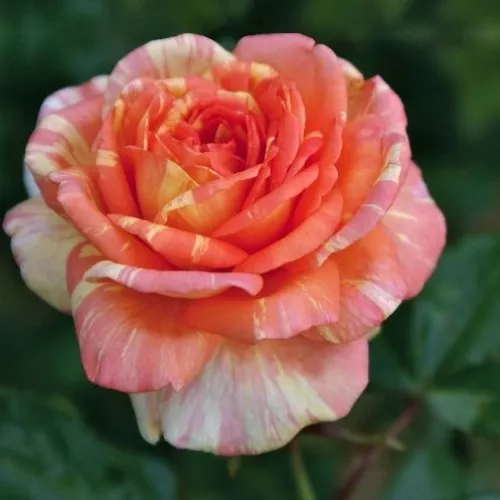
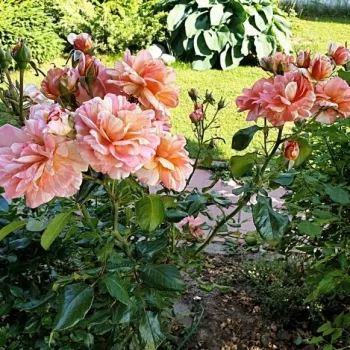
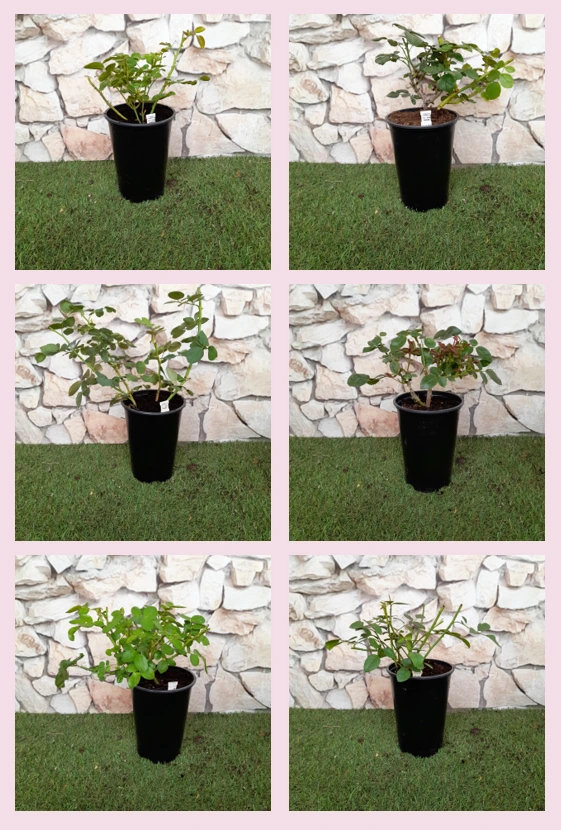
Imagine settling down with afternoon tea behind a gentle coastal windbreak, this compact floribunda wrapping your shingle terrace in painterly colour. La Rose des Impressionnistes brings salmon-orange, yellow-streaked blooms that hold their character even in brisk weather, giving a refreshing, seaside mood without demanding constant attention. Its dense, bushy habit feels naturally secure in South West breezes, while own-root plants anchor steadily into the ground and quietly build up a long-lived framework. In a large 40–50 litre pot or a small Devon front garden, it offers abundant repeat flowering on glossy dark foliage with low maintenance needs. Over the first three years it moves from strengthening roots, to building shoots, to delivering its full, impressionist-style ornamental display.
Usage options
| Target area | Reasoning |
|---|
| Small coastal front garden bed |
The compact, bushy habit and dense foliage create structure in limited spaces, ideal for a small front garden where every plant must earn its place with reliable repeat flowering and a long season of interest for beginners. |
| Shingle or gravel planting near the sea |
Its sturdy framework and moderate height cope well with breezy, exposed corners, giving you colourful brushstroke blooms while shrugging off typical coastal wind and spray in well-prepared, free-draining soil for coastal-owners. |
| Low informal hedge along a path |
Planted at hedge spacing, the dense, glossy foliage and regular flowering create a softly defined, low barrier that looks cared-for with minimal clipping and only occasional deadheading needed for busy-households. |
| Feature rose in a 40–50 litre terrace container |
In a generous container it forms a compact, floriferous mound with colourful, painterly blooms; own-root growth builds a stable, long-lived plant that responds well to basic watering and feeding routines for veranda-users. |
| Mixed border with perennials and grasses |
The orange-yellow striped flowers combine beautifully with soft grasses and coastal-style perennials, while the bushy shape fills gaps and offers season-long colour without complex pruning plans for hobby-gardeners. |
| Family garden play-area edge |
Moderate height and a compact form make it suitable near play spaces, giving cheerful, fruity-scented blooms and a tidy outline that can be kept in shape with straightforward annual pruning for family-gardeners. |
| Easy-care bed for low-maintenance planting |
Good disease resistance to common rose problems and modest water needs mean less spraying and fuss; you mostly enjoy the flowers while doing only light deadheading and winter pruning for time-poor-owners. |
| Long-term planting for lasting structure |
As an own-root floribunda it regenerates well from the base, avoiding graft failures and settling into a long, steady life with dependable flowering that gradually enhances the overall garden framework for long-term-planners. |
Styling ideas
- Seaside-terrace trio – Pair with blue Festuca and a dwarf Euonymus in a large container for a soft, coastal look – ideal for veranda-users who want easy structure and colour.
- Painterly-border – Weave through daylily hybrids and soft grasses so the striped blooms read like brushstrokes – perfect for hobby-gardeners who enjoy artistic planting schemes.
- Shingle-ribbon – Plant a loose line along a gravel path for a low, glowing hedge – suited to coastal-owners wanting gentle definition without formal clipping.
- Compact-family-corner – Use as a colourful anchor beside a seating area near a play space – good for family-gardeners seeking safe scale and long flowering with little upkeep.
- Low-care-mosaic – Combine several plants in a small bed with simple evergreens for a long-lasting, low-maintenance display – ideal for time-poor-owners preferring durable structure.
Technical cultivar profile
| Parameter | Data |
|---|
| Name and registration |
Floribunda bed rose, registered as ADAreviday, marketed as La Rose des Impressionnistes within the NIRPESPACE collection, suitable for shrub, bedding and occasional cutting uses. |
| Origin and breeding |
Bred by Michel Adam in France before 2015, parentage undetermined; introduced and initially distributed by NIRP International in 2015 as part of their contemporary garden rose assortment. |
| Growth and structural characteristics |
Compact, bushy shrub reaching around 60–85 cm in height and 40–60 cm spread, with dense, dark green glossy foliage and moderate prickliness, forming a neat, rounded garden presence. |
| Flower morphology |
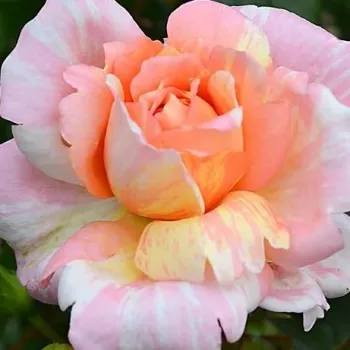
Medium-sized, double, cupped blooms with approximately 26–39 petals, borne in corymbose clusters; remontant, with an abundant second flush ensuring repeated decorative impact through the season. |
| Colour data and phenology |
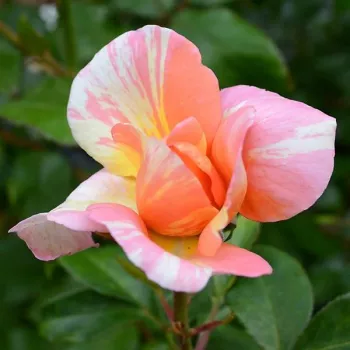
Vivid salmon-orange petals streaked golden-yellow; colour shifts gently in strong sun, from intense salmon orange with yellow stripes to softer peach tones with creamy-yellow highlights before fading. |
| Fragrance and aroma |
Displays a mild yet fresh, fruity fragrance that adds refinement without overwhelming nearby seating areas; double flowers reduce stamen access, so it is valued mainly for ornamental display. |
| Hip characteristics |
Rose-hip set is generally sparse due to the full, double flowers; when present, produces small spherical red hips around 7–10 mm across, adding discreet late-season interest. |
| Resistance and winter hardiness |
Good overall disease resistance to black spot, powdery mildew and rust; hardy to approximately −21 to −18 °C (RHS H7, USDA 6b, Swedish zone 3) with moderate heat and drought tolerance given watering. |
| Horticultural recommendations |
Best in sunny beds, borders, low hedges or spacious containers; plant 30–55 cm apart, ensure drainage on heavy clay, water in extended dry spells, and deadhead and prune lightly to maintain shape. |
La Rose des Impressionnistes offers compact, long-season flowering, good disease resistance and durable own-root growth that settles in for years, making it a thoughtful choice for relaxed, coastal-inspired gardens and terraces.