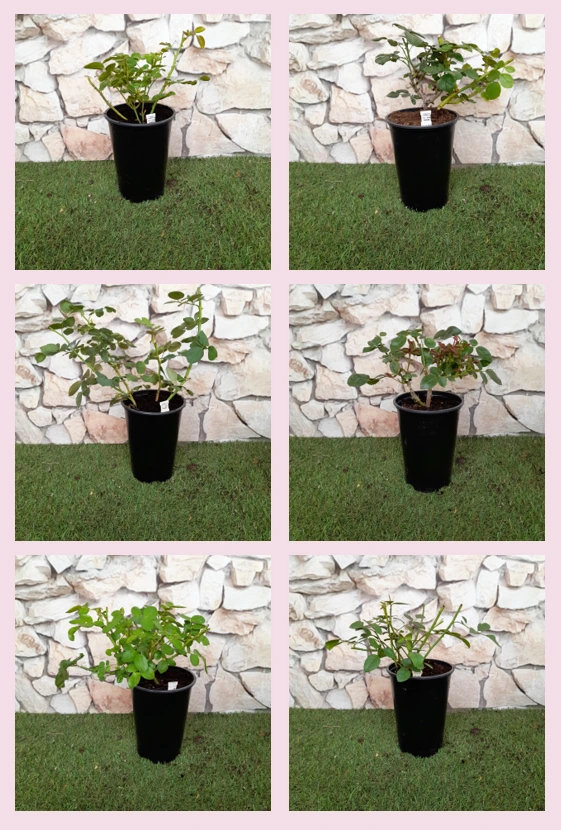
LAFAYETTE – dark pink bedding floribunda rose – Nonin
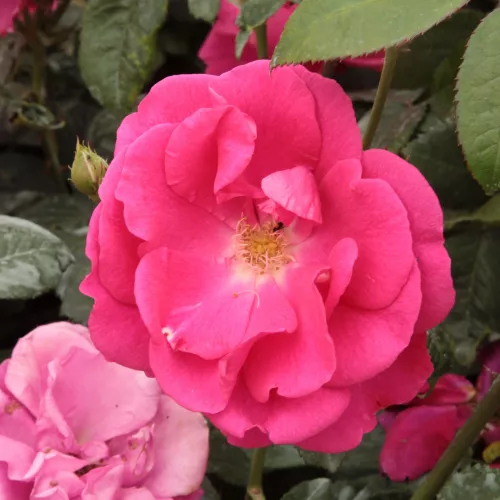
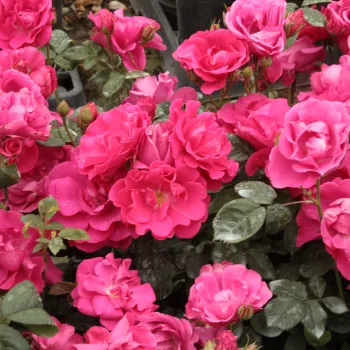
Imagine returning from a blustery walk along a Cornish beach to sit with your tea, sheltered by a planting of Lafayette, its dark-pink clusters giving a sense of effortless refreshment and coastal charm. This historic floribunda shrub forms a bushy, upright structure with semi-double blooms that fall cleanly, keeping beds looking neat with minimal maintenance. Own-root planting supports a long, steady life in your family garden, quietly building resilience below ground before rewarding you above: first consolidating roots, then pushing stronger shoots, and by the third year reaching full ornamental impact. Lafayette repeats in generous flushes, delivering months of colour in a sheltered, salt-tolerant layout that copes reliably with brisk seaside breezes and persistent coastal weather. Its bee-attracting open centres and gentle, sweet fragrance add a soft romance, while the matt mid-green foliage and autumn hips provide discreet interest well beyond the height of summer.
Usage options
| Target area | Reasoning |
|---|
| Coastal veranda planters (40–50 L containers) |
Lafayette’s bushy, upright habit and moderate height make it ideal for large 40–50 litre pots on a sunny but sheltered veranda, where its repeating dark-pink clusters bring a seaside feel with little intervention from beginners and busy owners. |
| Family front-garden focal point |
As a specimen, Lafayette builds a strong framework on its own roots, giving long-term structure and colour at the front of the house without the need for regular replacement, suiting homeowners who want a dependable, long-lived rose. |
| Low-maintenance coastal bed or border |
The good self-cleaning of its semi-double blooms helps beds stay tidy even in blustery conditions typical of seaside gardens, easing the deadheading workload for those who prefer straightforward care. |
| Season-long colour in small gardens |
Its remontant habit offers repeated flowering flushes from early summer onwards, ensuring compact spaces feel lively and uplifting over a long season, ideal for urban or courtyard gardeners seeking lasting visual impact. |
| Informal “girly” shingle planting |
The velvety dark-pink flowers with silvery-pink fading tones sit beautifully against pale shingle and driftwood accents, creating a soft, feminine coastal mood that appeals to lovers of romantic seaside styling. |
| Partially shaded side path |
Lafayette tolerates partial shade, so it suits side paths and corners that receive only part-day sun, bringing flower colour and light fragrance to areas where many bedding roses would disappoint more cautious gardeners. |
| Pollinator-friendly family border |
Semi-double flowers with accessible stamens attract bees and other beneficial insects, adding ecological value to a child-friendly family garden where close-up observation of visiting pollinators enriches everyday outdoor life. |
| Wind-exposed but sheltered-by-structures sites |
In typical British coastal gardens where buildings break the strongest gusts yet breezes remain brisk, Lafayette’s bushy habit and reliable flowering cope well, providing colour stability for coastal-style enthusiasts. |
Styling ideas
- Veranda-Harbour – Combine Lafayette in 40–50 litre tubs with blue Festuca and white sea kale for a relaxed harbour look – for coastal veranda owners who want seaside charm with simple upkeep.
- Pink-Shingle – Plant among pale gravel, bleached timber and low grasses to echo soft beach tones – for beginners seeking a feminine, “girly” coastal corner without complex design work.
- Sunset-Drift – Pair Lafayette with Crocosmia ‘Lucifer’ and Delosperma for fiery sunset accents – for colour-loving gardeners who enjoy long-season drama around seating areas.
- Breeze-Hedge – Use loosely spaced shrubs as a low, airy windbreak along a path – for families wanting gentle shelter and colour rather than a rigid, high-maintenance hedge.
- Tea-Nook – Frame a small bistro set with Lafayette and lavender in large pots – for busy urban homeowners who’d like a scented retreat that stays attractive with modest care.
Technical cultivar profile
| Parameter | Data |
|---|
| Name and registration |
LAFAYETTE – dark pink bedding floribunda rose; floribunda bed rose; shrub rose exhibition category; ARS approved exhibition name ‘Lafayette’; unregistered cultivar used in commerce since the early twentieth century. |
| Origin and breeding |
Raised by Auguste Nonin & Fils in France from cross ‘Rödhätte’ × ‘Richmond’; introduced 1918 in France and 1923 in Australia as ‘Joseph Guy’; historically distributed by Hazlewood Bros. Pty. Ltd. |
| Awards and recognition |
Received a Certificat de Mérite at the Bagatelle rose trials in Paris in 1918, reflecting early recognition for garden performance and ornamental value within classic bedding and border plantings. |
| Growth and structural characteristics |
Bushy, upright shrub reaching about 140–180 cm in height with 105–135 cm spread; moderately dense, matt mid-green foliage; moderately thorny stems; suitable for beds, edging lines and specimen planting schemes. |
| Flower morphology |
Semi-double, cup-shaped, medium-sized blooms with 13–25 petals, produced in clusters; remontant with plentiful repeat flowering; self-cleaning habit means many spent blooms fall naturally, helping maintain a neat display. |
| Colour data and phenology |
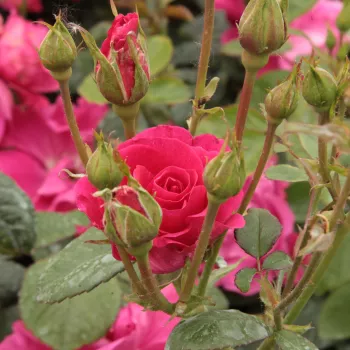
Velvety deep-pink to rose-red flowers, ARS DP, RHS 53A–53B; buds deep scarlet-pink, opening to vivid dark pink with lighter centres, fading to mid-pink with silvery tones; colour lightens somewhat in strong sun yet remains attractive. |
| Fragrance and aroma |
Light, sweet rose fragrance of mild intensity; scent is noticeable at close range around seating areas but never overpowering, suiting verandas and small gardens where subtlety is preferred over heavy perfume. |
| Hip characteristics |
Produces spherical orange-red hips around 10–14 mm in diameter; hips appear in moderate quantities after flowering, extending seasonal interest into autumn and offering additional visual texture in mixed plantings. |
| Resistance and winter hardiness |
Rated H7, broadly corresponding to USDA Zone 6b and Swedish Zone 3; tolerates approximately −21 to −18 °C; disease resistance moderate for powdery mildew, black spot and rust, sometimes requiring basic protective care. |
| Horticultural recommendations |
Use in beds, borders, edging or as a specimen at 100–180 cm spacing; recommended densities 0.8 plants/m² (square) or 1.0 plants/m² (hexagonal); suitable for partial shade and for own-root planting in large containers. |
LAFAYETTE offers long-season dark-pink clusters on a sturdy, own-root shrub that settles in for many years of easy-care colour in coastal or family gardens, making it a thoughtful choice for relaxed yet enduring planting.