Kensie hybrid tea rose – pharmaROSA® ORIGINAL 2-litre
Imagine returning from the seaside, sand still on your shoes, to a sheltered veranda where Kensie glows in creamy lemon tones against the breeze. This compact hybrid tea settles well in UK family plots, its roots anchoring securely even where winter gales and heavy showers demand reliable drainage and sturdy planting. Own-root structure supports longevity, quiet regeneration after setbacks, and a consistently tidy appearance with low maintenance needs. In a large 40–50 litre container on a Cornish balcony or a small Devon front garden bed, it flowers repeatedly with a light, fresh, fruity fragrance, offering an easy, feminine accent that matures steadily from year one roots through year two structure to full ornamental impact in year three.
Usage options
| Target area | Reasoning |
|---|
| Small coastal front garden bed |
Kensie’s bushy, medium-height habit fits narrow beds without overwhelming paths or windows, while its strong root system copes well with blustery sites near the sea; this suits those wanting dependable structure in changeable weather, including beginners. |
| Large patio container (40–50 litres) |
In a generous pot with free-draining compost, Kensie flowers recurrently and remains stable in wind, ideal for a veranda seating area where you can enjoy its light scent at close quarters, appealing to time-poor urban owners and coastal flat dwellers alike. |
| Low-maintenance family flower bed |
Good resistance to black spot, mildew and rust means less spraying and fewer lost leaves, keeping the plant attractive through the season with only basic pruning, ideal for households wanting colour without constant attention from every family member. |
| Cream-toned “girly” border |
The soft cream and lemon palette works perfectly with blush perennials and silvery foliage, creating a gentle, feminine corner that still feels refined rather than showy, a natural choice for those curating a calm, pastel garden style theme. |
| Cutting patch for home arrangements |
Medium-sized, fully double blooms on a bushy hybrid tea bush provide elegant stems for vases, while own-root growth recovers steadily after cutting, ideal for those who like to bring a few garden flowers indoors each weekend. |
| Coastal-style mixed planting with grasses |
Set among Festuca, sea kale or lavender, Kensie’s compact structure adds upright floral points; reliable root anchoring supports the planting scheme where wind and showers are frequent, fitting gardeners seeking relaxed, maritime-inspired compositions outside. |
| Long-season focal point near seating |
Remontant flowering with a lightly fruity fragrance keeps interest going beyond the first flush, so one well-sited plant beside a bench or terrace can provide months of changing blooms, suiting those who value extended performance from a single investment. |
| Durable planting for cold-prone locations |
With hardiness down to around –25 °C and own-root resilience, Kensie is well suited to exposed or frost-prone UK gardens, offering a stable feature that bounces back from winter, ideal for practical gardeners prioritising long-term reliability and value. |
Styling ideas
- Seaside-Veranda Glow – Plant Kensie in a 50-litre sand-toned pot with a backdrop of bleached wood furniture to echo beach huts – for balcony and veranda owners wanting a relaxed coastal feel.
- Cream-Tea Corner – Combine Kensie with lavender and dwarf sea kale around a small bistro set, creating a calm space for afternoon tea – for homeowners turning a sunny nook into a gentle retreat.
- Pastel-Girly Border – Thread Kensie through soft pink perennials and airy ornamental grasses for a feminine but not fussy border – for those curating a romantic, low-effort front garden.
- Wind-Kissed Hedge – Repeat-plant along a path at recommended spacing to form a low, billowing line of cream blooms – for gardeners wanting subtle structure in breezier plots.
- Cutting-Strip Accent – Place a short row of Kensie beside a veg patch to snip stems for jugs indoors – for practical gardeners who like their roses beautiful, productive and undemanding.
Technical cultivar profile
| Parameter | Data |
|---|
| Name and registration |
Kensie hybrid tea rose, commercial group Hybrid Tea; trade name Kensie Hybrid tea rose pharmaROSA®, former names not recorded, exhibition name not assigned, consumer offering in the pharmaROSA® ORIGINAL 2-litre range. |
| Origin and breeding |
Hybrid Tea type discovered in Germany in 2015, with parentage not documented; introduced to the market by PharmaRosa® Ltd. from Hungary, with exact registration and wider launch years not formally listed. |
| Growth and structural characteristics |
Bushy shrub rose around 100–140 cm high with 80–110 cm spread, moderately dense, glossy mid-green foliage and moderate prickliness, forming a well-rounded, medium-sized plant suited to beds and large containers. |
| Flower morphology |
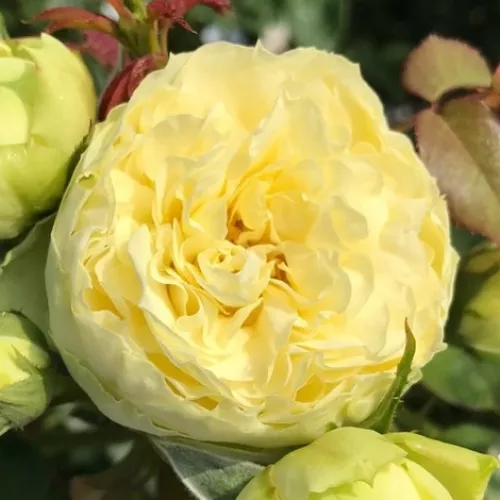
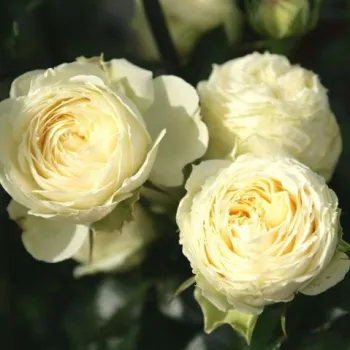
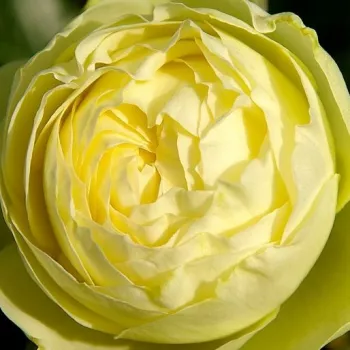
Medium-sized, double, ball to pompon-shaped blooms with approximately 26–39 petals borne in corymbose clusters, remontant with a notably abundant second flush, providing classic hybrid tea flowers on a compact framework. |
| Colour data and phenology |
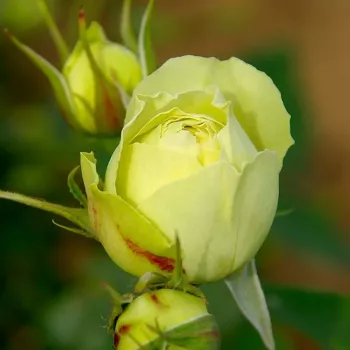
Cream-yellow flowers with a soft lemon-yellow centre; newly opened blooms show warm golden lemon tones, fading through straw-cream to ivory and near white, particularly in shade where outer petals may appear slightly greenish-white. |
| Fragrance and aroma |
Light, fresh, fruity fragrance that is noticeable at close range without dominating nearby seating areas, complementing its use next to patios and verandas for subtle sensory interest rather than intense perfume. |
| Hip characteristics |
Occasionally forms rounded hips around 10–18 mm across, generally sporadic and not a dominant ornamental feature, but adding a modest seasonal detail in late season when present on the plant. |
| Resistance and winter hardiness |
Classed as resistant to black spot, powdery mildew and rust; hardy to approximately –26 to –23 °C (RHS H7, USDA 5b, Swedish Zone 4), making it suitable for most UK regions including colder inland gardens. |
| Horticultural recommendations |
Recommended for flower beds, individual specimen use and cutting; low maintenance requirements with little routine intervention beyond basic pruning, using 65 cm spacing in masses or 55 cm for informal hedging lines. |
Kensie hybrid tea rose offers remontant cream-lemon blooms, good disease resistance and reliable hardiness, and in this own-root 2-litre form it establishes steadily for long-term, low-effort enjoyment, making it a thoughtful choice for your garden.