LEMON RAMBLER – pale yellow rambler climbing rose - Schultheis
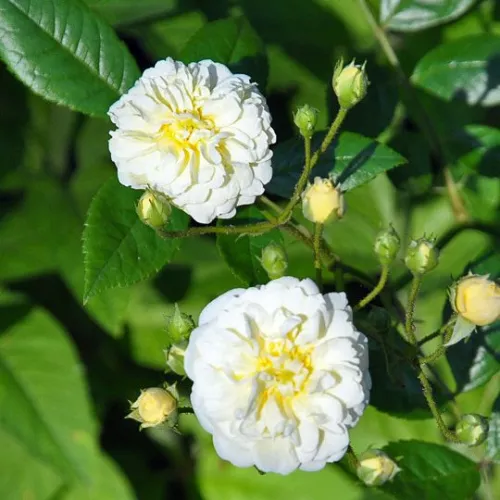
Bring a sense of seaside refreshment to your garden with Lemon Rambler, a pale lemon-yellow climber that settles in reliably and creates a gentle, wind-brushed screen for relaxed afternoons. Its semi-double clusters and strong citrus fragrance evoke sun-warmed dunes and coastal breezes, while its dense, mid-green foliage gives year-round structural presence on arches, pergolas and fences. Once established, its repeat-flowering habit offers a long season of soft colour on even modest supports, making it an easy way to add vertical interest in family gardens where space is limited. The robust own-root form means long-term garden stability and the ability to regenerate if pruned hard or weather-battered, offering a dependable companion that suits shingle-style beds and sheltered verandas. Over the first three years it builds quietly from root strength to taller shoots and then full ornamental impact, with glossy foliage helping it stand up gracefully where gardens face frequent wind and salt-laden showers, so you can enjoy coastal charm with reassuring ease.
Usage options
| Target area |
Reasoning |
| Pergola or arch in a small coastal-style garden |
Lemon Rambler’s climbing habit and 240–380 cm height are ideal for covering a modest pergola or arch without overwhelming a small family garden, while its repeat-flowering pale yellow clusters create a long-flowering walkway for relaxed evening use by beginner gardeners. |
| Wind-filtering screen along a veranda or exposed fence |
The dense, glossy mid-green foliage and rambling structure form a soft, living filter that breaks wind without feeling heavy, offering light privacy and movement in salty, breezy gardens typical of coastal counties, particularly where seating areas need calmer corners for busy homeowners. |
| Feature rose for sunny coastal shingle or gravel planting |
The combination of pale lemon flowers and strong citrus fragrance stands out above gravel, shingle and low perennials, creating a bright focal point that feels naturally seaside-inspired, especially when paired with drought-tolerant textures appreciated by coastal-style lovers. |
| Training on a wall, garage or garden outbuilding |
Its climbing growth and moderate spread mean it can be trained flat against walls and outbuildings without excessive pruning, softening hard structures with long-season bloom while keeping maintenance predictable for time-poor gardeners. |
| Loose flowering screen between garden zones |
Used along posts or light fencing, its rambling stems weave into a semi-transparent partition that defines play, seating and utility areas while retaining a relaxed, natural look that matures steadily over the first three years for family-garden owners. |
| Large pot or half-barrel on a sheltered balcony |
In a 40–50 litre container with good drainage and support, Lemon Rambler can be grown as a contained climber, bringing vertical interest, fragrance and soft colour to verandas and balconies where in-ground planting is limited, appealing to urban balcony gardeners. |
| Romantic partner for ornamental grasses and sea kale |
The airy, semi-double blooms and light lemon tones pair beautifully with blue-green sea kale, Festuca and soft Lavandula, creating a drifted, coastal border that feels calm yet structured, rewarding simple seasonal care from hobby gardeners. |
| Long-term own-root investment for evolving gardens |
The own-root form offers long lifespan and reliable regrowth after hard pruning or winter damage, providing a stable, structural climber that settles in as the garden changes and copes gracefully with frequent wind and salt-laden showers for committed long-term planners. |
Styling ideas
- Seaside-Arch – Train Lemon Rambler over a simple timber arch with sea kale and Festuca at the base for a soft, dune-like entrance – ideal for coastal-style lovers seeking an airy garden threshold.
- Veranda-Canopy – Grow it up posts of a covered veranda to form a light, fragrant canopy above outdoor seating – perfect for busy homeowners wanting shade and scent without complex designs.
- Shingle-Backdrop – Use it on a fence behind shingle planting with Sedum and New Zealand flax for layered coastal texture – suited to hobby gardeners building a relaxed, modern seaside feel.
- Cottage-Coastal – Combine Lemon Rambler on a wall with lavender and white obedient plant for a fresh, salty-breeze take on cottage style – appealing to beginners who like soft structure and romance.
- Balcony-Barrel – Plant in a 50 litre half-barrel with a slim obelisk, underplanted with compact grasses, for vertical charm in small outdoor rooms – great for urban balcony gardeners maximising limited space.
Technical cultivar profile
| Characteristic |
Data |
| Name and registration |
Rambler climbing rose, registered as SCH8056 and marketed as Lemon Rambler Climbing rose SCH8056; approved exhibition name Lemon Rambler, part of the climbing rose collection. |
| Origin and breeding |
Bred by Christian Schultheis in Germany from ‘Malvern Hills’ × ‘Penelope’, introduced and registered in 2014 by Rosenhof Schultheis Nursery as a modern rambler-type climbing rose. |
| Growth and structural characteristics |
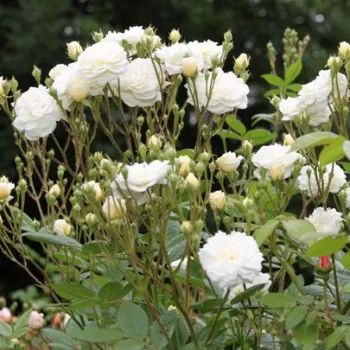
Vigorous climbing habit reaching around 240–380 cm high with a 120–220 cm spread, producing dense, mid-green, glossy foliage on relatively sparsely thorned stems suitable for training. |
| Flower morphology |
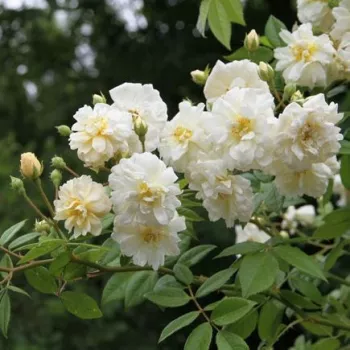
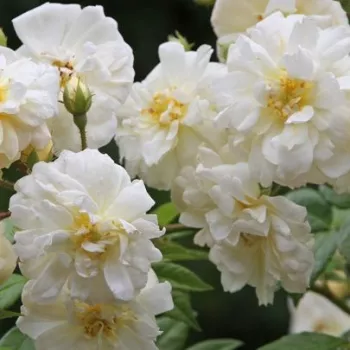
Semi-double, cupped flowers of medium size (approximately 1.5–2.75 in), carried in clusters, with 13–25 petals and a reliable repeat-flowering habit that includes a notably generous second flush. |
| Colour data and phenology |
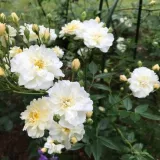
Pale creamy-yellow blooms with a richer lemon centre; buds open cream with lemon tones, then soften to buttery yellow, finally fading towards silky white petal edges before dropping cleanly. |
| Fragrance and aroma |
Strongly scented rose with a fresh, citrus-style aroma that complements the lemon-yellow colouring, adding a bright, uplifting character to seating areas, paths and other frequently used garden spaces. |
| Hip characteristics |
Forms moderate quantities of ellipsoid hips, approximately 9–15 mm across, ripening to an orange-red shade (RHS 33A), contributing subtle late-season interest once the main flushes have finished. |
| Resistance and winter hardiness |
Hardy to about −21 to −18 °C (RHS H7, Swedish zone 3, USDA 6b); disease resistance is modest, with susceptibility to powdery mildew and rust, and moderate vulnerability to black spot. |
| Horticultural recommendations |
Best on arches, pergolas, posts, fences and walls; allow around 165–300 cm between plants, give good air circulation, and maintain regular health checks and protection where disease pressure is high. |
Lemon Rambler Climbing rose SCH8056 brings long-season lemon-yellow colour, vertical structure and strong fragrance in an enduring own-root form, making it a sound choice if you enjoy relaxed coastal charm with dependable performance.