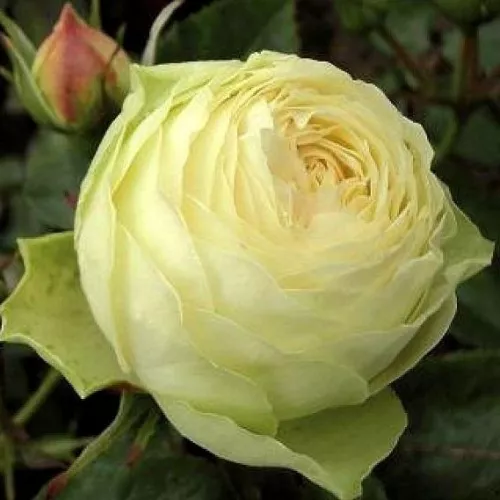
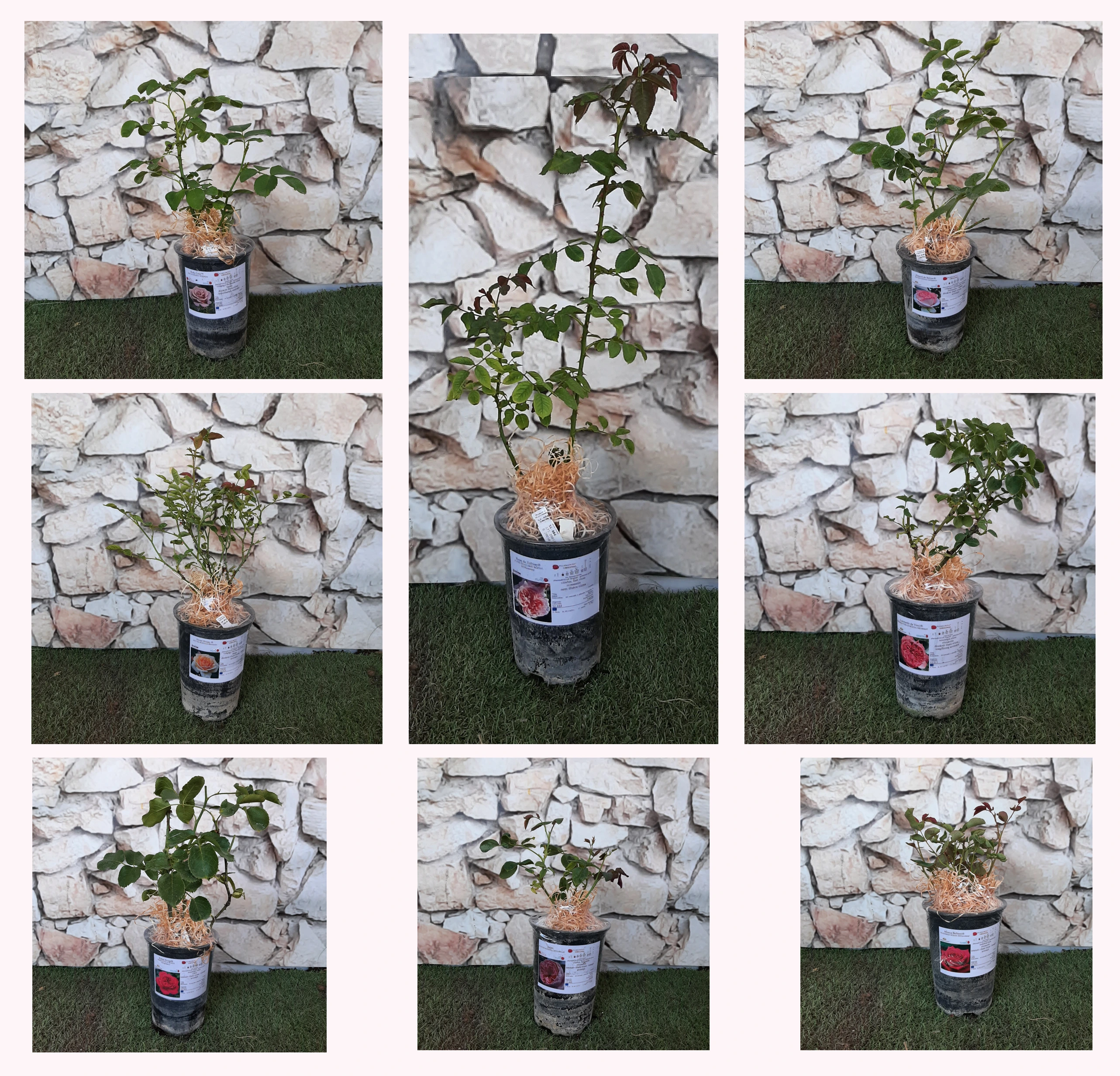
Tatton – orange bedding floribunda rose – Fryer
Bring a touch of coastal sunlight to your garden with Tatton, a compact floribunda bred in the UK that thrives in typical British changeable weather, offering steady summer colour even where breezes and showers meet the shore in a gently sheltered, well-drained corner. Its dense, dark green foliage gives a strong structure to small family gardens and shingle-style beds, while clusters of richly scented burnt-orange blooms add instant impact in beds or large containers. This own-root rose is grown for long-term resilience, so if a hard winter or an accidental pruning mishap knocks it back, it can regrow from its own base, preserving its character year after year. In a roomy 40–50 litre pot or a snug front-garden border, Tatton offers generous repeat flowering through the season, with vivid buds opening to warm mandarin-orange and then softening to peachy salmon tones that echo sunset light on wet shingle. Over time it settles in reliably – first focusing on rooting, then building bushy top growth and finally, by about the third year, maturing into its full presence as a sturdy, fragrant feature for relaxed, low-fuss coastal-inspired spaces.
Usage options
| Target area |
Reasoning |
| Small coastal front garden bed |
Tatton’s bushy, medium-height habit forms a neat, colourful mound that fits easily into limited spaces near the house, giving a soft wind-filtering effect without becoming overbearing. Its steady summer flowering provides a reliable focal point for coastal-style entries – ideal for beginners. |
| Large container on a sunny veranda (40–50 litres) |
In a generous 40–50 litre container, Tatton develops a stable root system that anchors it against blustery days while supplying enough moisture for abundant blooms. The orange flowers and rich fragrance create a holiday feel beside outdoor seating – perfect for busy homeowners. |
| Mixed bed with silver foliage and grasses |
The warm burnt-orange flowers contrast beautifully with sea kale, low yarrow and blue fescues, giving a relaxed coastal palette with minimal effort once established. Its compact spread and upright bushy shape help maintain order in narrow borders – appealing to design-conscious gardeners. |
| Family garden seating area backdrop |
Tatton’s height makes a comfortable backdrop behind benches without blocking light, while repeat blooms and strong fruity scent lend a welcoming atmosphere for tea or evening chats. Its own-root longevity means the planting improves with time, reassuring long-term planners. |
| Cut flowers from a small home cutting patch |
The long-stemmed, double, cup-shaped clusters are excellent for informal indoor arrangements, bringing the same mandarin-orange tones and rich fragrance to the table. Own-root robustness supports consistent regrowth after cutting, which suits creative decorators. |
| Structured bedding in front of evergreen shrubs |
Planted in a rhythm across a bed, Tatton’s dense foliage and uniform size create a tidy low layer in front of darker shrubs, giving clear structure across seasons. As its own-root base matures, it holds its line with less replanting, which benefits time-pressed gardeners. |
| Sheltered, sunny courtyard corner |
In a warm, protected nook with good drainage, Tatton offers a long flowering season and concentrated scent where you sit or pass close by, turning a small space into a richly coloured retreat. Its moderate height avoids crowding tight areas, suiting urban patio owners. |
| Informal, climate-conscious cottage-style border |
Tatton sits comfortably among drought-tolerant perennials, and with thoughtful watering it copes well through warmer spells while rewarding you with repeat flowers and fragrance; this makes it a quietly climate-aware choice for evolving British summers – reassuring for eco-minded gardeners. |
Styling ideas
- Harbour-porch accent – Place Tatton in a 40–50 litre terracotta pot by a front door with sea kale and dwarf silvermound nearby for a salty-breeze mood – ideal for coastal veranda owners.
- Sunset ribbon border – Line a narrow bed with Tatton and low yarrow, letting the orange blooms echo evening light while grasses soften the edges – suited to family gardens wanting easy structure.
- Tea-terrace duo – Flank a small seating area with two large containers of Tatton underplanted with trailing thyme, so fragrance and colour gather where you relax – perfect for busy urban patio users.
- Shingle-court mix – Combine Tatton with blue Festuca and low baby’s-breath in a gravelled bed to evoke a relaxed beach-garden feel with minimal fuss – great for low-maintenance style seekers.
- Compact cutting bay – Group several Tatton plants in a sunny corner for regular cutting, pairing with airy Gypsophila for simple home bouquets – ideal for beginners who enjoy arranging flowers.
Technical cultivar profile
| Parameter |
Data |
| Name and registration |
Floribunda bed rose, registered as FRYentice, marketed as Tatton – National Trust Inspired Collection – FRYentice; ARS exhibition name Tatton, selected for garden and cut-flower use. |
| Origin and breeding |
Bred by Gareth Fryer at Fryer’s Nurseries Ltd. in the United Kingdom, around 1999, with parentage unrecorded; introduced commercially in 2000 by Fryer’s Roses. |
| Growth and structural characteristics |
Bushy shrub reaching about 85–115 cm in height and 70–95 cm spread, with dense, slightly glossy dark green foliage and moderate prickliness; suited to beds, edging and feature containers. |
| Flower morphology |
Double, cup-shaped blooms, typically 26–39 petals, produced in clusters on branching stems; large flower size and remontant habit give an initial flush followed by plentiful repeat flowering. |
| Colour data and phenology |
Deep burnt-orange base tone with a subtle brownish tint; buds dark orange-red, opening to vivid mandarin-orange, then fading through rich orange to salmon-orange with pale peach-toned edges. |
| Fragrance and aroma |
Strongly scented floribunda with a pronounced, richly fruity fragrance character; best appreciated near seating areas, paths or containers where the flowers can be enjoyed at close range. |
| Hip characteristics |
Occasionally bears small spherical hips, about 8–12 mm in diameter, coloured orange-red; hips are incidental to display and usually secondary to repeated flowering in typical garden use. |
| Resistance and winter hardiness |
Hardy to approximately −21 to −18 °C (RHS H7, USDA 6b, Swedish zone 3); requires regular preventive care as it is very susceptible to powdery mildew, black spot and rust in damp seasons. |
| Horticultural recommendations |
Prefers a sunny, well-drained position; space 50–55 cm for hedging or bedding, 90 cm as a specimen; in high-disease areas allow good air flow and consider protective sprays for reliable performance. |
Tatton National Trust Inspired Collection FRYentice offers richly fragrant orange blooms, a compact structural habit and the durable, regenerating reliability of an own-root rose; an attractive choice if you value lasting colour with considered care.