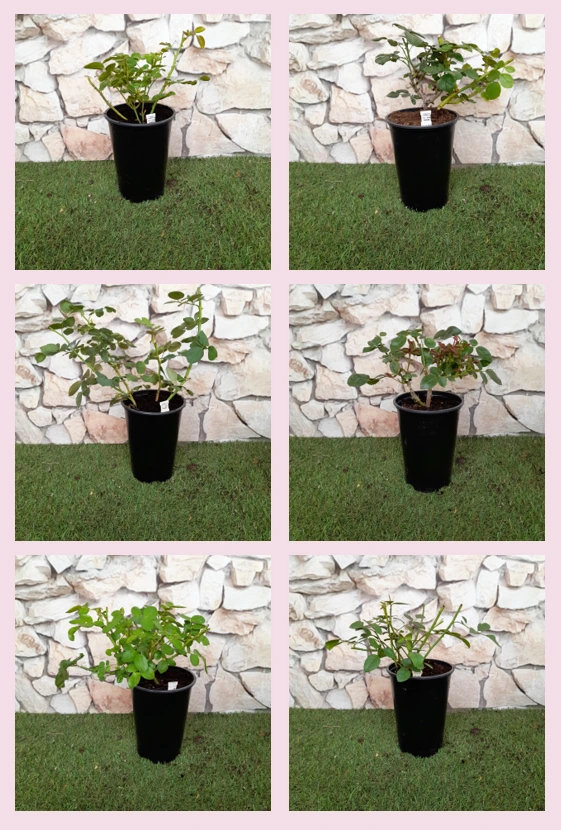
Leonard Dudley Braithwaite – crimson-red English rose – Austin
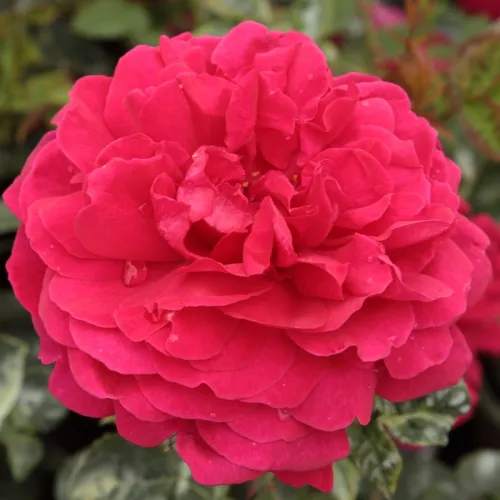
Salty breezes, sun on shingle and a sheltered cup of tea after a walk along the shore – this is the mood that Leonard Dudley Braithwaite brings into a small coastal garden or veranda. Its richly petalled, velvety crimson blooms flower in generous flushes from early summer into autumn, with a very strong, lingering scent that carries beautifully on a breeze. As an own‑root shrub, it establishes gradually yet securely, offering dependable structure and ornamental value over many years with minimal fuss. In typical British conditions it copes well with blustery, rain‑laden days and needs only sensible watering and good drainage to thrive. Planted in a 40–50 litre container or a well‑prepared bed, you can expect roots to settle in the first year, strong new shoots in the second, and a full, romantic effect by the third – a quietly reliable choice for busy coastal garden owners.
Usage options
| Target area |
Reasoning |
| Compact coastal veranda container |
In a 40–50 litre pot this bushy, medium‑tall shrub forms a dense, wind‑filtering screen with richly scented crimson rosettes at eye level, perfect beside a chair or bistro set on a salt‑kissed balcony or small veranda for the coastal-style beginner. |
| Small family flower bed near seating |
Planted as a focal shrub by a bench or terrace, its repeat-flowering habit and very strong fragrance create a long-season backdrop for everyday family use, with only moderate pruning and deadheading needed for homeowners who enjoy relaxed, low-effort colour. |
| Romantic mixed border in clay-based soil |
With its dense, dark foliage and saturated crimson blooms, it anchors mixed plantings of sea kale, grasses and perennials, coping well with blustery, rain‑laden days as long as the soil is improved for drainage, appealing to gardeners refining heavier coastal plots. |
| Lightly shaded side path or north-east corner |
This variety tolerates partial shade, so it keeps flowering and holding its colour in those cooler, lightly shaded sections along a side path or house wall where other roses may underperform, suiting urban and village gardeners working around existing buildings. |
| Seasonal cut flowers from the home garden |
The large, very full rosette blooms with firm stems and rich colour lend themselves to short-stemmed jugs and vases indoors, allowing you to bring the scent and atmosphere of a coastal garden tea into the house, ideal for home decorators who enjoy simple cutting. |
| Low, fragrant windbreak behind shingle |
Used as a loose, shoulder-height barrier behind a shingle strip, its bushy habit and medium height form a gently protective screen that tempers breezes while providing long-flowering interest, suiting those shaping sheltered spots without high fencing. |
| Own-root long-term specimen shrub |
As an own-root plant it ages steadily and evenly, without the risk of graft suckers, rebuilding from its base after hard winters or pruning and maintaining its character for many seasons, reassuring buyers who want a long-lived, dependable garden feature. |
| Informal, richly coloured hedge |
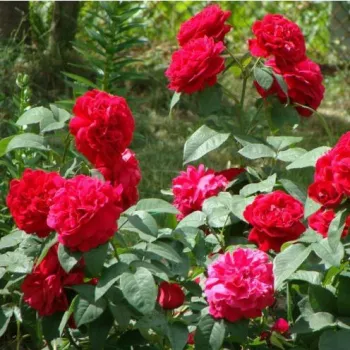
At 80–90 cm spacing, it forms a softly billowing hedge with overlapping crimson clusters and discreet dark foliage, especially effective along paths or driveways where regular deadheading is straightforward, well suited to families wanting structure without formality. |
Styling ideas
- CORNISH VERANDA – one shrub in a 50 litre tub with sea kale and Festuca around the base for a soft, dune-like feel – for coastal-style lovers wanting easy, seaside romance.
- RASPBERRY BORDER – repeat along a mixed border with pale Coreopsis and silver grasses to set off the deep crimson blooms – for hobby gardeners building a relaxed, colourful edge.
- TEA-CORNER FOCUS – place a single plant near outdoor seating where the fragrance can drift over morning coffee – for busy homeowners seeking simple daily pleasure.
- COASTAL HEDGELET – create a loose, chest-high line behind shingle or gravel, pairing with low Lavandula for contrast – for families who want soft separation without tall fencing.
- EVENING CUTTING PATCH – group two or three plants in a sunny spot for regular fragrant stems for indoor jugs – for beginners who enjoy gathering flowers after work.
Technical cultivar profile
| Parameter |
Data |
| Name and registration |
English Rose shrub from the Romantic rose group; registered as AUScrim, marketed as Leonard Dudley Braithwaite English Rose AUScrim, classified as a bush rose and suitable for exhibition. |
| Origin and breeding |
Bred by David C. H. Austin in the UK in 1988 from ‘Mary Rose’ × ‘The Squire’; registered 1993 and introduced after 1993 by David Austin Roses Ltd., Albrighton, United Kingdom. |
| Awards and recognition |
Holds the RHS Award of Garden Merit, first granted in 1994 and reconfirmed in 2012; American Rose Society garden rating 7.9, underlining reliable ornamental and garden performance. |
| Growth and structural characteristics |
Bushy, densely foliated shrub 115–160 cm high and 100–155 cm wide, with dark green, slightly glossy leaves and dense prickling; spent blooms persist and usually require manual deadheading to stay tidy. |
| Flower morphology |
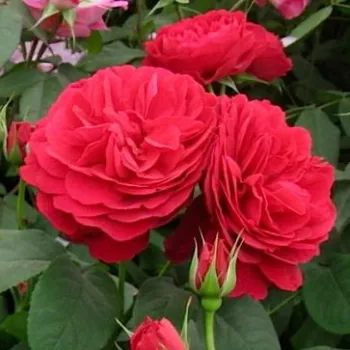
Large, cluster-borne rosette blooms, very full with more than forty petals; repeat-flowering with a particularly abundant second flush, providing an extended season of display in suitable conditions. |
| Colour data and phenology |
Deep crimson-red with a purple tinge, velvety in tone; buds dark maroon, opening to rich near-black bases, lightening towards raspberry red, with colour holding well except for slight magenta notes in strong heat. |
| Fragrance and aroma |
Very strongly scented variety with a long-lasting perfume that carries well around seating; detailed fragrance character not fully documented but noted consistently as intense and persistent. |
| Hip characteristics |
Hip set generally low because of very double flowers; when present, produces small, bottle-shaped red hips about 6–9 mm in diameter, adding occasional autumn interest without heavy seeding. |
| Resistance and winter hardiness |
Hardy to approximately −26 to −23 °C (RHS H7, Swedish zone 4, USDA 5b); black spot resistant, with medium tolerance to powdery mildew and rust, and moderate heat and drought tolerance needing regular watering. |
| Horticultural recommendations |
Best at 80–150 cm spacing depending on use; prefers well-drained soil and regular moisture; requires occasional pest control and deadheading; suitable for beds, mixed borders, hedging and cutting, with some spring frost protection. |
Leonard Dudley Braithwaite offers richly scented crimson flowers, repeat blooming and long-term stability from its own-root form, making it a thoughtful choice for those planning a lasting, easy-care coastal garden.