LEONARDO DA VINCI® – pink nostalgia rose - Meilland
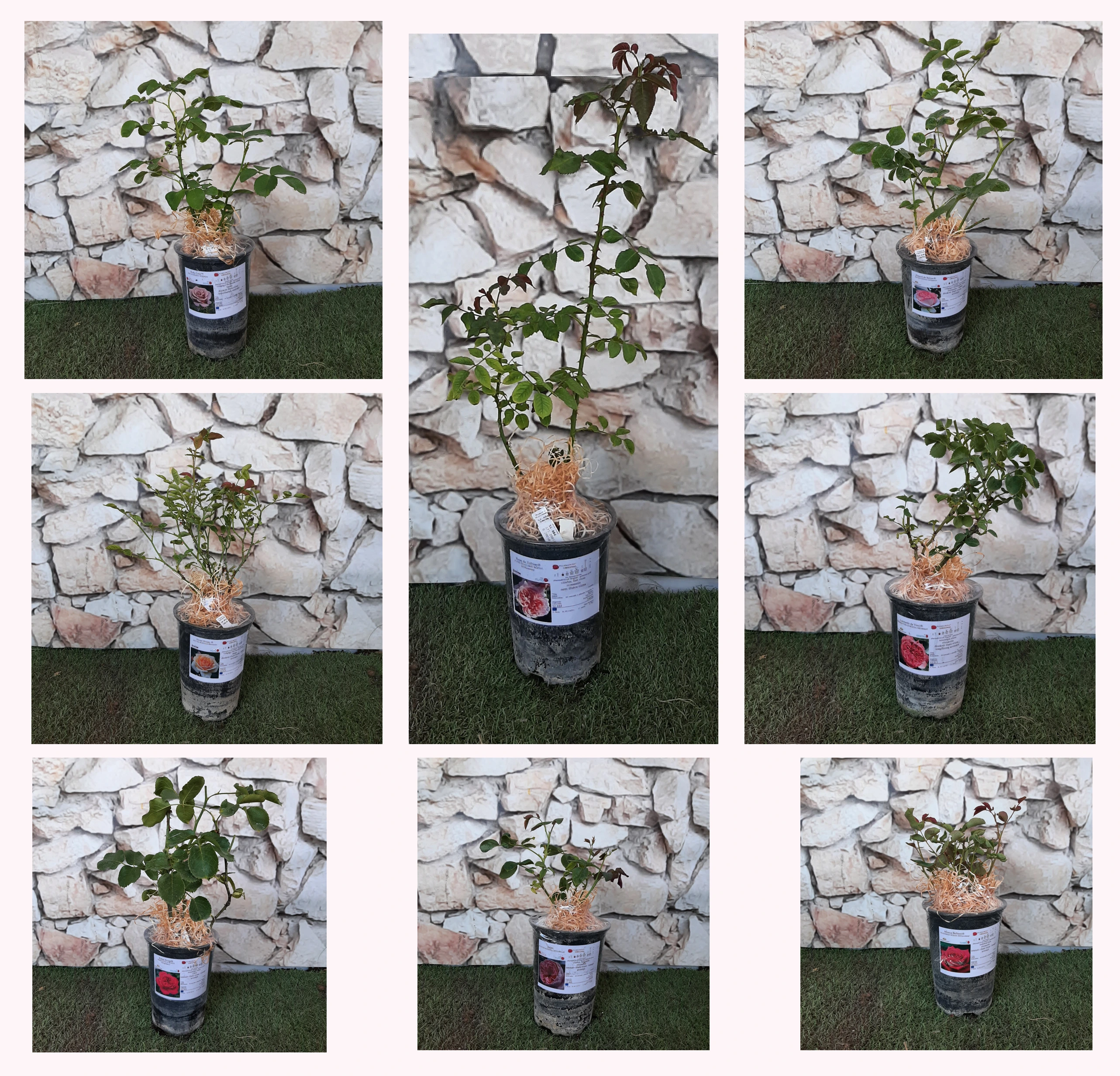
Imagine coming home from the beach to sip tea in the lee of a hedge, the air bright with petals and the sense of sun-warmed stone. LEONARDO DA VINCI® forms a naturally bushy screen that breaks salty breezes and shrugs off typical coastal weather, ideal for small Cornish and Devon gardens where space is precious. Its compact, upright growth is easy to shape into a flowering hedge or low border, while the own‑root habit builds a long-lived framework that matures steadily – roots in year one, strong shoots in year two, full garden presence by year three. In a generous 40–50 litre container on a veranda or terrace, it brings reliable pink rosettes with minimal fuss.
Usage options
| Target area |
Reasoning |
| Coastal veranda in large containers |
Performs reliably in sizeable 40–50 litre pots, where its compact, bushy habit stays balanced in strong light and wind, bringing structured colour to coastal seating areas with relatively little day‑to‑day care for busy veranda owners and beginners. |
| Low, family-friendly flowering hedge |
Dense, glossy foliage and upright, branching growth create a neat, medium-height hedge that helps soften wind while marking boundaries, giving long-lasting structure and privacy without complex pruning for time-poor homeowners. |
| Small mixed border near a seating area |
Medium-tall, compact plants fit easily into modest borders, providing layers of deep pink rosettes at eye level, so even a short path or patio edge feels abundant and romantic for relaxed weekend gardeners. |
| Romantic “girly” coastal shingle planting |
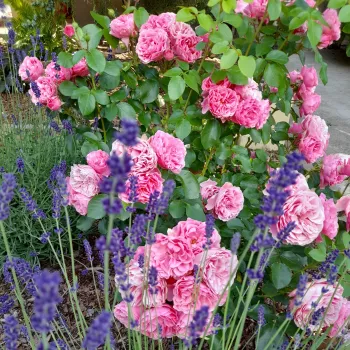
Thickly petalled, nostalgic blooms hold their colour well in bright sun, pairing beautifully with sea kale, Festuca and lavender to echo a soft, seaside palette and create a playful, feminine corner for coastal-style lovers. |
| Wind-aware front garden by the pavement |
Sturdy, well-branched bushes root firmly and cope with exposed sites, giving a stable flowering presence that helps filter breezes typical of open front gardens in breezy streets for salt-tolerant garden owners. |
| Long-season colour focus near the house |
Clusters of very double flowers bloom in generous flushes with a strong repeat, so entrances, patios and paths stay colourful over a long season with only light deadheading needed for everyday rose enjoyers. |
| Low-maintenance, long-lived structure plant |
Own-root plants gradually develop a durable framework that recovers well after tougher winters or pruning, keeping their ornamental value for many seasons with modest intervention for long-term-minded gardeners. |
| Clay-tolerant bed with managed drainage |
Once established, it anchors well in heavier soils and responds reliably where drainage is improved and watering is thoughtful, suiting many typical UK plots with heavier ground for practical family garden owners. |
Styling ideas
- Seaside-Veranda – One or two LEONARDO DA VINCI® in 50 litre tubs with sea kale and blue Festuca, softening salt-tinged breezes – ideal for coastal balcony and veranda owners.
- Romantic-Hedge – A short run of bushes at 55 cm spacing along a path, underplanted with lady’s mantle to catch fallen petals – perfect for families wanting gentle summer privacy.
- Pastel-Border – Combine with lavender and low grasses in a small front border, letting the deep pink blooms provide the focal note – good for busy homeowners who prefer simple upkeep.
- Clay-Corner – Plant on a slight mound with added grit in heavier soil, then frame with rosemary and sedum to extend interest – suited to UK gardens with less-than-perfect drainage.
- Tea-Nook – Position a single specimen by a bench, with pale gravel and a few shells at the base to echo the shore – delightful for those who like a calm, nostalgic seating spot.
Technical cultivar profile
| Parameter |
Data |
| Name and registration |
Leonardo da Vinci® Romantica® (MEIdeauri), exhibition floribunda nostalgia rose, ARS exhibition name ‘Leonardo da Vinci’; part of the Romantica romantic rose group for garden and show use. |
| Origin and breeding |
Bred by Alain Meilland, Meilland International, France; cross: ‘Sommerwind’ × (‘Milrose’ × ‘Rosamunde’); bred 1993, registered 1993, introduced 1994 by Meilland International. |
| Awards and recognition |
Gold medal Monza 1993, IGA award Stuttgart 1993, Belfast commendation 1996, Gold medal The Hague 1997, Netherlands Top Rosen award 1997, confirming strong ornamental performance. |
| Growth and structural characteristics |
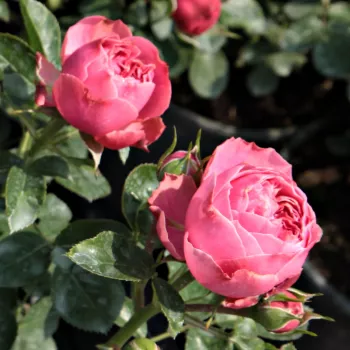
Bushy, compact floribunda shrub, around 110–170 cm tall and 70–120 cm wide, with dense, dark green glossy foliage and moderate thorns; forms a full, well-branched, upright garden presence. |
| Flower morphology |
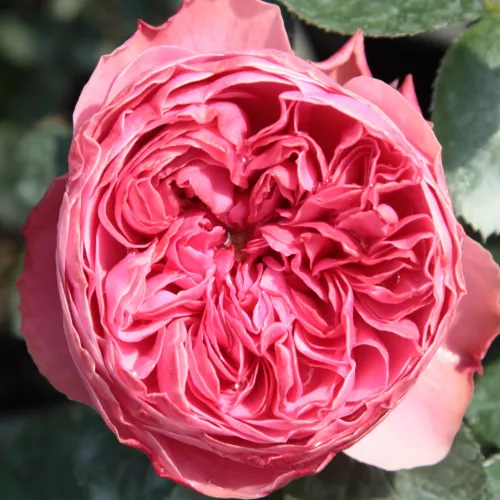
Large, very double rosette blooms, usually in clusters, with more than 40 petals; repeat-flowering with a notably abundant second flush, providing a generous display across the main season. |
| Colour data and phenology |
Deep, warm pink flowers (RHS 62C outer, 61C inner) with pastel-tinged edges; colour is stable, barely fading in strong sunlight, giving a consistently vivid effect from bud to full bloom. |
| Fragrance and aroma |
Primarily an ornamental variety with heavily double flowers; fragrance is very weak and barely perceptible, while dense petal formation restricts pollinator access to the central stamens. |
| Hip characteristics |
Occasional small spherical hips, around 6–10 mm, orange-red and of modest ornamental value in late season; not a heavy fruiting variety and mainly grown for its floral display. |
| Resistance and winter hardiness |
Hardy to about −26 to −23 °C (RHS H7, USDA 5b, Swedish zone 4); moderate disease resistance to black spot, powdery mildew and rust; needs routine care in humid or high-pressure seasons. |
| Horticultural recommendations |
Best at 55–100 cm spacing, 2.5–2.9 plants/m² for mass or hedge use; tolerates partial shade, needs irrigation in drought and basic deadheading; suited for borders, containers, hedging and cutting. |
LEONARDO DA VINCI® offers compact structure, long-season colour and dependable coastal performance in an own-root form that matures into a durable garden feature; a thoughtful choice if you value beauty with straightforward care.