LÉONIE LAMESCH – orange-yellow flower-bed polyantha rose - Lambert
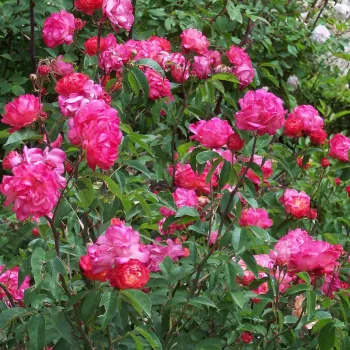
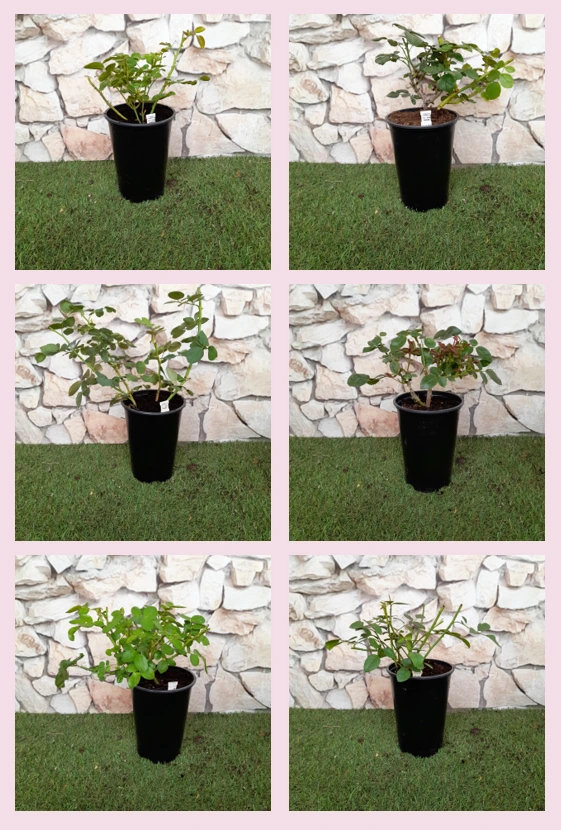
After a day collecting seashells, you can sit with your tea sheltered behind this rose’s bushy, low hedge and enjoy a subtly perfumed breeze: compact habit, remontant flowering, fruity scent and colour-shifting blooms create a lively, seaside feel even in small coastal plots. Its own-root form supports a naturally long-lived, regenerating shrub that knits into the soil, giving reassuring stability and anchoring on exposed, breezy sites while staying surprisingly manageable for busy gardeners. In a large 40–50 litre container or a narrow bed, it settles steadily—roots in the first year, fuller shoots in the second, then its full ornamental impact by the third—keeping the overall care effortless yet rewarding.
Usage options
| Target area |
Reasoning |
| Coastal veranda pots (40–50 litres or larger) |
Its naturally compact, bushy framework suits generous containers on a breezy veranda, giving structure without dominating the space, and remaining easy to prune and water on a busy week for beginners. |
| Small front-garden beds by the driveway |
Reliable remontant flowering keeps colour returning from early summer into autumn, so even a narrow border by the drive stays cheerful between school runs and commuting for busy homeowners. |
| Sunny family seating area as a low windbreak |
The dense yet moderate-height shrub line softens gusts and filters salty air around a patio, providing calmer, more comfortable corners in exposed UK gardens for coastal families. |
| Informal “girly” shingle strip with sea kale and grasses |
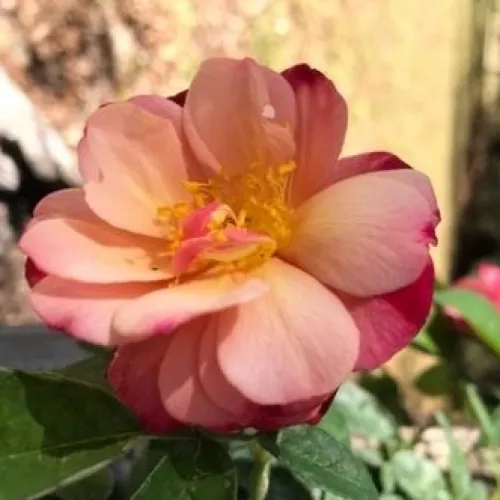
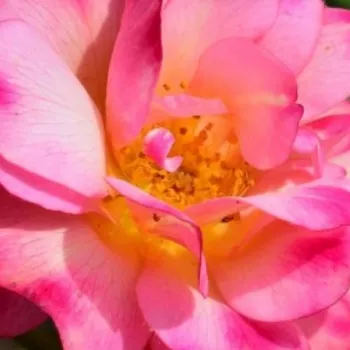
Its playful colour-shifting blooms move from copper-orange to creamy tones, blending beautifully with sea kale, feather reed grass and silvery shingle for coastal-style lovers. |
| Long-lived low hedge along a path or boundary |
As an own-root shrub it matures into a durable, regenerating line of plants, keeping shape and flowering across many seasons without complex replacement programmes for long-term planners. |
| Mixed border with lavenders and ornamental grasses |
The pleasantly spicy, fruity fragrance threads through companions like Lavandula and Festuca, adding a sensory layer near paths or terraces best appreciated by scent-focused gardeners. |
| Clay-improved beds with good drainage in family gardens |
Once established, its manageable size and moderate maintenance needs sit well with UK clay soils improved for drainage, giving steady performance without constant intervention for practical gardeners. |
| Pollinator-accent corner near play areas |
Semi-double clusters offer moderately accessible centres, adding some pollinator interest while remaining primarily ornamental and tidy around children’s spaces for family gardeners. |
Styling ideas
- Seaside-Patio Border – line a sunny, sheltered terrace edge with Léonie Lamesch, sea kale and low Festuca for a gentle windbreak and soft movement – ideal for coastal veranda owners.
- Girly-Shingle Ribbon – weave plants through pale gravel with feverfew and dwarf lavender, letting the colour-shifting blooms echo beach sunsets – perfect for romantic, low-fuss garden makers.
- Vintage-Tea Corner – place a pair in large tubs by a bistro set, backed by feather reed grass, to enjoy fruity fragrance with morning coffee – suited to small-plot balcony and patio users.
- Pathway-Hedge Run – plant a loose, low hedge along a main garden path, underplanted with catmint for a soft, cottage look – good for families wanting gentle structure without harsh fencing.
- Late-Season Glow – mix with Rudbeckia and ornamental grasses so the remontant orange-yellow clusters carry colour into autumn – appealing to beginners chasing long, easy seasonal interest.
Technical cultivar profile
| Parameter |
Data |
| Name and registration |
Shrub and polyantha bed rose marketed as Léonie Lamesch, a polyantha bedding rose within the bedding rose collection; unregistered variety with verified cultivar authenticity for garden use. |
| Origin and breeding |
Bred by Peter Lambert, Lambert & Söhne, Germany, introduced in 1899 from cross ‘Aglaia’ × (‘Mignonette’ × ‘Shirley Hibberd’); a classic Lambert shrub-polyantha with historical character. |
| Growth and structural characteristics |
Compact, bushy, upright shrub reaching about 80–120 cm high and 100–140 cm wide, moderately dense mid-green, slightly glossy foliage, sparsely thorned shoots and medium self-cleaning behaviour overall. |
| Flower morphology |
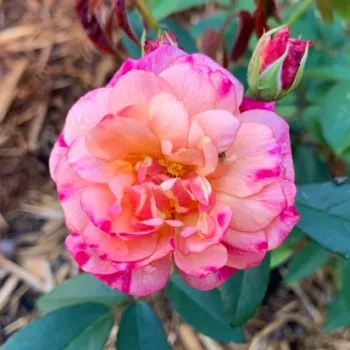
Semi-double, cup-shaped flowers with approximately 13–25 petals, small blooms in cluster-flowered inflorescences, repeating freely with a notably abundant second flush that extends garden display. |
| Colour data and phenology |
Light copper-orange base, golden-yellow centre and fine carmine-red edge; colour fades to creamy yellow with a purplish-red veil, giving changing tones from bud to aging bloom across the season. |
| Fragrance and aroma |
Medium-strength scent with a pleasantly spicy, fruity character, clearly noticeable at close range around seating areas; semi-double blooms give moderate ornamental interest for evening fragrance enjoyment. |
| Hip characteristics |
Rose-hip production is usually sparse; when present, small spherical hips 5–8 mm across appear in orange-red tones, adding occasional fine-textured seasonal detail in late summer to autumn. |
| Resistance and winter hardiness |
Hardy to about −21 to −18 °C (RHS H7, USDA 6b), with moderate tolerance to heat and drought and moderate resistance to powdery mildew, black spot and rust under typical UK garden conditions. |
| Horticultural recommendations |
Best in sunny beds, borders, hedges or large containers; medium maintenance with occasional pest and disease checks, planted at 100–180 cm spacing depending on hedge, border mass or specimen use. |
LÉONIE LAMESCH offers compact structure, repeat flowering and a pleasantly fruity fragrance in an own-root form that matures into a stable, long-lived feature, well worth considering for relaxed coastal-style family gardens.