LOLITA – apricot hybrid tea rose - Kordes
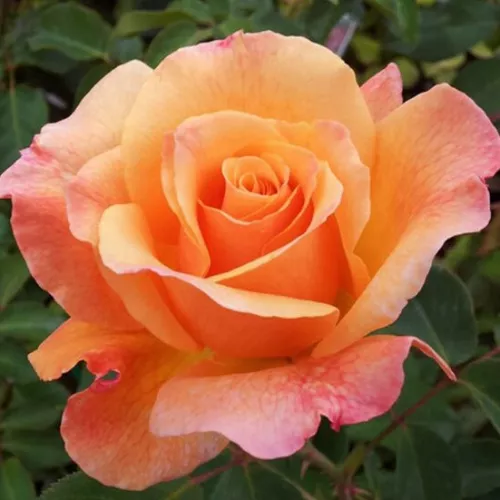
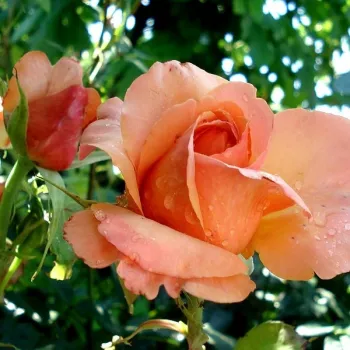
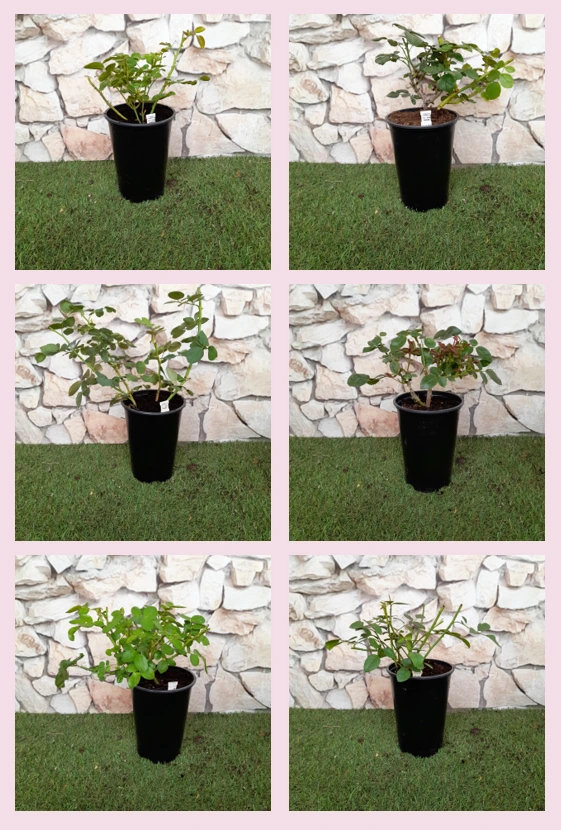
Imagine leaning back with afternoon tea, sheltered behind the LOLITA rose as its tall, upright stems filter a light breeze from the sea, offering a calm corner that feels naturally protected yet still open to the coastal sky in a way that gently moderates strong salt‑laden winds. Its high‑centred, apricot blooms unfold in succession, bringing a classic hybrid tea elegance to small family gardens and coastal verandas where space is precious but you still want a true cut‑flower look straight from your own borders. As an own‑root plant, it settles in steadily and is capable of long‑term renewal, building a strong framework in the first year, more confident flowering in the second, and a full, satisfying display by the third, so you can plan the garden’s future with quiet confidence.
Usage options
| Target area |
Reasoning |
| Coastal family garden windbreak rose line |
The tall, upright habit and dense dark green foliage form a light vertical screen that softens breezes without feeling heavy, ideal along paths or fence lines in exposed streets where it helps moderate strong, salty winds for young families and relaxed beginners. |
| Statement container on a sunny veranda |
Placed in a 40–50 litre container, this rose develops a stable root system and enough height to frame seating areas, giving you classic hybrid tea blooms at eye level with minimal fuss on a bright veranda, perfect for coastal-style lovers and busy homeowners. |
| Cutting patch for home bouquets |
The long, straight stems and high‑centred, exhibition-type flowers are made for vases; planting a small group gives a reliable supply of apricot blooms from summer onwards for informal bouquets, appealing to hobby florists and creative garden owners. |
| Feature specimen in a small to medium front garden |
Used as a solitary specimen with space around it, the plant’s mature height and dense foliage create a strong focal point near gateways or drives, adding structure and year‑on‑year ornamental value that rewards patient but time‑poor garden beginners. |
| Mixed border with perennials and grasses |
The warm apricot tones blend beautifully with lavender, lady’s mantle and ornamental grasses, giving a soft, shingle‑garden feel while the repeat flowering keeps colour going between perennial peaks, ideal for informal borders tended by relaxed gardeners. |
| Long-season family seating area backdrop |
Positioned behind a bench or outdoor table, the successive flushes of flowers and medium fragrance add a refined backdrop from early summer into autumn, supporting relaxed evening use of the garden for sociable households and pragmatic owners. |
| Own-root planting for long-term garden structure |
As an own‑root rose, it can regenerate from the base after pruning or weather damage, gradually forming a durable framework that supports consistent flowering over many seasons, suiting those who value longevity and steady results, especially cautious beginners. |
| Sunny border in moisture-managed heavier soils |
Planted in well‑drained but heavier soils with added organic matter, its robust root system anchors firmly and copes with typical British rainfall when drainage is managed sensibly, offering dependable structure and flowers for realistic, climate‑aware garden owners. |
Styling ideas
- Seaside Border Drift – Combine with lavender and blue Festuca to echo shingle and sea tones, letting the apricot blooms glow against cool greys – ideal for coastal-style enthusiasts.
- Veranda Showpiece – Grow in a generous 40–50 litre pot beside a bistro set so the flowers sit at eye level – perfect for small-space homeowners who enjoy tea outdoors.
- Apricot Cutting Row – Plant a short row along a path for easy stem access, adding lady’s mantle at the front to soften the base – suited to hobby florists and bouquet lovers.
- Golden Focus Bed – Use one plant as a centrepiece, circling it with pale perennials and low grasses so its warm tones stand out – good for front gardens that need a clear focal point.
- Family Retreat Screen – Line the back of a seating nook with three plants to filter wind and frame the view with flowers – appealing to families creating a calm outdoor corner.
Technical cultivar profile
| Parameter |
Data |
| Name and registration |
Hybrid tea rose, registered as KORlita (syn. LitaKOR), marketed as LOLITA. Belongs to the hybrid tea group and approved for exhibition use by the American Rose Society. |
| Origin and breeding |
Bred by Reimer Kordes at W. Kordes’ Söhne in Germany before 1972, from Colour Wonder × unknown seedling, and first introduced commercially in 1972 via Roy H. Rumsey in Australia. |
| Awards and recognition |
Holds ADR status from the German General Rose Trials (1973) and received a Certificate of Merit in the New Zealand Rose Trials (1974), attesting to garden and show performance. |
| Growth and structural characteristics |
Strong, upright shrub reaching about 130–170 cm high and 100–140 cm wide, with dense, slightly glossy dark green foliage and moderate prickliness, forming a tall, vertical garden presence. |
| Flower morphology |
Large, double, high‑centred hybrid tea blooms with 26–39 petals, mostly solitary on long stems, classically shaped for cutting and exhibitions, and remontant with a generous second flowering flush. |
| Colour data and phenology |
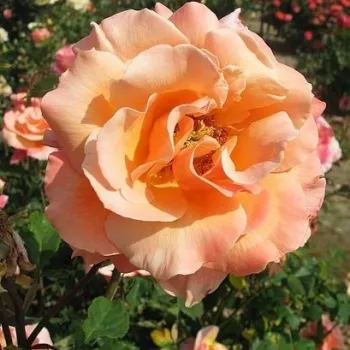
Medium peach‑orange with a golden cast, coded RHS 24B outer and 23A inner; opens radiant peach‑orange, then shifts through golden apricot to a creamy, pastel peach tone as the blooms age. |
| Fragrance and aroma |
Moderate, noticeable scent with a distinct peach character, offering a pleasant, not overpowering fragrance in the garden and in cut stems when used near seating or in indoor arrangements. |
| Hip characteristics |
Hip set tends to be poor because of full, double flowers; where present, hips are ellipsoid, around 12–18 mm in diameter, and colour to an attractive orange‑red later in the season. |
| Resistance and winter hardiness |
Rated H7, reliably hardy to about –21 to –18 °C (USDA 6b). Shows good resistance to powdery mildew and black spot, with moderate susceptibility to rust under conducive conditions. |
| Horticultural recommendations |
Best in full sun with well‑drained soil; allow space for its height. Recommended distances: 120 cm for mass plantings, 110 cm for hedges and 200 cm as a specimen; maintenance level is moderate. |
LOLITA offers tall structure, classic apricot hybrid tea blooms and reliable repeat flowering on a long-lived own-root framework, making it a refined yet manageable choice for your next garden planting decision.