LYDIA® – orange-pink park rose – Kordes
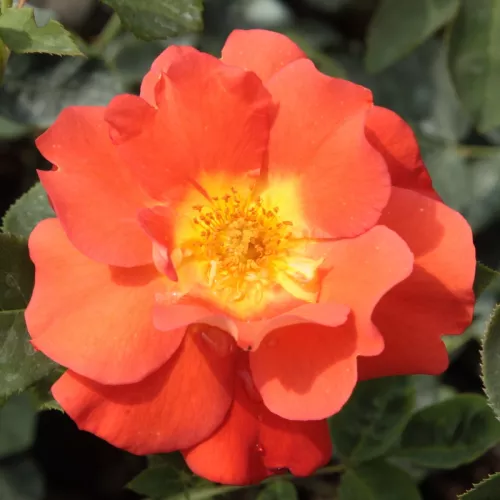
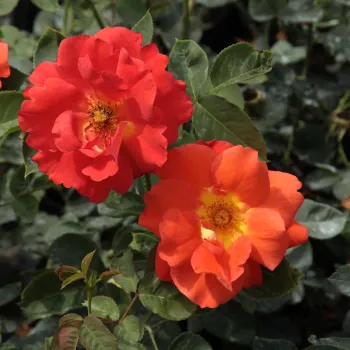
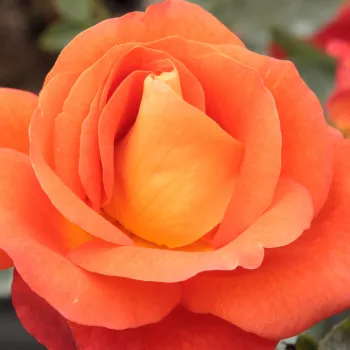
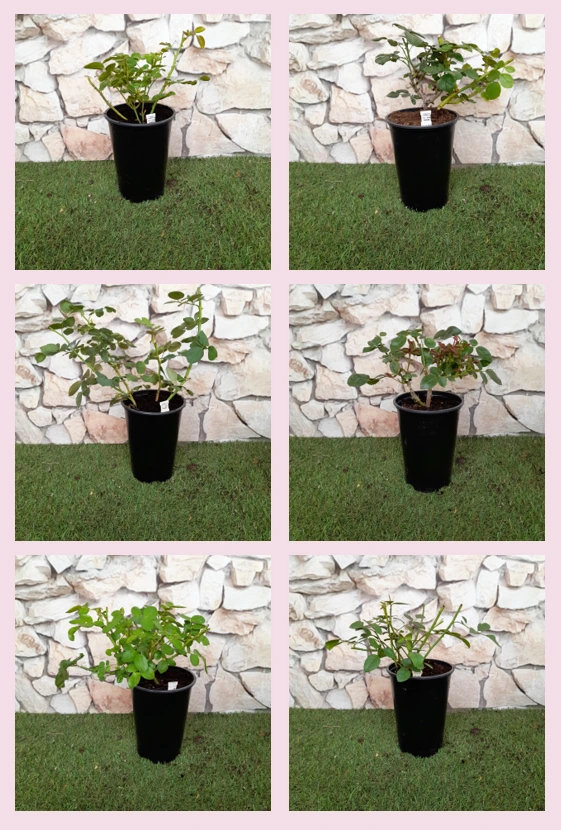
Let Lydia® bring a sense of refreshment to your coastal-inspired garden, echoing sunny afternoons and sea-breezy verandas while coping well with blustery, changeable weather in exposed family plots near the coast and beyond. Its upright, bushy structure and dense dark-green foliage create a softly sheltering backdrop, ideal as a feminine, wind-filtering screen for shingle beds or patios. Clusters of semi-double, orange-pink flowers appear in waves all summer, the good remontancy ensuring colour even when you only have time for the simplest of seasonal tasks. Strong, fruity fragrance and visible stamens invite bees and bumblebees, adding gentle movement and life around your seating area. Because this is an own-root plant, you gain reassuring longevity, steady ornamental value and easy regeneration if winter gales snap a stem. In its first year it concentrates on roots, in the second on shoots, and by the third it settles into its full, generous garden presence with minimal intervention from you.
Usage options
| Target area | Reasoning |
|---|
| Coastal veranda wind-filter screen |
The tall, upright, bushy habit and dense foliage help break wind and create a softer microclimate around seating, while coping reliably with brisk, salty, wind-driven showers typical of British coastal gardens; well suited to coastal-style lovers |
| Shingle or gravel coastal bed |
Lydia® thrives as a structural anchor in light, free-draining beds, with its own-root resilience supporting long-term performance where soil depth is modest and conditions can swing from wet to dry; reassuring for busy garden owners |
| Feature rose in a large patio container |
In a 40–50 litre pot with good drainage, its vertical shape and repeat-flowering clusters deliver a striking, space-efficient display on small terraces, especially where ground planting is limited; ideal for urban veranda owners |
| Informal flowering hedge for front gardens |
Recommended hedge spacing allows stems to knit into a gently screening, flower-laden boundary, offering privacy without feeling heavy, and needing only straightforward, occasional pruning; attractive to family home gardeners |
| Feminine focal point near a seating area |
The warm orange-pink tones that fade to peach and cream, combined with a strong fruity scent, create a romantic, “girly” focal shrub beside a bench or bistro set, encouraging relaxed tea breaks for romantic garden enthusiasts |
| Pollinator-friendly accent in mixed borders |
Semi-double flowers expose accessible stamens, attracting bees while still giving a full, decorative look, so you can enjoy both a tidy shrub and light wildlife value in everyday planting schemes; reassuring for nature-conscious beginners |
| Low-maintenance park-style planting strip |
Good self-cleaning flowers mean less deadheading, while own-root growth gives stability and recovery after harder pruning, suiting simple, repeated planting along drives, paths or communal areas for low-maintenance seekers |
| Seasonal interest with hips in autumn |
After flowering, small red hips add a discreet late-season detail, extending interest without extra care and complementing grasses or sea kale in a coastal palette valued by four-season gardeners |
Styling ideas
- Coastal-nook – Plant Lydia® in a 50-litre pot by a sheltered, south-facing wall with sea-hued cushions and lanterns – for coastal-style lovers wanting colour and scent in tight spaces.
- Shingle-softness – Combine with sea kale, Festuca grasses and pale pebbles to soften a driveway edge while keeping maintenance light – for busy homeowners seeking a breezy, seaside look.
- Sunset-border – Thread Lydia® through a border of lavender and hardy geraniums to echo warm sunset tones and prolong flowering – for beginners building an easy, romantic border.
- Veranda-screen – Use two or three plants in large containers to flank a balcony or terrace rail, filtering wind and framing sea or town views – for urban veranda owners wanting privacy with flowers.
- Family-front – Create an informal front-garden hedge with spaced shrubs underplanted with low grasses, keeping sight lines open but soft – for family gardeners needing friendly, low-fuss structure.
Technical cultivar profile
| Parameter | Data |
|---|
| Name and registration |
Shrub rose marketed as LYDIA® – orange-pink park rose, with registered cultivar name Lydia and ARS exhibition name Lydia, belonging to the Park – shrub rose commercial group. |
| Origin and breeding |
Bred by Reimer Kordes at W. Kordes’ Söhne, Germany, from an unknown seedling × ‘Circus’ (Swim, 1954); introduced and registered in 1973 as a robust shrub for parks and gardens. |
| Awards and recognition |
Bronze medal at the Baden-Baden International Novelty Competition in 1975, reflecting early recognition of its garden performance and ornamental qualities among contemporary shrub roses. |
| Growth and structural characteristics |
Upright, bushy shrub reaching about 140–220 cm in height with a 120–180 cm spread, moderately thorny, and carrying dense, dark green, slightly glossy foliage that forms a full, screening structure. |
| Flower morphology |
Semi-double, goblet to cup-shaped clustered blooms, typically small at 0.5–1.5 inches across with around 13–25 petals, flowering repeatedly with a generous second flush in suitable garden conditions. |
| Colour data and phenology |
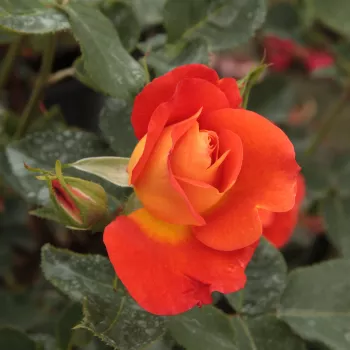
Colour shifts from deep orange-red buds to vibrant salmon-orange, then to warm orange-pink, finally softening through peach to creamy yellow tones; ARS orange blend, RHS 24B outer and 14B inner petal codes. |
| Fragrance and aroma |
Strong, distinct, rich fruity fragrance characteristic of traditional shrub roses, with semi-double blooms that reveal stamens, making scent and nectar accessible to visiting pollinating insects in the garden. |
| Hip characteristics |
Produces moderately abundant, small ellipsoidal hips about 8–12 mm in diameter, coloured red (RHS 44A), adding a modest but attractive decorative element to planting schemes during the later season. |
| Resistance and winter hardiness |
Hardy to approximately −26 to −23 °C (RHS H7, USDA 5b, Swedish zone 4), with moderate resistance to powdery mildew, black spot and rust, performing reliably under average UK garden care. |
| Horticultural recommendations |
Suitable for parks, hedges, specimens, containers and urban green spaces; medium maintenance with occasional pest control, spacing 90–165 cm depending on use and around one plant per square metre in mass plantings. |
LYDIA® offers upright structure, repeat flowering and a strong fruity scent in a resilient own-root form that settles in for years of reliable colour; a thoughtful choice if you value lasting character with modest effort.