MADAME ALFRED CARRIÈRE – white historic noisette rose - Schwartz
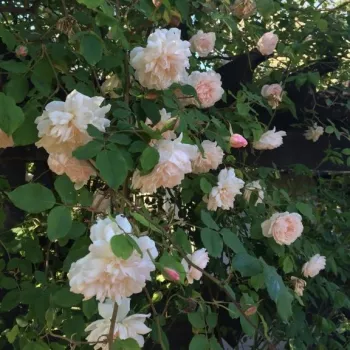
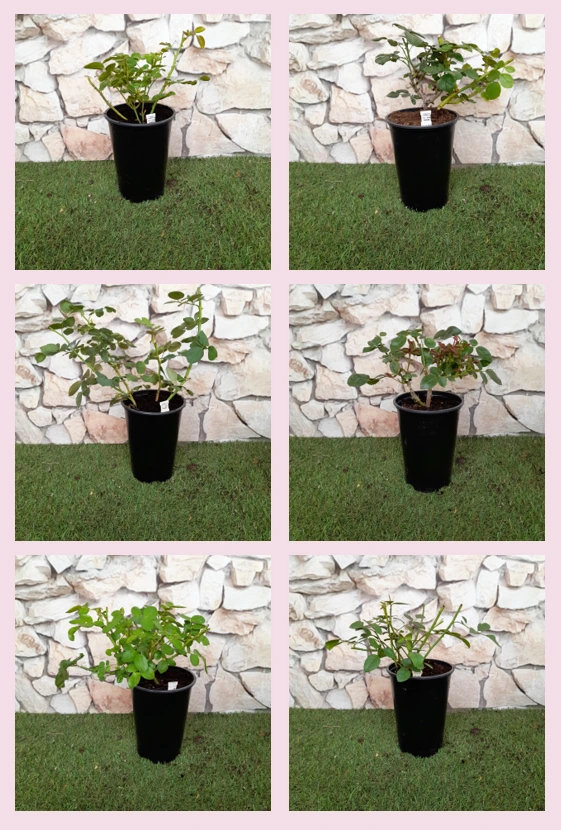
Imagine returning from a windswept Cornish beach to a veranda framed by creamy blooms, their fruity perfume drifting on the air even in shade. Madame Alfred Carrière is a heritage climber that feels at home in exposed, salt-kissed gardens, rooting deeply and holding steady where other plants might struggle in blustery, moisture-laden weather. As an own-root rose it offers reassuring longevity, quietly rebuilding itself after harsh seasons and maintaining its ornamental presence without fuss. Early on its energy goes into a strong underground framework, then into taller, flowered shoots, before settling into full, curtain-like coverage over the following summers. Its naturally vigorous yet slightly thorny canes make training over arches and pergolas straightforward, creating a soft, romantic backdrop for family life outdoors.
Usage options
| Target area | Reasoning |
|---|
| Coastal veranda windbreak |
This rose forms tall, leafy walls that help temper coastal breezes, while still letting light through to seating areas and windows. Its reliable vigour gives confidence on exposed plots, especially where a traditional fence feels too stark for beginners. |
| Shady north- or east-facing wall |
Madame Alfred Carrière is known for flowering well in partial shade, bringing creamy clusters and perfume to aspects where other climbers often disappoint. This makes it an excellent choice for those with limited sunny walls, especially busy-owners. |
| Arbour or archway over a path |
Its long, flexible canes and generous repeat flowering are ideal for clothing arches, creating a soft, romantic tunnel of blooms in small to medium gardens. Once trained, only light pruning is needed each year, suiting time-poor. |
| Low-maintenance heritage feature |
With its historic pedigree and awards, this cultivar provides classic character without demanding expert care. Own-root plants mature steadily into a permanent structure that copes well with British seasons, rewarding patient hobby-gardeners. |
| Family seating area backdrop |
The dense foliage and large, full flowers build a gentle visual screen around patios and play spaces, softening boundaries while still feeling airy. The moderate prickles are manageable, especially when trained up supports away from small children. |
| Large container on sheltered terrace |
In a 40–50 litre or larger container with good drainage, this rose can be trained against railings or a wall, offering height and fragrance where soil is limited. Regular watering and feeding are straightforward tasks for veranda-owners. |
| Resilient structure in exposed gardens |
Once established, its substantial root system helps anchor the plant and cope with irregular rainfall, giving more consistent growth than many grafted climbers. This stability supports long-term layout planning for thoughtful planners. |
| Season-long scented display |
Large, very full flowers appear in generous flushes, then return reliably later in the season, extending interest well beyond a brief June peak. Combined with its sweet, fruity scent, this creates a lasting highlight for romantics. |
Styling ideas
- Sea-side veranda screen – Train along wires above a shingle or gravel seating area and underplant with sea kale and blue Festuca for a coastal feel – for coastal-style lovers seeking privacy with softness.
- Romantic archway – Drape over a metal or wooden arch, weaving canes loosely and pairing with Verbena bonariensis for airy contrast – for those wanting an easy, storybook entrance to the garden.
- Shaded tea corner – Use on a north-facing wall behind a small bistro set, adding pale Allium and silver-foliage pots – for veranda owners who enjoy evening tea in scented calm.
- Historic cottage wall – Combine with Lychnis viscaria 'Alba' and lavender at the base to echo old cottage borders – for lovers of heritage roses who prefer relaxed, traditional planting.
- Family garden backdrop – Let it curtain a pergola beside a lawn, keeping stems tied up and underplanting with low herbs to avoid prickles at hand height – for families wanting beauty with straightforward upkeep.
Technical cultivar profile
| Parameter | Data |
|---|
| Name and registration |
Madame Alfred Carrière, historic Noisette/Tea-Noisette climbing rose; heritage commercial type. Old garden rose exhibition category; unregistered cultivar widely traded under this traditional name. |
| Origin and breeding |
Bred by Joseph Schwartz in Lyon, France, around 1875 and introduced by Veuve Schwartz in 1879. A classic French Noisette rose with unknown parentage, now established in historic rose collections worldwide. |
| Awards and recognition |
National Rose Society Best White Climbing Rose (1908); RHS Award of Garden Merit (1993); World Federation of Rose Societies Old Rose Hall of Fame inductee (2003), confirming sustained global garden value. |
| Growth and structural characteristics |
Very vigorous climbing habit, 5–7 m high with 2–4 m spread, slightly thorny shoots and dense mid‑green, lightly glossy foliage. Suited to walls, arches and pergolas where long canes can be trained. |
| Flower morphology |
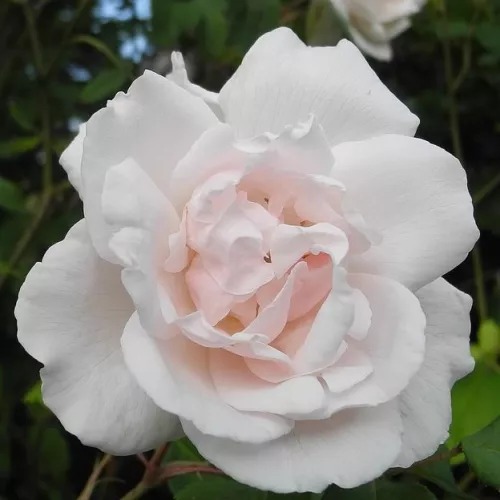
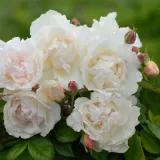
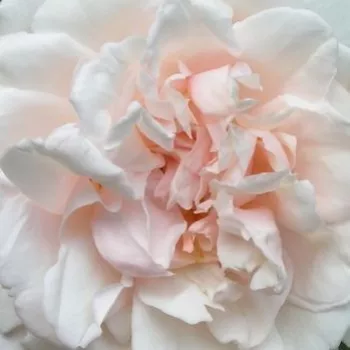
Large, very full, cup-shaped blooms with 40+ petals, borne mainly in clusters. Repeat-flowering with a plentiful second flush after the main display, providing extended ornamental value through the season. |
| Colour data and phenology |
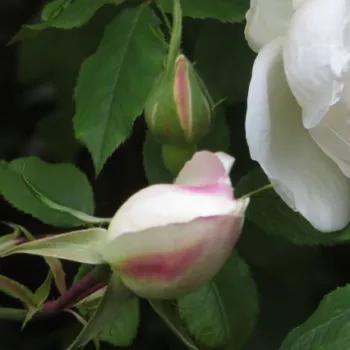
Creamy off-white flowers with soft powder-pink centres; ivory buds veiled with rosy tints. ARS white; RHS 155D outer, 65C inner. Pinkish hues fade in heat to milky white, giving a luminous, refined effect. |
| Fragrance and aroma |
Very strong, sweet, fruity scent, noticeable at a distance in still air. Primarily ornamental due to very double form, with enclosed stamens offering limited value for pollinators compared with simpler-flowered varieties. |
| Hip characteristics |
Produces few hips because of its densely double flowers. When present, hips are bottle-shaped, 15–22 mm in diameter, yellow–orange (RHS 24A), adding modest late-season interest without dominating the display. |
| Resistance and winter hardiness |
Hardy to approximately -21 to -18 °C (RHS H7; Swedish zone 3; USDA 6b). Good heat tolerance with irrigation in drought; medium disease resistance, with notable resistance to black spot and rust, moderate mildew risk. |
| Horticultural recommendations |
Best as wall-trained climber, pergola or arch rose, including partial shade. Space 2.3–3.8 m depending on use; plant at about 0.2 plants/m² in schemes. Maintenance medium, with light pruning and occasional plant protection. |
Madame Alfred Carrière offers vigorous, shade-tolerant height, season-long fragrant flowering and long-lived own-root reliability; consider it if you would like a softly romantic, enduring climber for your garden.