MAGIA NERA™ – dark red hybrid tea rose – COMsor
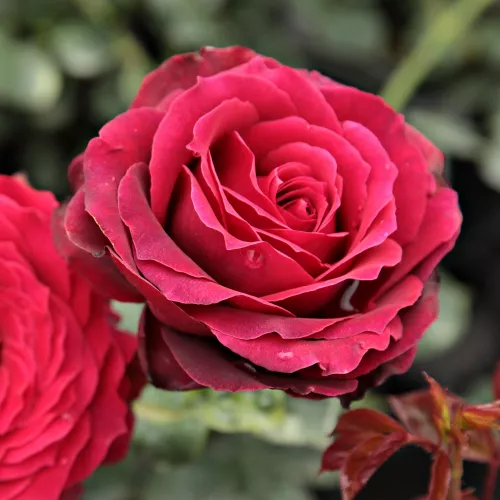
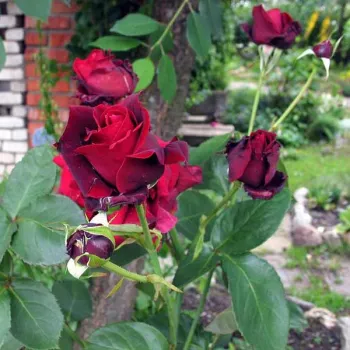
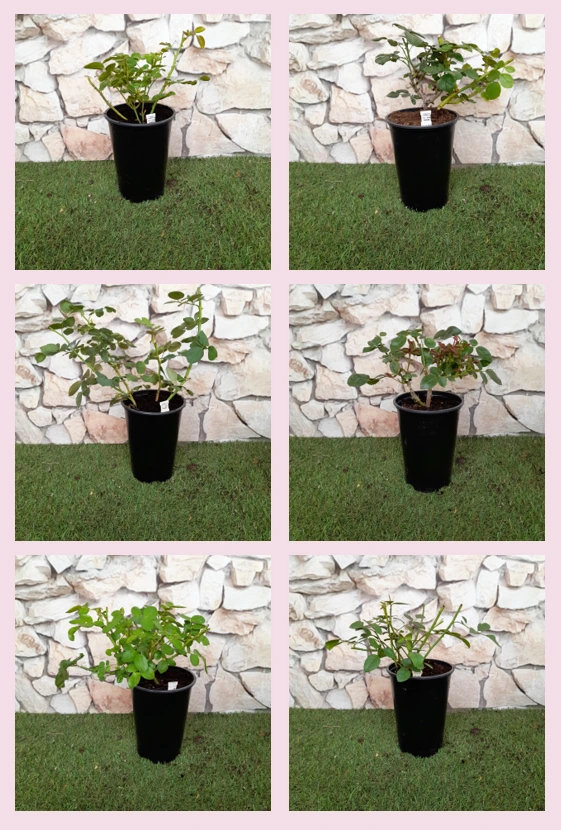
Imagine late-afternoon seaside light glancing off velvety dark-red blooms as you enjoy tea in a sheltered corner, protected from brisk coastal gusts by this bushy, salt-tolerant hybrid tea rose that copes well with frequent wind and rain in exposed gardens. MAGIA NERA™ offers reliably remontant flowering, sending up elegant, high-centred buds on a compact, 80–110 cm framework that suits smaller family plots and coastal verandas. Its dense, glossy foliage complements the almost black-maroon petals, while the strong, classic rose fragrance adds a touch of evening theatre after days spent collecting shells on the shingle. Naturally disease-resistant and with a low maintenance requirement, this own-root, 2-litre plant establishes steadily: roots in year one, stronger shoots in year two, and full ornamental value by year three. In a 40–50 litre container or a well-drained bed, it becomes a long-lived anchor in your planting, with sparse thorns and semi-double blooms that are ideal for cutting. With its stable colour that barely fades in strong sun and its capacity to regenerate from the base, MAGIA NERA™ promises enduring elegance without demanding complicated gardening routines.
Usage options
| Target area |
Reasoning |
| Coastal veranda in large container |
Well suited to a 40–50 litre pot where drainage can be controlled, allowing healthy root development and stable growth in breezy, salty air. Compact height keeps it manageable on balconies and verandas for the busy coastal homeowner. |
| Small front garden focal point |
The upright, bushy habit and intensely dark, velvety blooms give instant street-side impact without taking up much space, and own-root vigour supports a long-lived presence for the space-conscious beginner. |
| Cutting patch for home bouquets |
High-centred, pointed buds on long stems open into classic florist-style flowers, and the strong fragrance makes every stem special, offering reliable repeat flushes for the home cut-flower enthusiast. |
| Low-maintenance family flower bed |
Good disease resistance and sparse thorns make upkeep simpler around pathways and play areas, while the bushy structure fills its allotted space neatly for the time-poor family gardener. |
| Coastal wind-filter hedge segment |
Planted at 50–60 cm spacing, the dense foliage and sturdy stems form a permeable screen that softens salty breezes and frequent showers typical of exposed plots for the weather-aware coastal owner. |
| Mixed perennial border with grasses |
The deep, dark-red flowers contrast beautifully with silvery foliage and fine grasses, while remontant flowering keeps colour running through summer, supporting long seasonal interest for the design-focused garden lover. |
| Clay soil bed with improved drainage |
In heavier ground, a raised or amended bed with grit allows the roots to anchor securely and avoids waterlogging, helping the plant cope confidently with wet, windy spells for the UK clay-soil gardener. |
| Pollinator-accent corner near seating |
Semi-double blooms offer some pollen and nectar, and their strong scent and rich colour draw visual and sensory focus beside a bench, enhancing evening relaxation for the scent-loving veranda sitter. |
Styling ideas
- Shingle Elegance – Set MAGIA NERA™ in a large sand-coloured container with sea kale and blue fescue for a refined, salt-tolerant coastal composition – ideal for seaside veranda owners.
- Tea-Corner Screen – Plant a short row along a seating nook, underplant with lavender and catmint to soften edges and perfumes – perfect for relaxed afternoon tea drinkers.
- Twilight Drama – Combine with pale grasses and white perennials so the dark blooms glow at dusk – for gardeners who enjoy evening fragrance and atmosphere.
- Compact Cutting Row – Line a sunny fence with evenly spaced plants and low underplanting, creating a neat source of long-stemmed blooms – suited to home florists in modest gardens.
- Clay-Smart Border – In a slightly raised, grit-improved strip, mix with drought-aware companions to balance colour and resilience – aimed at homeowners managing heavier UK soils.
Technical cultivar profile
| Parameter |
Data |
| Name and registration |
Hybrid tea rose, registered as COMsor, marketed as Magia Nera™ Hybrid tea rose COMsor; ARS exhibition name Norita; part of the Hybrid Tea commercial group. |
| Origin and breeding |
Bred by Maurice Combe in France from ‘Charles Mallerin’ × unknown seedling; introduced in 1966 via Vilmorin-Andrieux, Kern Rose Nursery, Treloar Roses and Rose Barni. |
| Growth and structural characteristics |
Bushy shrub 80–110 cm high, 50–70 cm spread, dense glossy dark-green foliage, sparsely thorned shoots; weak self-cleaning so spent blooms benefit from occasional deadheading. |
| Flower morphology |
Semi-double, 13–25 petalled, high-centred, pointed-budded blooms of florist type; large flowers produced mainly singly on stems, with remontant, abundant second flowering flushes. |
| Colour data and phenology |
Deep, velvety dark-red with blackish tones; buds almost black-burgundy, opening to uniform dark red with slightly blackened edges; colour holds very well and fades only slightly to burgundy-purple. |
| Fragrance and aroma |
Strong, clearly perceptible perfume with deep, classic hybrid tea rose character; flowers provide a pronounced scent presence around seating areas and in cut arrangements indoors. |
| Hip characteristics |
Produces moderate numbers of spherical hips, 10–14 mm in diameter, orange-red when ripe; hips can add a subtle seasonal accent in late season if faded blooms are not removed. |
| Resistance and winter hardiness |
Disease-resistant to powdery mildew, black spot and rust; hardy to approximately −21 to −18 °C (RHS H7, USDA 6b, Swedish Zone 3); moderate heat tolerance, needs watering in prolonged drought. |
| Horticultural recommendations |
Best in full sun with well-drained soil; spacing 50–90 cm depending on use, 2.8–3.2 plants/m² for groups; suitable for beds, hedging segments and as a specimen or cut-flower plant. |
Magia Nera™ Hybrid tea rose COMsor offers compact, fragrant, repeat flowering with rich, stable colour, and as an own-root plant it builds a durable, regenerating framework over time; a thoughtful choice for long-term coastal and family gardens.