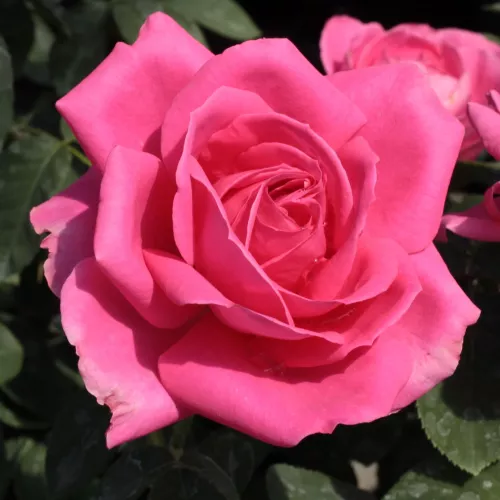
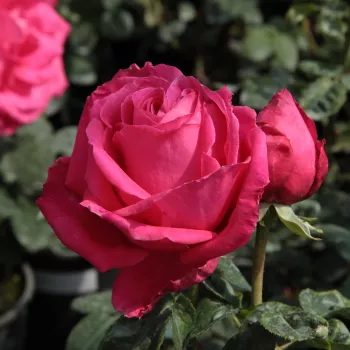
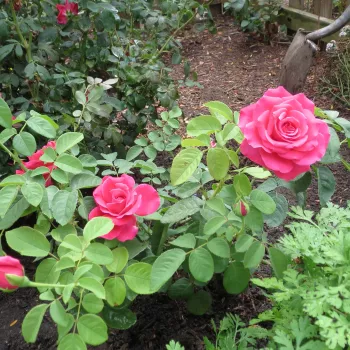
MARIA CALLAS® – pink hybrid tea rose – Meilland
Bring a touch of seaside glamour to your garden with MARIA CALLAS®, a classic hybrid tea rose that feels right at home beside shingle, sea kale and a steaming pot of afternoon tea. Its long, upright stems and large, exhibition-style blooms make it ideal for cutting, yet it remains surprisingly manageable in an average family garden. As an own-root rose, it offers reassuring stability, quietly building a strong framework below ground before really performing above it, and its dense foliage gives valuable shelter in breezier spots, helping it cope where coastal winds meet sun-warmed patios. In a generously sized container or border, this variety rewards simple, regular watering and light care with repeat flowering from early summer onwards, while the strong, lasting fragrance drifts beautifully across a veranda. Well-suited to shingle-style, salt-aware planting, it works particularly well where you want dependable structure and a focal point that matures gracefully over time, with new growth building year by year into full impact. Give it good drainage, a sunny aspect and space for its roots, and it will return for many seasons as a quietly luxurious coastal companion that fits busy lives. With a little patience as it establishes, you can expect a natural progression from rooting, to strong shoots, to full ornamental presence over its first three years in the garden.
Usage options
| Target area |
Reasoning |
| Sunny coastal veranda in a large container |
Planted in a 40–50 litre pot, MARIA CALLAS® forms a tall, upright accent that catches the light while its dense foliage offers a degree of wind buffering on exposed Cornish or Devon verandas. Regular watering and good drainage help it handle breezy, salt-touched days without fuss for the time-poor coastal gardener who still loves classic roses, beginners. |
| Feature rose in a small family front garden |
Its statuesque height and solitary, exhibition-style flowers create a single, elegant focal point that instantly lifts a modest front garden without needing complex design. Once settled on its own roots, the plant develops a lasting framework that can be refreshed simply by seasonal pruning, suiting householders wanting presence without heavy maintenance, homeowners. |
| Cut-flower corner by the patio |
The long, straight stems and large, very full blooms are ideal for vases, so a small patch near the house becomes a ready-made cutting garden. You gain armfuls of richly pink, strongly scented flowers over a long season from just a few plants, perfect for those who enjoy bringing the garden indoors, hobby-gardeners. |
| Mixed coastal-style border with grasses |
In a border with Festuca, sea kale or silvery foliage, its vivid deep pink flowers and glossy dark leaves provide vertical structure that anchors looser planting. The sturdy, upright habit keeps the blooms held above nearby perennials, adding order and rhythm to a breezy, shingle-inspired scheme that remains easy to look after, planners. |
| Long-season “girly” seating nook |
Near a bench or bistro set, this rose delivers repeat waves of large, showy flowers that keep a compact seating nook looking celebratory from early summer well into autumn. The abundant second flush avoids gaps in colour, supporting a consistently pretty, pink theme without constant replanting, stylists. |
| Sheltered family terrace with afternoon tea |
The strong, lingering perfume is best appreciated close to paths and terraces, where you pass by regularly or sit with a cup in hand. Planted near seating, the rose turns simple moments into small rituals, with fragrance carried on warm, slightly salty breezes by the house, sensualists. |
| Clay-based garden beds with improved drainage |
Where heavier soils are common, preparing a well-drained planting hole and raising the bed slightly allows the own-root plant to establish a deep, resilient root system. Over time this underpins reliable growth and flowering despite variable rainfall and seasonal wet spells in ordinary UK family plots, pragmatists. |
| Low-effort statement rose for busy gardeners |
Once the initial shaping and basic care are in place, MARIA CALLAS® rewards you with enduring structure, dependable remontant flowering and the capacity to regrow strongly from its own roots after pruning or weather setbacks, making it a practical choice for salt-aware gardens with blustery, changeable conditions, time-poor-owners. |
Styling ideas
- Shingle-Glam Border – Pair with sea kale, lamb’s ear and fine grasses so its upright, glossy framework and vivid blooms anchor a loose, beachy planting – ideal for coastal-style lovers.
- Veranda Showpiece – Grow in a 50-litre container by French doors, letting its tall stems and repeated flowering bring theatre to a compact seating area – perfect for beginners with patios.
- Pink Parlour Corner – Combine with soft pastels in pots and cushions so its long-season, deep pink flowers and strong scent define a feminine tea nook – suited to “girly” terrace decorators.
- Cutting-Row Strip – Plant a simple row along a path, using its straight stems and exhibition flowers as a dedicated cutting source – attractive for home florists who like easy structure.
- Evening-Scent Seat – Position behind a bench with airy companions so its fragrance and tall profile create a sheltered, long-lived highlight around family seating – good for relaxed urban families.
Technical cultivar profile
| Parameter |
Data |
| Name and registration |
Hybrid tea rose, registered as MEIdaud, marketed as Maria Callas® – pink hybrid tea rose – Meilland; also exhibited as Miss All-American Beauty in ARS shows. |
| Origin and breeding |
Bred by Marie-Louise Meilland, Meilland International, France, from ‘Chrysler Imperial’ × ‘Karl Herbst’; introduced and registered in 1965 for garden and exhibition use. |
| Awards and recognition |
Winner of the Portland Gold Medal in 1966 and All-America Rose Selections award in 1968, confirming its long-term garden and exhibition value to discerning rose growers. |
| Growth and structural characteristics |
Strong, upright hybrid tea reaching about 130–170 cm high and 70–95 cm wide, densely thorned with dark, glossy foliage forming a full, vertical presence in borders and containers. |
| Flower morphology |
Large, very full, high-centred blooms with 40+ petals on mostly solitary stems; classic pointed buds and an abundant second flush provide a long display for cutting and garden effect. |
| Colour data and phenology |
Rich deep pink flowers, fuchsia-toned in bud, with good colour retention; outer petals may soften slightly in strong sun, yet overall display remains vivid through successive flowerings. |
| Fragrance and aroma |
Strong, long-lasting scent typical of classic hybrid teas; richly perfumed blooms are best enjoyed close to paths, seating areas and cut for indoor decoration in vases and bowls. |
| Hip characteristics |
Hip set is limited by the very double flowers; occasional small, egg-shaped orange-red hips around 10–14 mm in diameter may form when spent blooms are not removed. |
| Resistance and winter hardiness |
Hardy to about −15 to −12 °C (RHS H6, USDA 7b), with moderate resistance to black spot, mildew and rust; benefits from regular watering and basic preventative care in humid summers. |
| Horticultural recommendations |
Best in sunny sites with well-drained soil; plant 50–55 cm apart in groups or 90 cm for specimens, and prune annually to maintain upright form and a steady supply of quality blooms. |
MARIA CALLAS® offers tall, structural flowering, strong fragrance and dependable repeat blooms on its own roots, giving a long-lived, low-fuss highlight for coastal-style gardens and terraces; consider it where you want lasting elegance with practical ease.