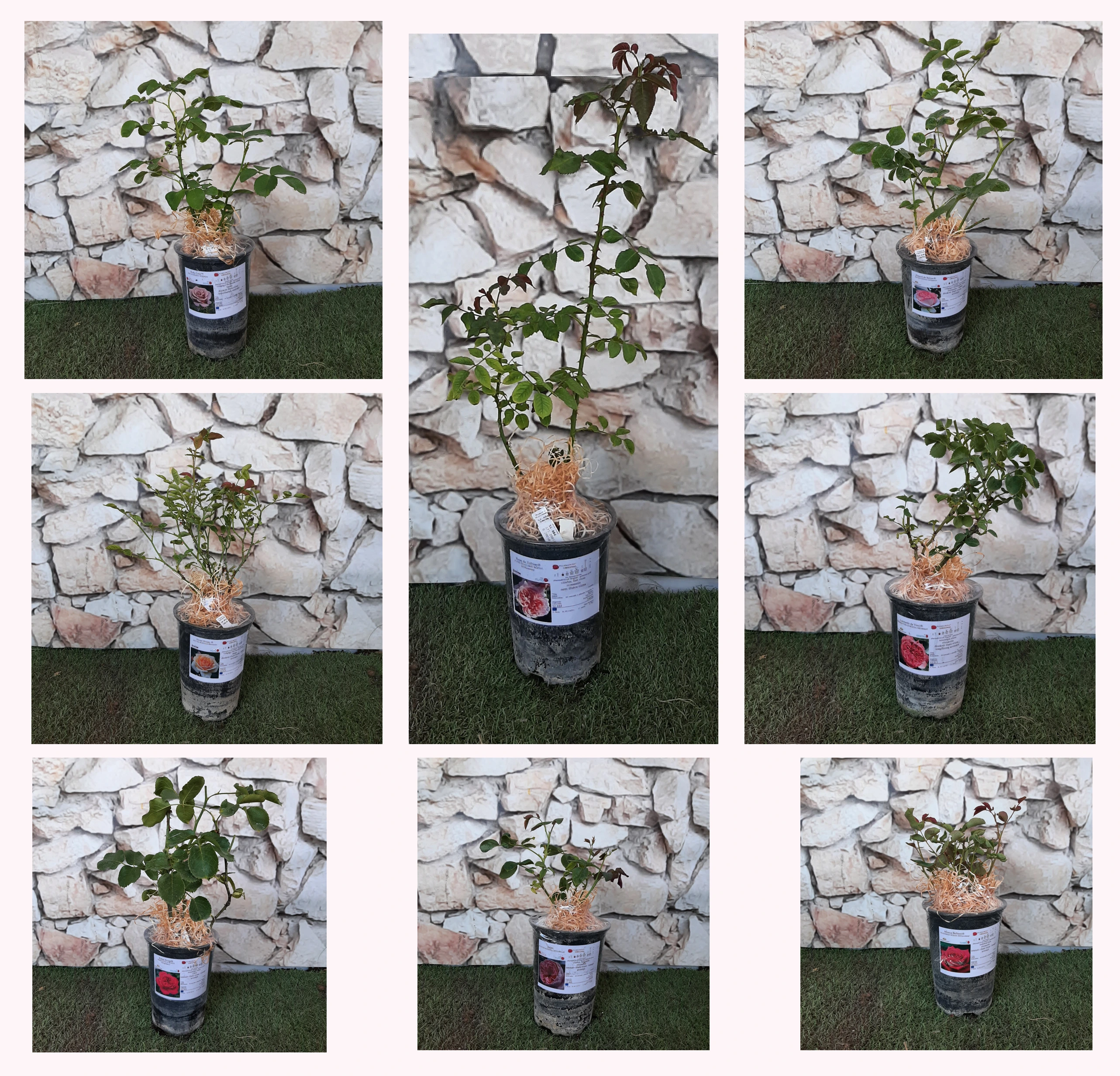
BARPABLE – mauve‑lilac dwarf-mini rose – Barni
The evocatively named Barpable miniature rose brings a touch of playful seaside romance to small UK gardens, shingle beds and protected coastal verandas, combining compact proportions with surprisingly generous, damask-rich fragrance. Its neat, compact shrub shape stays low and tidy, ideal where space is tight yet you still want a refined, cottage-style feel after a day collecting seashells. Semi-double, cupped blooms in shifting shades of mauve-lilac and lavender-purple appear in generous clusters, their colour holding well even in unsettled weather and bright light. This own-root shrub is bred for a long garden life, quietly strengthening below ground before rewarding you above: the first year focuses on roots, the second on extra shoots and branching, and by the third season it settles into full ornamental impact. Performs reliably in typical British conditions, where its sturdy framework copes well with brisk coastal breezes and carefully managed, heavier soils that need thoughtful drainage. Self-cleaning flowers mean there is less deadheading to worry about, freeing you to enjoy the salty, windy, sunny mood your planting creates. Perfect for low edging, containers and small beds, its moderate maintenance needs are easily met with occasional care, while own-root resilience supports steady longevity and regrowth over the years, giving busy gardeners lasting value from a petite yet characterful rose.
Usage options
| Target area |
Reasoning |
| Low edging along a shingle path |
The naturally compact, low habit forms a tidy line that softens hard edges without encroaching onto paths. Regular clusters of mauve-lilac blooms bring colour at eye and child height with minimal clipping, ideal for relaxed, everyday enjoyment by beginners. |
| Coastal-style veranda container |
Barpable thrives in a sunny, sheltered spot, and in a 40–50 litre container its roots have the space to anchor securely while you control moisture levels for heavier or sandy mixes, making it well suited to breezy, coastal-style seating areas for homeowners. |
| Small family front garden bed |
Its moderate maintenance and good self-cleaning mean less time spent deadheading and more time simply appreciating the waves of bloom, giving a polished look to compact front gardens without complex pruning, which suits time-pressed families. |
| Feature plant near seating for evening scent |
The very strong, garden-filling damask fragrance is best enjoyed up close, so a single shrub near a bench or terrace creates a surprisingly luxurious scent focus in small spaces, rewarding even modest planting efforts for hobby-gardeners. |
| Mixed border with sea kale and ornamental grasses |
Its stable, own-root framework and long lifespan make it a reliable anchor plant among shifting textures like sea kale and Festuca, maintaining structure and colour year after year while surrounding perennials change, pleasing long-term minded planners. |
| Refined cottage-style edging in clay-based soils |
The bushy, glossy foliage and elegant flower form lend a refined edge to paths where UK clays are common; in raised or improved beds with good drainage the plant establishes steadily, coping with breezier weather for coastal-style loving gardeners. |
| Season-long colour accent in patio groupings |
Remontant flowering provides repeated waves of bloom through the season, so a single container can contribute steady colour to a group of pots, reducing the need to swap plants in and out, which is especially helpful for busy urban residents. |
| Long-term container rose for stable ornamental value |
Being own-root, Barpable rebuilds from its base if pruned hard or weather-damaged, supporting a long-lived, predictable shape and flower show in one large pot, a practical choice for those seeking dependable structure with modest care among newcomers. |
Styling ideas
- Seaside-border – Plant Barpable in a narrow strip with sea kale and low Festuca grasses to echo Cornish and Devon shores – for coastal-style lovers seeking a gentle windbreak feel.
- Veranda-duo – Place one large container on each side of a patio door, underplant with silver thyme for scent layers – for homeowners wanting a simple but elegant entrance.
- Cottage-ribbon – Create a curving edging along a path, interspersed with Carpathian bellflower for soft mauve on mauve – for hobby gardeners enjoying relaxed cottage charm.
- Evening-corner – Combine Barpable with dwarf boxwood and a lantern on a small terrace for a fragrant twilight nook – for busy urban residents unwinding after work.
- Pastel-patch – Group three plants in a triangle in front of taller perennials for a concentrated mauve-lilac focal point – for beginners wanting quick, visible impact.
Technical cultivar profile
| Parameter |
Data |
| Name and registration |
Miniature shrub rose, commercial mini-dwarf type; registered as BARpable, marketed as Barpable Mini - dwarf rose BARpable, ARS exhibition name Parbleu, part of the Mini - dwarf rose collection. |
| Origin and breeding |
Bred by Beatrice Barni of Rose Barni Srl, Pistoia, Italy; breeding completed in 2012, introduced commercially in 2013, from unknown parentage, distributed initially by Rose Barni. |
| Growth and structural characteristics |
Compact, bushy shrub 35–55 cm high and 30–50 cm wide, with dense, glossy dark green foliage flushed reddish when young and moderate prickliness, forming a neat, low mound in beds or containers. |
| Flower morphology |
Semi-double, cupped blooms with 13–25 petals, borne in clusters; very large flowers for a miniature type, approximately 3.5 inches across, remontant with particularly abundant second flush in season. |
| Colour data and phenology |
Mauve-lilac to lavender-purple, ARS code M, RHS 76A outer and 76C inner; buds open dark magenta-purple, then lighten through cool lavender with silvery veil, with very good colour retention as blooms age. |
| Fragrance and aroma |
Very strong, garden-filling scent with classic damask character, best appreciated near seating areas or paths; fragrance persists well in average UK summer conditions and can be used for small cut-flower displays. |
| Hip characteristics |
Hip set is generally low; where present, small spherical hips 5–7 mm across develop, colouring orange-red and adding a discreet late-season accent without significantly affecting flowering performance. |
| Resistance and winter hardiness |
Hardy to approximately −21 to −18 °C, RHS H7, Swedish zone 3, USDA 6b; disease resistance moderate to powdery mildew, black spot and rust, benefits from routine monitoring and good air circulation. |
| Horticultural recommendations |
Best in sunny sites; suitable for edging, beds, hedging, containers and small-scale cutting. Medium maintenance, occasional plant protection; plant 25–45 cm apart, at 6–7.2 plants per m² for fuller massed effects. |
BARpABLE offers compact form, repeat mauve-lilac flowering and powerful fragrance in a resilient own-root miniature rose, making it a long-lived, easy-care choice you can select with confidence.