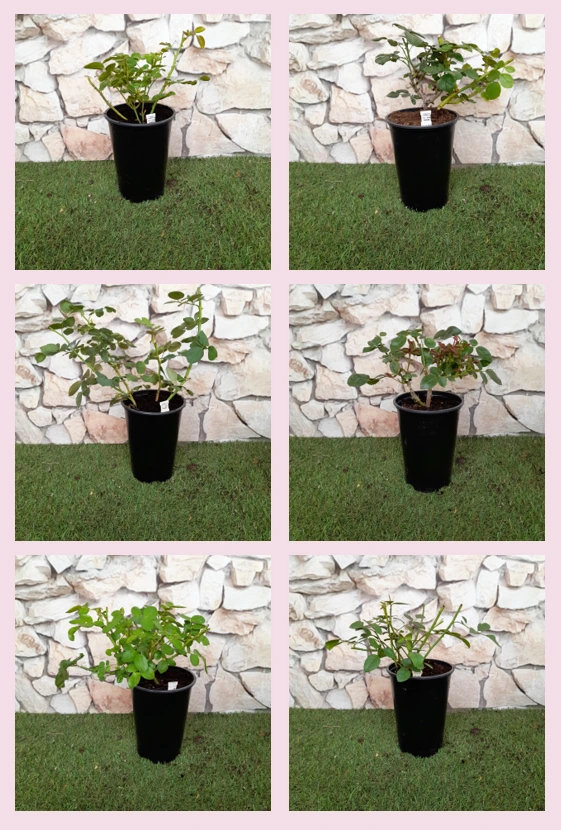
MILANO® – red bedding floribunda rose – Kordes
Imagine returning from a breezy Cornish beach, salt in the air, and finding your veranda framed by low, glowing scarlet blooms: MILANO® is bred for coastal resilience and easy care in real family gardens. This compact floribunda’s upright, bushy habit carries clusters of semi-double flowers that keep their colour even in bright seaside sun, giving reliable structure in smaller beds and shingle-style borders. Own-root plants establish steadily – year one building roots, year two more shoots, and by year three a full display that shrugs off wind and wet – while dense foliage adds cover for a sheltered tea corner. In a 40–50 litre container or a narrow strip by the drive, you gain long-season impact with minimal fuss, the plant anchoring securely where soil has been improved for drainage and watering is straightforward.
Usage options
| Target area |
Reasoning |
| Small coastal front garden bed |
Compact height and spread make MILANO® ideal for tight spaces by the front path, where wind and rain are frequent but you still want a neat, colourful welcome in scarlet. Suits time-pressed homeowners. |
| Veranda or balcony container (40–50 litres) |
In a large pot of at least 40–50 litres, the upright form and dense foliage create a low windbreak around seating, while own-root stability supports long-term use without frequent replacement. Ideal for busy urbanites. |
| Low flowering hedge along a drive |
Regular, upright growth and close planting distances allow a clipped, low hedge that guides cars and visitors, staying ornamental for many years thanks to the robust own-root system. Suitable for practical-minded families. |
| Mass planting in a shingle or gravel strip |
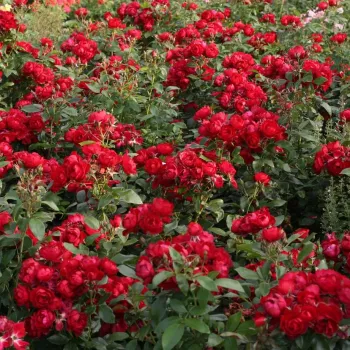
Floribunda clusters give strong blocks of colour above gravel or shingle, evoking a coastal feel while simplifying weeding and mowing in tricky margins. Best for low-maintenance garden beginners. |
| Mixed bed with sea kale and ornamental grasses |
The cool scarlet tones pair well with sea kale, Festuca and Lavandula, adding structure and summer-long flower clusters that stand out against silvery foliage and soft grasses. Inspiring for design-conscious coastal-lovers. |
| Family play-area border edge |
Modest height and moderately thorny stems help define play spaces without forming an overpowering barrier, while the plant’s dense canopy keeps its shape with simple seasonal trimming. Fitting for safety-aware parents. |
| Clay-soil garden with improved drainage |
Once planted into clay that has been loosened and mixed with grit, the resilient root system anchors firmly and copes well with wet, gusty weather common in exposed gardens near the sea. Helpful for coastal-plot owners. |
| Pollinator-friendly ornamental strip |
Semi-double flowers offer moderate forage for insects while remaining tidy and showy, with excellent colour retention for a smart front strip that still contributes to garden ecology. Appealing to wildlife-aware gardeners. |
Styling ideas
- Harbour-Edge Bed – Combine MILANO® with sea kale and blue Festuca in a shingle strip for a bright, wind-ready, low-care frontage – ideal for coastal-style enthusiasts.
- Tea-Veranda Pot – Plant one or three MILANO® in a 40–50 litre container beside outdoor seating to form a living scarlet screen – suited to balcony and veranda users.
- Crimson Ribbon – Line both sides of a narrow path with closely spaced plants to create a low flowering hedge guiding the way – perfect for organised homeowners.
- Family-Friendly Mix – Set MILANO® among Heuchera and compact grasses for colour at child height without overwhelming the play area – good for young families.
- Townhouse Strip – Use a single row of MILANO® in the front garden bed to deliver long-season impact with simple annual care – attractive to busy city gardeners.
Technical cultivar profile
| Property |
Data |
| Name and registration |
Floribunda bed rose; registered as KORjuwko, marketed as Milano® / MILANO®, in the Kordes' Climate Roses® collection; ARS exhibition name Milano; verified cultivar identity for garden use. |
| Origin and breeding |
Bred by Tim-Hermann Kordes at W. Kordes’ Söhne, from Unnamed Seedling × Unnamed Seedling; introduced in 2011 through W. Kordes’ Söhne, with subsequent registration in Europe and the United States. |
| Awards and recognition |
Highly decorated: prizes at Barcelona, Kortrijk, Monza and Baden bei Wien, plus Grande Rose du Siècle at Lyon in 2011, reflecting sustained ornamental quality and professional endorsement. |
| Growth and structural characteristics |
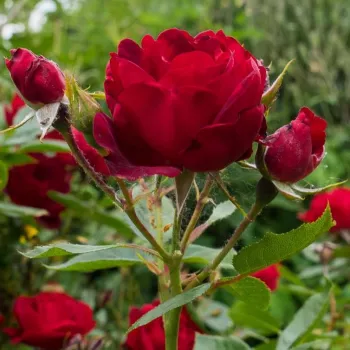
Compact, upright floribunda, about 45–75 cm tall and 30–50 cm wide; dense, bright green glossy foliage with moderate prickles; suitable for beds, edging, hedging and mass planting schemes. |
| Flower morphology |
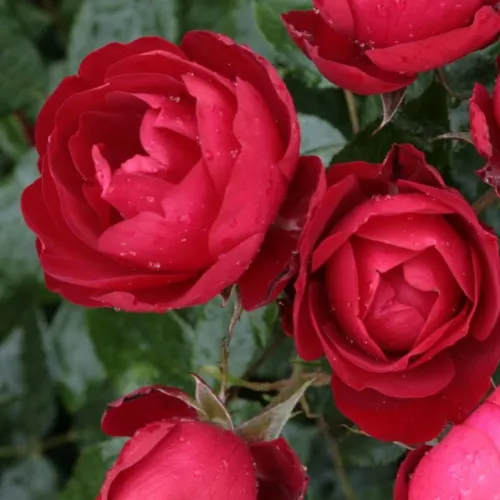
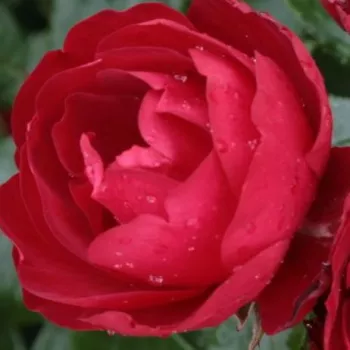
Semi-double, globular to pompon blooms, medium-sized at roughly 4–7 cm diameter, borne in clusters; around 13–25 petals; remontant flowering habit providing a generous second flush in season. |
| Colour data and phenology |
Deep, cool scarlet red from bud to full bloom, with excellent sunlight stability; minimal fading, slight purplish tinge late on; maintains an even, luminous red display over a long flowering period. |
| Fragrance and aroma |
No noticeable fragrance; bred primarily for garden performance, colour stability and structural effect rather than scent; moderately attractive to insects due to semi-double flowers with partial stamen exposure. |
| Hip characteristics |
Moderate crop of small spherical orange-red hips, about 6–10 mm; adds discrete seasonal interest but usually secondary to the plant’s principal role as a long-flowering bedding and landscape rose. |
| Resistance and winter hardiness |
Rated to approximately -32 to -29 °C (RHS H7, USDA 4b, Sweden Zone 5); resistant to powdery mildew and rust, moderate against black spot; tolerates heat with watering in prolonged dry spells. |
| Horticultural recommendations |
Best in full sun on well-drained soil; recommended spacings 25–45 cm depending on use, with 12.8–14.7 plants/m² for mass plantings; moderate maintenance with occasional pest and disease checks. |
MILANO® offers compact structure, long-season scarlet clusters and reliable colour on a durable own-root framework, making it a thoughtful choice for enduring impact in smaller coastal and family gardens.