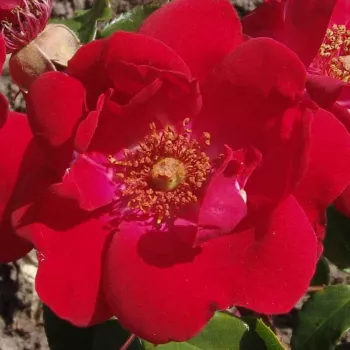
MILLARD DE MARTIGNY – fiery-red climbing rose - Ducher & Massad
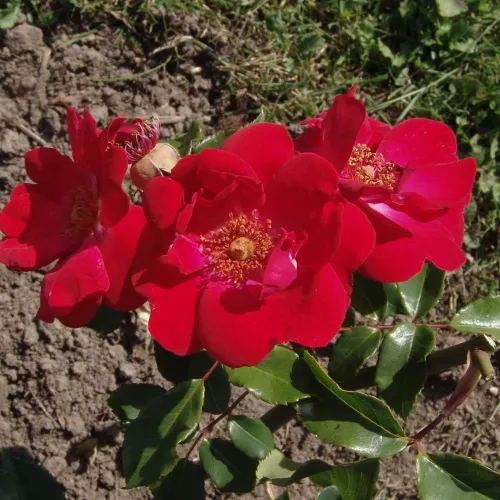
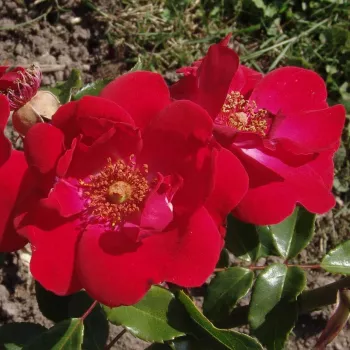
Along windy British coasts where fencing can feel stark, this fiery red climber offers an easy way to soften boundaries while creating a sheltered nook for afternoon tea. Its own-root vigour settles in steadily, rewarding patient gardeners as roots establish, then stems extend, and by the third season the rose carries its full ornamental presence with minimal intervention. Medium maintenance needs and reliable repeat flowering make it a practical choice for busy households who still want colour from early summer well into autumn. In breezier sites it copes confidently, standing firm and flowering even when exposed to strong onshore gusts. Trained against walls, pergolas or sturdy arches in small to medium family gardens, it brings a bold vertical accent without demanding expert care. For containers, choose at least a 40–50 litre pot to anchor growth and reduce watering stress. Its semi-double blooms open wide enough to show golden stamens, adding a relaxed, informal character perfectly suited to a coastal veranda or shingle garden. Over time, its resilience and own-root longevity support a stable, long-term display, while moderate maintenance needs, repeat flowering, upright habit, semi-double blooms, strong colour, and coastal-style versatility make it an inviting option for gardeners who prefer simple routines to complicated regimes.
Usage options
| Target area | Reasoning |
|---|
| Climbing feature on a coastal veranda |
This rose’s resilient structure and good heat tolerance help it cope with brisk onshore winds, giving you a living windbreak and a colourful backdrop for seating areas near the sea, especially suited to the relaxed expectations of the beginner. |
| Long-term focal point on a family boundary |
As an own-root climber it builds strength gradually and can be rejuvenated from the base if ever cut back hard, giving you a long-lived, reliable boundary highlight that matures alongside the needs of the busy homeowner. |
| Low-fuss flowering screen for small gardens |
Moderate maintenance needs and self-cleaning flower clusters mean only occasional deadheading and light pruning are required to keep it neat, making it a realistic choice for the time-pressed urban gardener. |
| Season-long colour on pergolas and arches |
Remontant flowering with a generous second flush extends the display well beyond peak summer, so structures like pergolas remain vivid focal points for months, suiting those who appreciate extended interest but minimal upkeep. |
| Upright climber for narrow side returns |
Its naturally upright habit and medium height make it easier to train in tighter passages or side returns without overwhelming the space, an advantage for compact plots where every metre matters to the small-garden owner. |
| Informal wildlife-friendly corner |
Semi-double, open blooms expose stamens for partial pollinator access and modest hip formation, allowing a gentle contribution to garden ecology while still looking ornamental, suiting the nature-aware yet practical beginner. |
| Bold colour accent in shingle or gravel plantings |
The intense fire-red flowers hold their colour well in sun and heat, giving a strong contrast against pale gravel, timber or painted coastal fencing, which appeals to those seeking a striking but uncomplicated design statement. |
| Large container on a sheltered terrace |
Grown in a 40–50 litre or larger container with good drainage, its own-root robustness and moderate water needs offer a manageable way to enjoy a climbing rose where soil is limited, ideal for veranda-focused coastal living. |
Styling ideas
- Harbour-View Arch – Train this upright climber over a simple wooden arch, underplant with sea kale and Festuca for a soft, dune-like feel – ideal for coastal-style lovers.
- Shingle Backdrop – Plant against a sunlit fence rising from pale gravel, intersperse with Lavandula and low Verbena for a relaxed, Mediterranean edge – perfect for busy homeowners.
- Veranda Screen – Use in a 50 litre half-barrel beside decking posts, guiding stems along wires to form a light privacy screen – suited to small-plot urban gardeners.
- Crimson Courtyard – In a paved courtyard, mix with blue Caryopteris in large containers for bold colour contrast around a bistro set – attractive to beginners wanting instant impact.
- Family Gateway – Flank a garden entrance with two climbers on obelisks, softening paths that lead to play or dining areas – appealing to families seeking structure without fuss.
Technical cultivar profile
| Parameter | Data |
|---|
| Name and registration |
Millard de Martigny is marketed as a large-flowered climbing rose; it belongs to the climbing rose collection and is listed as a shrub rose and exhibition floribunda type. |
| Origin and breeding |
Bred in France by Fabien Ducher and Dominique Massad, introduced by Roseraie Ducher in 2009; parentage is not recorded, but the line reflects classic French garden rose breeding. |
| Growth and structural characteristics |
Upright climber reaching about 130–220 cm in height with a spread of 80–150 cm, moderately thorny, and clothed in dense, slightly glossy mid‑green foliage suitable for training. |
| Flower morphology |
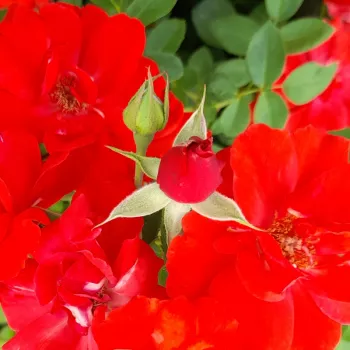
Semi-double, flat clusters of medium-sized blooms, usually 1.5–2.75 inches across, carrying around 13–25 petals, with remontant flowering and a notably generous second flush. |
| Colour data and phenology |
Vivid, uniform fire-red blooms with slightly darker inner petals; colour holds very well in sun and heat, lightening only slightly towards petal edges as flowers age on the plant. |
| Fragrance and aroma |
Fragrance is very weak, with only a faint rosy character detectable in warm, still conditions, so the cultivar is chosen primarily for colour effect rather than scent performance. |
| Hip characteristics |
Produces few hips; when present they are small, spherical, orange-red fruits about 10–15 mm across, adding only a light seasonal accent rather than a strong autumn display. |
| Resistance and winter hardiness |
Hardy to approximately −21 to −18 °C (RHS H7, USDA 6b), with moderate resistance to black spot, mildew and rust; prefers regular watering during extended dry spells in summer. |
| Horticultural recommendations |
Best grown in full sun with free-draining soil; suitable for borders, parks, hedging or as a specimen climber, with planting distances of 130–220 cm depending on the intended use. |
MILLARD DE MARTIGNY offers vibrant, long-season colour, an upright climbing habit and durable own-root performance, making it a thoughtful choice for low-fuss coastal and family gardens where you value lasting structure and steady reward.