MILLY™ – white bedding shrub rose - Tanjga
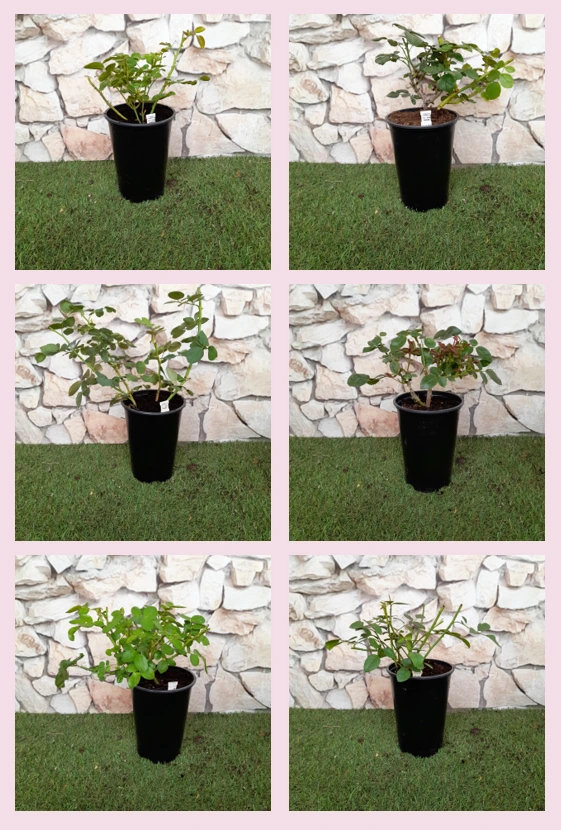
Imagine coming home from the Cornish coast, dropping your shells on the veranda table and sitting down behind a living windbreak of low, white roses: MILLY™ settles quickly into small family gardens and coastal-style spaces, making the most of even modest beds and terraces while coping well with blustery, salt-tinged air and freely draining shingle or heavier soil once improved for better drainage. Its compact, bushy habit and dense foliage give year-round structure, while clusters of snow-white, self-cleaning blooms keep the border looking fresh without constant deadheading. As an own-root shrub it builds a long-lived, reliable framework that can regenerate from the base, rewarding light-touch care. In a large 40–50 litre container or a small hedge, it anchors verandas and paths without dominating, offering semi-double flowers that are welcoming to visiting pollinators. Over the first three seasons it typically focuses on roots, then bushy shoots, and by year three delivers its full garden presence.
Usage options
| Target area | Reasoning |
|---|
| Small coastal front garden bed |
The compact, bushy form and 40–55 cm height make MILLY™ ideal for neat beds in exposed front gardens, providing a low, flowering buffer to frequent sea breezes and salt-tinged showers, especially for coastal-style lovers. |
| Shingle or improved clay coastal border |
This shrub rose copes with breezy, rain-lashed conditions once planted in well-prepared, freely draining soil, so it suits shingle mulches and improved clay where drainage and water management are carefully balanced by hobby gardeners. |
| Low flowering hedge along a path |
At 35 cm spacing MILLY™ forms a dense, flowering ribbon with glossy foliage that defines boundaries without blocking light, offering a tidy, long-lived hedge that suits family garden owners. |
| Ground-cover band in a mixed planting |
The spreading habit and self-cleaning flowers allow it to knit together at 6–7 plants/m², covering soil and reducing weeding while providing a long season of white clusters for busy urban gardeners. |
| Large container on a sheltered veranda |
In a 40–50 litre pot MILLY™ becomes a manageable, own-root feature: stable, regenerating from the base and flowering repeatedly with modest care, ideal for beginners. |
| Pollinator-friendly white border |
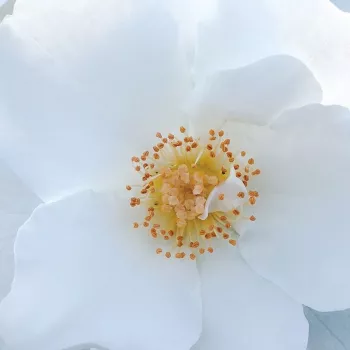
Semi-double, open blooms with exposed yellow stamens offer easy access for bees and other insects, creating a light, refreshing white scheme that quietly supports wildlife-conscious homeowners. |
| Long-season flowerbed accent |
Remontant clusters keep returning, and excellent colour retention means the snow-white petals stay clear and bright, giving a reliable, low, flowering accent for season-long colour seekers. |
| Low-maintenance family play-area edge |
With moderate care needs and good natural self-cleaning, this thorny but compact shrub provides a durable, long-lived edging, reducing fiddly deadheading for time-poor parents. |
Styling ideas
- Veranda Calm – Plant MILLY™ in a 50 litre clay pot with blue Festuca and a simple teak chair for a salty-breeze tea corner – ideal for coastal veranda owners.
- Shell Path – Line a shingle path with a low hedge of MILLY™ and sea kale for a beach-walk feel – perfect for seaside cottage gardeners.
- White Drift – Mass-plant MILLY™ as a ground-cover band with Allium aflatunense rising through for late-spring structure – suited to design-conscious homeowners.
- Sunlit Terrace – Combine MILLY™ in containers with lavender and Crocosmia ‘Lucifer’ for white, purple and red contrast – attractive to entertaining-focused terrace users.
- Play-Safe Edge – Use compact rows of MILLY™ to frame a lawn, with low perennials in front, for easy mowing lines – useful for families wanting simple upkeep.
Technical cultivar profile
| Parameter | Data |
|---|
| Name and registration |
Modern shrub rose from the Winterjewel® collection; registered as BOZmillwin and marketed as Milly™ Winterjewel® BOZmillwin, a white bedding shrub rose for flowerbeds and landscape use. |
| Origin and breeding |
Bred by Biljana Bozanić Tanjga of PhenoGeno Roses, Serbia, from ‘Pouldiram’ × ‘Adelaide Hoodless’; registered in 2017 and introduced commercially after 2017 for wider garden use. |
| Awards and recognition |
Recipient of a Bronze Medal in the Plant Novelty Competition at the Zieleń to Życie trade fair in Warsaw in 2014, recognising ornamental value and promise for garden and landscape planting. |
| Growth and structural characteristics |
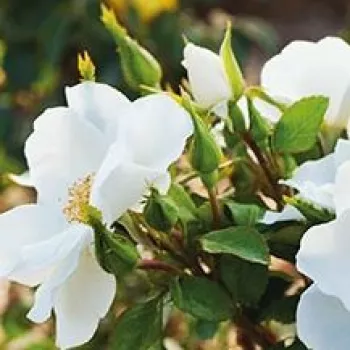
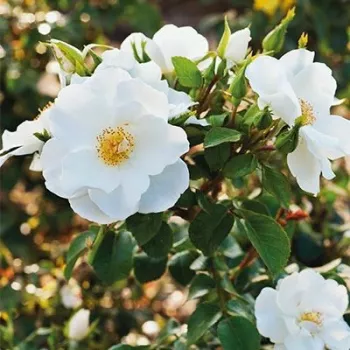
Compact, bushy, spreading shrub reaching about 40–55 cm in both height and spread, with dense, dark green, slightly glossy foliage and plentiful prickles, forming a low, even mound in beds. |
| Flower morphology |
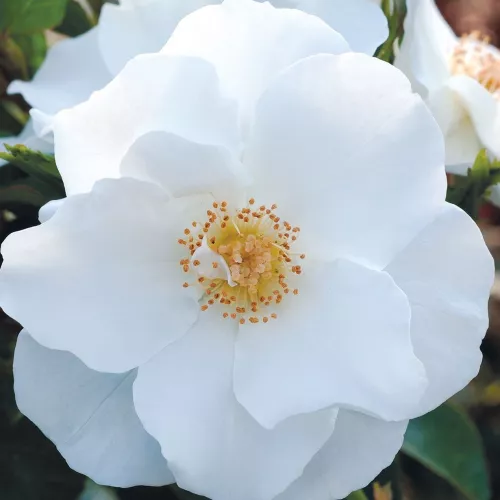
Semi-double, flat, cluster-flowering blooms of medium size (about 4–7 cm), bearing 13–25 petals; remontant habit with abundant repeat flushes and good self-cleaning of spent flowers. |
| Colour data and phenology |
Pure, uniform snow-white petals (RHS NN155D) from bud to full bloom, no greenish or pink tinge; colour holds excellently with age, highlighted by clear yellow-gold stamens throughout flowering. |
| Fragrance and aroma |
Very light, barely noticeable scent with a subtle honey character; primarily selected for visual impact, clean white colour and garden performance rather than for strong fragrance in planting schemes. |
| Hip characteristics |
Develops moderate numbers of small, spherical rose hips, around 6–10 mm in diameter, coloured orange-red and adding a discreet autumn interest without dominating the plant’s overall appearance. |
| Resistance and winter hardiness |
Hardy to approximately −26 to −23 °C (RHS H7, Swedish zone 4, USDA 5b); moderate resistance to black spot, mildew and rust, benefiting from standard monitoring and occasional treatments. |
| Horticultural recommendations |
Best in sunny positions with well-drained soil; plant 35–65 cm apart depending on use, at 6–7 plants/m² for mass effect; suitable for beds, edging, containers, low hedges and ground-cover roles. |
MILLY™ Winterjewel® BOZmillwin offers compact, long-season white flowering, pollinator-friendly semi-double clusters and durable own-root growth; a thoughtful choice for understated, easy-care coastal and family gardens.