MILROSE – pink bedding floribunda rose - Chabert
Imagine sipping tea in a sheltered corner after a breezy walk along a Cornish beach: MILROSE wraps that feeling into a compact, easy rose. Its bushy habit, dense foliage and semi-double pink blooms bring reliable colour and cheerful structure to coastal-style shingle beds, cottage borders and veranda pots. This floribunda-style bedding rose is bred for resilience with robust disease resistance, so day‑to‑day care stays pleasantly simple. The own‑root 2‑litre plant settles in steadily, giving a secure start and long-term stability as it anchors itself in breezier gardens where good drainage helps cope with blustery, showery weather by the sea. Over successive seasons it offers consistent flowering, gentle fragrance and a quietly elegant presence that matures alongside your family garden.
Usage options
| Target area | Reasoning |
|---|
| Coastal veranda containers (40–60 litre planters) |
MILROSE’s bushy, compact habit and dense glossy foliage suit large containers, where 40–60 litre tubs allow roots to stabilise in wind and salt-tinged air while you enjoy season-long pink clusters close to your seating area – ideal for beginners. |
| Small family front garden border |
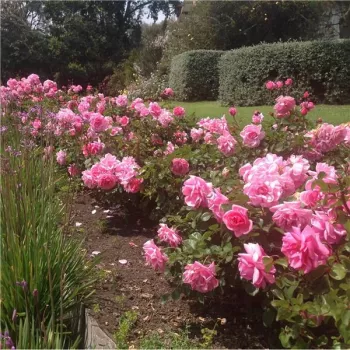
Planted at the recommended distances, this floribunda creates a tidy, low hedge of soft pink that looks cared-for with minimal attention, thanks to low maintenance needs and own-root durability – reassuring for busy-homeowners. |
| Coastal shingle or gravel planting |
In well-drained shingle with improved pockets of soil, MILROSE forms a sturdy, bushy mound that stands up to regular wind and rain, pairing naturally with sea thrift and blue sedges for a relaxed, seaside mood – perfect for coastal-gardeners. |
| Mixed border with perennials and ornamental grasses |
The mid-pink, semi-double clusters sit beautifully among blue Festuca, sea kale and lavender, giving gentle movement and colour from early summer onwards without overshadowing other plants – a good choice for design-conscious gardeners. |
| Informal low hedge along a path or drive |
Regular spacing at hedge distances creates a clean-edged pink ribbon that guides the eye and softens hard landscaping, while dense foliage and branching provide a quietly formal outline – attractive for neatness-lovers. |
| Family back garden seating area |
Planted near a terrace or bench, the light classic rose scent and repeat flushes of flowers add a gentle backdrop without overpowering the space, inviting relaxed use of the garden in everyday life – welcoming for tea-drinkers. |
| Cottage-style bedding near the house |
Its repeat flowering and soft colour shifts from vivid to pearly pink echo traditional cottage borders while remaining easy to manage; own‑root growth builds up year by year into a reliable, long-lived clump – reassuring for long-term-planners. |
| Small cutting patch for informal bouquets |
The long flowering season and generous corymbose clusters provide plenty of mid-sized stems for jugs and vases, with flowers that open prettily and carry a light fragrance, without demanding specialist cutting-rose skills – ideal for home-florists. |
Styling ideas
- Seaside-Veranda – group MILROSE in 50–60 litre tubs with Armeria maritima and blue sedges for a breezy, seashell-and-shingle feel – suited to coastal veranda owners.
- Pink-Pathway – line a front path at hedge spacing to create a soft pink border edged with gravel and low lavender – ideal for neat, low-effort entrances.
- Cornish-Cottage – weave MILROSE through a border of sea kale, catmint and ornamental grasses for a romantic yet easy-care cottage look – appealing to beginners.
- Family-Patio – place a trio in large containers around a seating area so children and guests enjoy the colour and light scent at eye level – perfect for sociable families.
- Relaxed-Cutting – dedicate a short row in a sunny bed to MILROSE for casual, frequently replenished jugfuls of pink blooms – attractive to home arranging enthusiasts.
Technical cultivar profile
| Parameter | Data |
|---|
| Name and registration |
Floribunda bedding shrub rose; registered as DELbir, marketed as Milrose Bedding rose DELbir, exhibition name Milrose; part of the Bedding rose collection. |
| Origin and breeding |
Bred by André Chabert for Pépinières & Roseraies Georges Delbard, France; parentage ‘Orléans Rose’ × (‘Français’ × ‘Lafayette’); introduced in France in 1965. |
| Awards and recognition |
Holder of four medals from international rose competitions, indicating consistent ornamental quality and performance recognised by professional judging panels. |
| Growth and structural characteristics |
Bushy shrub 70–100 cm high and 50–70 cm wide, densely foliated with light green, glossy leaves; framework moderately prickly and suited to bedding, borders and low hedging. |
| Flower morphology |
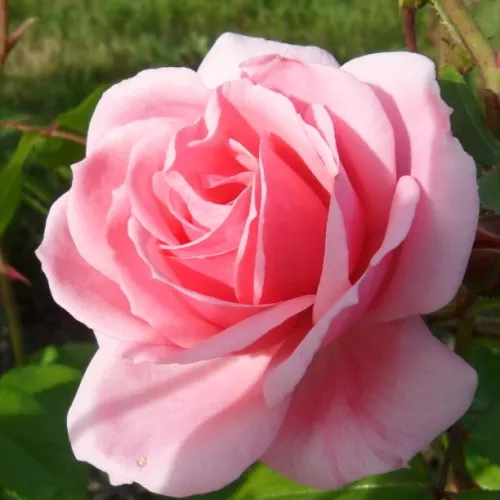
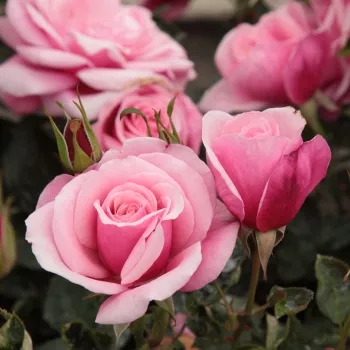
Semi-double, cup-shaped blooms with 13–25 petals; large flowers in corymbose clusters; remontant with an abundant second flush, providing colour across much of the season. |
| Colour data and phenology |
Mid-pink flowers (RHS 55C outer, 62D inner) opening rich then lightening to pearly pastel tones; colour remains even in full bloom before gently fading to a soft, silky pink. |
| Fragrance and aroma |
Lightly fragranced with a soft, classic rose aroma; detectable near the plant without being overpowering, making it suitable for seating areas and family spaces. |
| Hip characteristics |
Moderate crop of small spherical red hips, 5–8 mm diameter, developing after flowering and adding subtle seasonal interest if spent blooms are left uncut in late summer. |
| Resistance and winter hardiness |
Good overall disease resistance, with documented resistance to powdery mildew, black spot and rust; winter hardy approximately to −21 to −18 °C (RHS H7; Swedish zone 3; USDA 6b). |
| Horticultural recommendations |
Best in sunny positions with well-drained soil; recommended spacings 35–65 cm depending on use, at 5.7–6.6 plants/m² for massing; own-root plants suit long-term garden bedding. |
MILROSE offers easy, long-season pink flowering, bushy structure and good disease resistance in a durable own-root form, making it a thoughtful choice for relaxed coastal or family gardens you wish to enjoy for many years.