MINNEHAHA – pink historic rambler, rambling-climbing rose - Walsh
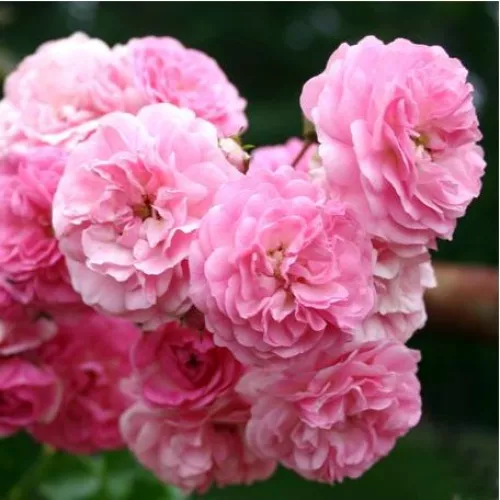
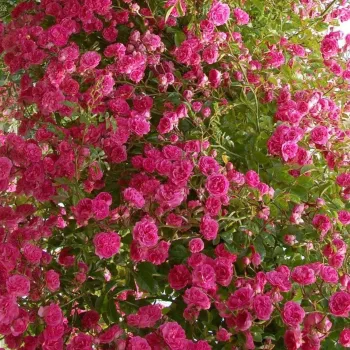
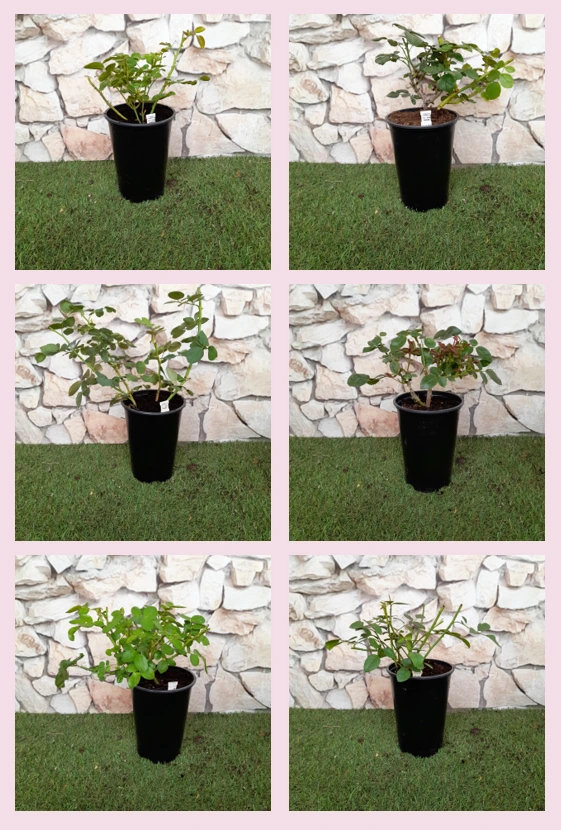
Let the historic Minnehaha rambler bring a sense of coastal breeze and sun-bleached romance to your garden, with arching canes that dress pergolas, fences or old trees in cascades of soft pink, waterfall-like clusters. This own-root plant is bred for resilience, settling securely even where strong winds meet moist soils, offering confidence on exposed, seaside plots where good drainage and anchoring really matter. Once planted, its low-maintenance character and reliable, once-a-year summer show create space for slow, salty-afternoon moments rather than chores, while dense, glossy foliage provides long-season coverage and privacy. Over time, the own-root system supports steady regeneration and a long ornamental lifespan, with Year 1 focused on roots, Year 2 on extending shoots, and by Year 3 you enjoy its full curtain of nostalgic flowering.
Usage options
| Target area | Reasoning |
|---|
| Pergola or arch in a small coastal family garden |
Minnehaha’s long, flexible canes and dense foliage make it ideal for clothing pergolas or arches in seaside gardens, creating a sheltered, laughing-water tunnel of pink each summer and reducing exposure where strong winds meet moist soils; perfect for the relaxed coastal homeowner gardener |
| Veranda or balcony in a large container |
In a 40–50 litre container with good drainage, Minnehaha can be trained along wires or posts to form a romantic screen, offering soft shade and privacy for a shingle-style veranda without demanding daily care; ideal for time-pressed coastal-style beginners |
| Fence or boundary as a living windbreak |
Planted along a boundary, its vigorous growth and glossy foliage build a thick green wall that filters coastal breezes and frames the garden, while own-root resilience supports long-term structure with modest upkeep; suited to family-oriented plot owners |
| Climbing through a small tree or large shrub |
Minnehaha’s rambler habit allows it to be guided into a sturdy tree or shrub, where it threads soft pink clusters among existing branches for a once-a-year spectacle, with minimal pruning needs afterwards; appealing to creatively minded nature-loving gardeners |
| Historic-style cottage or coastal shingle planting |
The historic 1904 origin and old-fashioned flower pompoms harmonise with cottage-style planting and shingle gardens, pairing well with sea kale, Festuca or Lavandula for a breezy, nostalgic scene; fitting for lovers of characterful period garden designs |
| Low-intervention family garden backdrop |
As a low-maintenance, disease-resistant rambler, Minnehaha forms a long-lived backdrop that needs only occasional checks for rust, leaving more time for family life and relaxed outdoor living; designed for busy household-focused garden users |
| Mass planting in parks or shared green spaces |
With its recommended spacing for mass planting, Minnehaha can create sweeping drifts of pink summer flower and dense ground-level cover, delivering impact with limited upkeep over many years; suitable for community-minded space stewards |
| Feature specimen on a wall or large obelisk |
Trained as a specimen, its long canes, dark green leaves and single, dramatic flush of pink give a strong seasonal highlight, while own-root vigour helps recovery after pruning and supports an extended garden lifetime; ideal for statement-seeking rose enthusiasts |
Styling ideas
- Sea-veranda screen – Train Minnehaha along veranda balustrades in a 40–50 litre container for a breezy privacy veil – for coastal balcony and terrace owners seeking soft shelter
- Historic pergola walk – Drape it over a narrow pergola, underplanted with sea kale and Festuca for a romantic seaside walkway – for families wanting a characterful garden route
- Shingle cottage corner – Let it scramble on a wall above shingle, with Italian curry plant and dwarf yew for texture – for lovers of traditional yet low-care planting
- Tree-top waterfall – Thread canes through a small tree to create a pink summer cascade with minimal pruning – for creative gardeners who enjoy naturalistic structures
- Parkland ribbon – Use recommended spacing along fences to form a continuous flowering ribbon and robust green barrier – for those shaping shared or large boundary spaces
Technical cultivar profile
| Parameter | Data |
|---|
| Name and registration |
Minnehaha, a historic Hybrid Wichurana rambler rose; commercial type historic rambler, climbing-creeping rose; unregistered cultivar, ARS exhibition name Minnehaha; marketed as Minnehaha Historic rose Minnehaha. |
| Origin and breeding |
Bred by Michael Henry Walsh, Walsh’s Hardy American Roses, USA; Rosa wichurana × ‘Paul Neyron’; introduced in the United States in 1904 via Walsh’s Hardy American Roses, with authenticity verified for this product line. |
| Growth and structural characteristics |
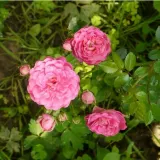
Very vigorous climbing rambler with 450–700 cm height and 200–350 cm spread; moderately thorny canes; dense, glossy dark green foliage (RHS 139A); suited to pergolas, arches, fences, walls or training into trees. |
| Flower morphology |
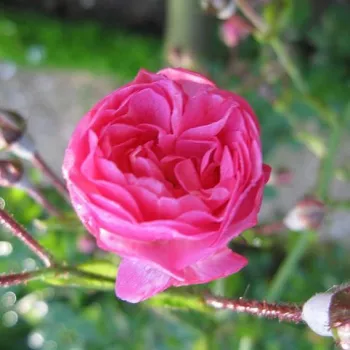
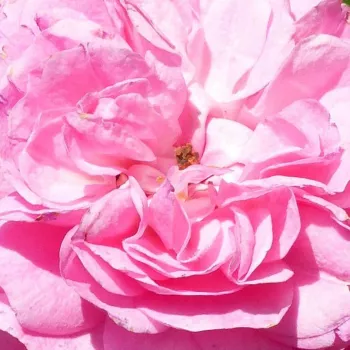
Double, ball to pompon-shaped flowers in clustered inflorescences; 26–39 petals; small blooms (0.5–1.5 in) borne freely in season; not remontant, with a single but abundant main flush providing a strong seasonal display. |
| Colour data and phenology |
Flowers open mid-pink with paler centre, fading towards soft pastel pink and finally almost white; ARS colour MP, RHS 62C outer, 65D inner; colour retention modest, giving a gentle, weathered pastel effect over time. |
| Fragrance and aroma |
Fragrance is very weak, with a light rosy character only faintly perceptible at close range; primarily grown for visual effect rather than scent; double blooms provide limited pollinator access, so wildlife value is modest. |
| Hip characteristics |
Rose hips form sparsely due to double flowers; when present, they are small spherical hips, approximately 5–8 mm diameter, red RHS 44A, adding light ornamental interest without significant fruit display or wildlife value. |
| Resistance and winter hardiness |
Good general disease resistance; resistant to powdery mildew and black spot, with moderate susceptibility to rust; hardy approximately to −21 to −18 °C (USDA 6b, RHS H7, Swedish zone 3); may need spring frost protection. |
| Horticultural recommendations |
Best on well-drained soil with support; low maintenance but inspect occasionally for rust; recommended spacing 145–270 cm depending on use; planting density 0.34–0.39 plants/m²; primary uses include pergolas, arches, fences and trees. |
Minnehaha offers vigorous coverage, low-maintenance reliability and long-lived own-root resilience, making it a thoughtful choice if you would like a softly romantic, historic rambler to mature gracefully in your garden.