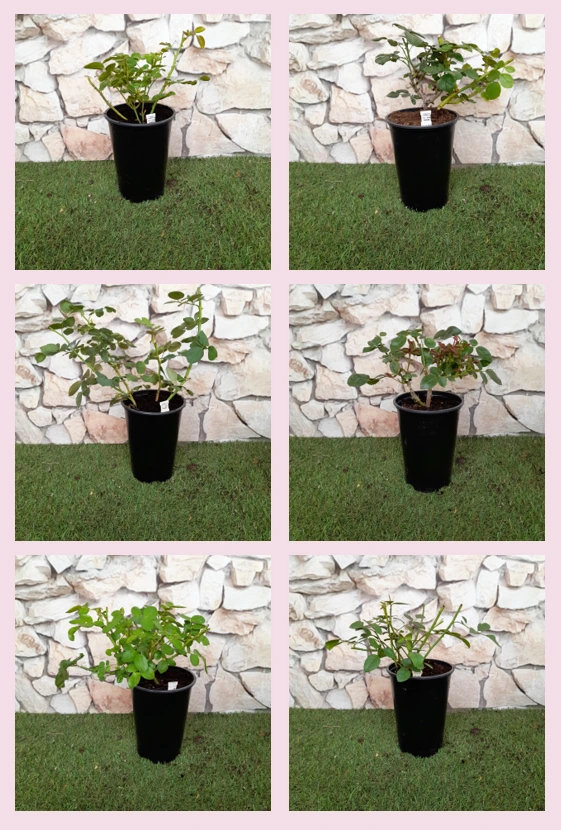
MORSDAG® – red bedding polyantha rose – Grootendorst & Goey
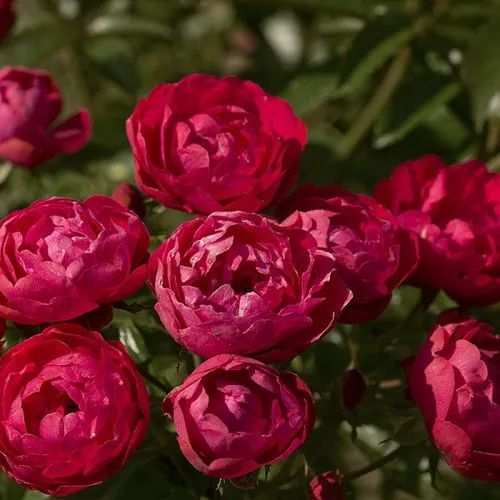
On a breezy Cornish afternoon, MORSDAG® settles into shingle or clay with quiet confidence, forming a low, bushy cushion of glossy foliage and clusters of velvet-red pompons. This compact polyantha is ideal where you want neat structure and continuous colour without complicated maintenance, coping well with exposed sites where coastal winds and showers demand reliable root anchoring. In a 40–50 litre container or a small front garden bed, its remontant sprays rebuild quickly after each flush, building strong roots in year one, fuller shoots in year two and delivering its best ornamental display by year three for long, easy-going garden .
Usage options
| Target area |
Reasoning |
| Coastal veranda container (40–50 litres) |
Compact size and dense branching make MORSDAG® ideal for a single statement container that will not overwhelm a small veranda, while its own-root sturdiness supports long-term structure in breezy coastal air for beginners and busy veranda owners |
| Low-maintenance front garden edging |
The uniform, low mound habit lines paths and driveways with even, red colour blocks that need only light pruning and the occasional tidy, suiting those who want a smart look with minimal seasonal effort for time-poor family gardeners |
| Small shingle or gravel bed near the house |
MORSDAG® anchors well in free-draining coastal shingle mixed with compost, its repeat-flowering clusters providing long-season colour where space is limited and conditions are bright but windy for coastal-style enthusiasts |
| Mixed border with shrubs and grasses |
The clear crimson flowers sit cleanly against dark foliage and combine easily with sea kale, Festuca or lavender, creating a structured but soft look that stays attractive over many years thanks to resilient own-root growth for homeowners planning long-lived borders |
| Compact informal hedge or boundary line |
Recommended hedge spacing allows plants to knit into a low, flowering barrier that remains tidy with light trimming, benefitting from good disease resistance and robust root systems that mature steadily over seasons for practical family-garden planners |
| Urban courtyard or small back garden |
Its modest height and spread suit tight spaces, while reliable remontant flowering provides a long display in partial shade courtyards where you may only manage watering and one simple yearly prune for busy urban hobby gardeners |
| Children’s viewing corner or seating nook |
The abundant, ball-shaped sprays offer cheerful colour at a child’s eye level without towering canes, and the lightly thorned stems are easier to manage when you occasionally deadhead or guide growth for families creating safe, pretty corners |
| Public-style planting strip at home |
Borrowing from park bedding schemes, MORSDAG® works in simple repeated blocks that handle regular rain and breeze with dependable flowering, mirroring easy-care municipal planting in a private front strip for owners who like practical, proven schemes |
Styling ideas
- Seaside border ribbon – repeat MORSDAG® in a loose line through shingle, interplanted with sea kale and blue Festuca for a salty, windswept look – ideal for coastal veranda owners
- Cream-tea corner – place a single 50-litre pot by a bistro set, underplant with trailing thyme to soften the rim – for those who want a simple, welcoming tea spot
- Red-and-lavender duet – pair with compact lavender along a path so crimson sprays rise above a fragrant, silvery edge – suited to beginners seeking easy harmony
- Urban pocket hedge – create a low, flowering boundary between parking and patio, repeating MORSDAG® at close spacing – good for small-plot homeowners wanting order without fuss
- Playful colour patch – group three plants with soft grasses and a small bench to give children a bright, friendly viewing place – perfect for family gardens with young observers
Technical cultivar profile
| Parameter |
Data |
| Name and registration |
MORSDAG® is a polyantha bedding rose, marketed as a bed rose; also known under the ARS exhibition name ‘Mothersday’, with no separate registered cultivar name recorded. |
| Origin and breeding |
Derived from the red sport ‘Dick Koster’ and older rugosa lineage, bred in the Netherlands by F. J. Grootendorst and J. de Goey, introduced in Europe from 1918 to 1949. |
| Awards and recognition |
Recognised in American Rose Society local shows, repeatedly winning first place in the ‘Polyantha spray’ category in the late 1990s and early 2000s at exhibition level. |
| Growth and structural characteristics |
Compact, dense shrub to around 40–60 cm high and 60–90 cm wide, with glossy dark green foliage, lightly thorned stems and a naturally tidy, bushy outline well suited to bedding. |
| Flower morphology |
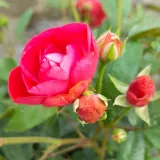
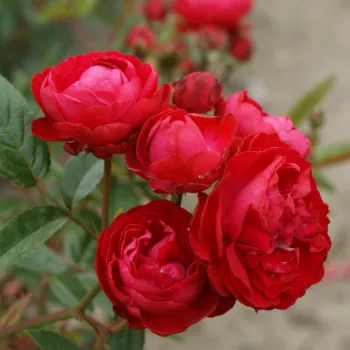
Produces small, double pompon blooms (26–39 petals) in tight clusters, with strong remontant behaviour and particularly abundant second flushes after light trimming or deadheading. |
| Colour data and phenology |
Flowers open in deep crimson tones (RHS 53A/B), then lighten slightly to a clear, mid-red shade; colour remains even and velvety, with very good resistance to fading in summer light. |
| Fragrance and aroma |
Displays a very weak, barely perceptible rose-like scent; grown primarily for continuous visual impact and bedding structure rather than for strong fragrance or perfume production. |
| Hip characteristics |
Due to fully double flowers, hip set is low; occasional small spherical red hips, around 5–7 mm across, may form later in the season but are not a decorative feature. |
| Resistance and winter hardiness |
Hardy to about –26 to –23 °C (RHS H7, USDA 5b), with good resistance to black spot and powdery mildew and moderate rust sensitivity, needing average care in typical UK gardens. |
| Horticultural recommendations |
Best in well-drained soil with regular watering in dry periods; suitable for beds, edging, containers and low hedges, planted 45–85 cm apart depending on use and desired density. |
MORSDAG® offers compact, repeat crimson flowering, durable own-root structure and easy edging or container use, making it a thoughtful long-term choice for those refining a small family garden.