MOZART – pink-white park rose - Lambert
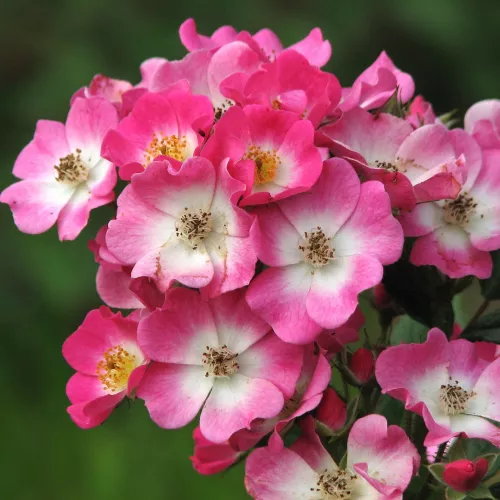
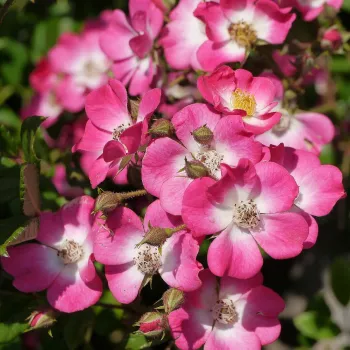
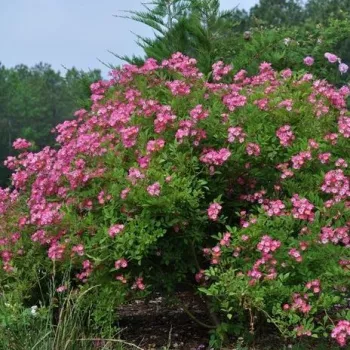
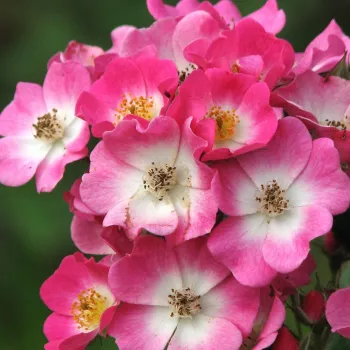
Imagine late afternoon seabreeze, a sheltered cup of tea and the gentle shimmer of MOZART drifting above coastal shingle. This classic shrub rose forms an airy, upright hedge or specimen, giving reliable flower cover while coping well with brisk, salt‑tinged winds and showery weather that are typical of exposed British shores. Masses of single, pink‑and‑white blooms appear in generous clusters from early summer, returning in a lively second flush, and the simple, open flowers are highly attractive to pollinators. Light muscat‑like fragrance and soft mid‑green foliage create a relaxed, informal mood that suits family gardens by the sea or inland. In a large 40–50 litre container on a veranda, or in a well‑drained border, this own‑root shrub is bred for longevity: it builds strong roots in year one, fuller shoots in year two and a settled, mature presence by year three, rewarding even time‑pressed beginners with dependable colour and structure.
Usage options
| Target area |
Reasoning |
| Coastal veranda in large containers |
Ideal for a sunny, sheltered Cornish or Devon veranda in a 40–50 litre pot, where its upright habit stays tidy yet generous. It copes comfortably with fresh onshore breezes and regular showers, making it reliable for those who love coastal style, including beginners. |
| Pollinator-friendly family seating area |
Single, open flowers with accessible stamens provide easy forage for bees and other beneficial insects throughout the season, perfect beside a bench or outdoor table where you can watch visiting wildlife, appealing to nature‑minded coastal families and relaxed beginners. |
| Informal flowering hedge along a boundary |
The upright, moderately tall habit and repeat flowering make a loose, informal hedge that screens without feeling heavy. It weaves soft colour through summer and early autumn, suiting boundary lines in average‑sized gardens for busy householders and practical beginners. |
| Mixed coastal-style shrub border |
Works well among sea kale, Festuca and low grasses, its airy structure letting wind pass through while adding strong colour highlights. This gives movement and resilience in shingly, drained borders for design‑conscious but time‑limited coastal gardeners and keen beginners. |
| Low-maintenance park-style planting in front gardens |
With medium maintenance needs and reasonable disease tolerance, it fits informal front gardens where there is little time for detailed care. Occasional dead‑heading and light pruning keep it performing, which suits urban households seeking dependable structure and casual beginners. |
| Partially shaded side path or alley |
Tolerates partial shade, so it can brighten side paths or the shadier edge of a terrace where other roses struggle. Flower clusters lift the space without needing intricate care, supporting small‑space owners and town‑garden beginners. |
| Season-long colour focal point |
The abundant first flush followed by a generous second flowering creates a long visual season. As an accent near a doorway or terrace, this repeat performance brings ongoing interest with modest intervention, ideal for busy families and colour‑loving beginners. |
| Wildlife-friendly autumn accent with hips |
After flowering, small orange‑red hips add gentle autumn interest and potential wildlife value, extending its role beyond summer. This seasonal shift enriches cottage‑coastal planting schemes for gardeners who value subtle change and thoughtful beginners. |
Styling ideas
- Shingle-Veranda Trio – place MOZART in a 50 litre tub with sea kale and blue Festuca on a south-facing veranda for a breezy, informal coastal look – ideal for seaside balcony owners and relaxed beginners
- Pink-Wave Hedge – plant a gently curving row along a boundary at hedge spacing to create an airy, flowering screen – suited to family gardens needing soft privacy with little fuss
- Tea-Corner Focus – position a single shrub beside a bistro set, underplanted with low lavender, for scented, bee-friendly summer teas – perfect for small gardens and those craving a calm retreat
- Pollinator-Ribbon Border – weave MOZART through a narrow border with globe thistles and ornamental grasses to form a wildlife corridor – aimed at nature-focused householders wanting easy structure
- Front-Garden Welcome – use one or two shrubs near the front path where repeat blooms and hips greet visitors – for urban homeowners who prefer long-lasting impact over intensive care
Technical cultivar profile
| Characteristic |
Data |
| Name and registration |
MOZART – pink-white park rose - Lambert; shrub rose in the Park - shrub rose group, classic shrub exhibition class; unregistered cultivar with American Rose Society exhibition name ‘Mozart’. |
| Origin and breeding |
Bred by Peter Lambert, Germany, 1936, introduced 1937 by Baumschule Peter Lambert. Parentage: ‘Robin Hood’ (Hybrid Musk) × ‘Rote Pharisäer’ (Hybrid Tea), combining vigour, cluster flowering and classic shrub character. |
| Awards and recognition |
Holds the Royal Horticultural Society Award of Garden Merit (1993) for reliable garden performance, plus American Rose Society Best Classic Shrub (1999, 2000) and Pacific Northwest District recognition in 2000. |
| Growth and structural characteristics |
Upright shrub with moderately dense, slightly glossy mid-green foliage; height around 140–200 cm, spread 130–190 cm. Moderately thorny stems; self-cleaning is partial, so light dead-heading of clusters is beneficial. |
| Flower morphology |
Small, single flowers (about 0.5–1.5 inches) borne in large corymbose clusters. Petal count typically 5–12, flat in form, with good remontancy and particularly abundant second flowering under suitable conditions. |
| Colour data and phenology |
Vivid crimson-pink outer petals with a clear white central eye; buds dark crimson-pink. Colour lightens through soft pink-lilac; moderate fade in strong sun, with long-lasting effect from successive clusters across the season. |
| Fragrance and aroma |
Light, delicate scent with a subtle muscat-like note, noticeable at close range rather than distance. Fragrance is gentle enough for seating areas where strong perfume might be overwhelming. |
| Hip characteristics |
Produces moderate numbers of small, spherical orange-red hips, about 6–10 mm, adding light autumn ornament and potential wildlife interest if spent flowers are not all removed after flowering. |
| Resistance and winter hardiness |
RHS H7, Swedish Zon 4, USDA Zone 5b; tolerates approximately −26 to −23 °C. Disease resistance is medium to the main foliar problems, with moderate heat and drought tolerance given regular watering in dry spells. |
| Horticultural recommendations |
Best in well-drained but moisture-retentive soil, including improved clay. Suitable for beds, hedges, urban green spaces and large containers; plant 100–110 cm apart in mass or hedging, up to 180 cm when used as a solitary specimen. |
MOZART – pink-white park rose - Lambert offers long-season colour, pollinator-friendly single blooms and an enduring own-root shrub form that settles in steadily over the years, making it a thoughtful choice for relaxed coastal and family gardens.