Historical Rose

40-046-1
40-046-2

Mrs. John Laing

Historic rose

- – Henry Bennett

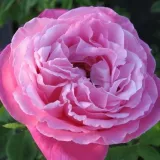
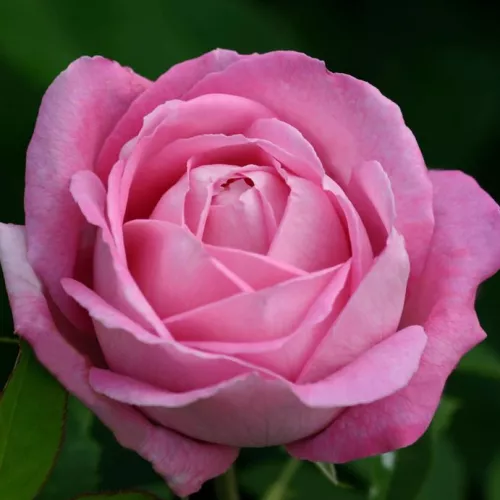
Silvery-tinged, soft mid-pink; becomes paler as it fades. - historic, perpetual hybrid rose - very strongly scented, noticeable from a distance rose - deeply sweet, tea-like, rose-like

– Abundant repeat flowering through the season.
– Very strongly scented with rich rose-tea notes.
– XL, very double, ball-shaped nostalgic blooms.
– Hardy to –34 °C, reliable in cold climates.
– Almost thornless, easier to handle and prune.
Special feature: RNRS Gold Medal-winning Victorian classic, ideal for cut flowers and historic-style borders.
Real photographs – Refined garden style
Mrs. John Laing
vivianaROSE® ORIGINAL 2-litre own-root potted rose
23,10 £
Unfortunately, we are currently unable to ship to the United Kingdom; we only deliver to countries within the European Union. For more information, please contact us!
3 (3250)
facebook   twitter

MRS. JOHN LAING – pink historical perpetual hybrid rose - Bennett

Imagine stepping onto your veranda after a breezy walk along the shore, sheltered by an informal rosey windbreak that softens the salt-tinged air while you pour a late-afternoon tea. Mrs. John Laing is a historic hybrid perpetual rose that slips easily into smaller coastal family gardens, bringing generous, repeatedly blooming flowers in soft, silvery-pink shades on an upright, well-anchoring root system that copes confidently with strong breezes and challenging, heavy soils. Its very strongly scented, classic rose-and-tea fragrance drifts around seating areas, making it ideal beside shingle paths or a sheltered veranda wall. Barely-thorny stems mean more relaxed family gardening, while own-root resilience supports a long-lived, stable structure that matures steadily from root establishment to fuller top growth and, by the third season, its complete character as a refined historic garden feature.


Usage options

Target area Reasoning
Coastal veranda windbreak The robust, upright framework and dense foliage help form a gentle screen that tempers sea breezes without feeling heavy, ideal along a veranda edge or shingle strip by the house, for those who like relaxed coastal style beginners
Fragrant seating-area feature Very strongly scented, classic rose-and-tea blooms carry on the air, so a single shrub near chairs or a small terrace gives a luxurious perfume effect all summer, even in modest gardens where every plant must earn its place homeowners
Season-long flowering border Remontant flowering means repeated flushes of large, double blooms, offering reliable colour from early summer well into autumn with simple care and occasional deadheading, suiting those wanting interest over many months busy-gardeners
Own-root long-term garden investment As an own-root rose, it regenerates well from the base, maintaining shape and vigour over many years without graft issues, gradually building from a compact start into a stable, enduring presence in a family border long-term-planners
Part-shade cottage corner Its tolerance of partial shade lets you plant beside walls or fences where sun is limited yet you still want traditional, romantic roses that flower well, making awkward corners softer and more welcoming in daily use cottage-style-lovers
Large container on sheltered terrace In a generous pot of at least 40–50 litres with good drainage, the upright habit and large, pastel-pink blooms create a movable focal point that can be positioned out of the harshest wind and enjoyed up close balcony-owners
Refined, low-prickle access route Barely thorny stems make it suitable near paths and driveways where people brush past, giving handsome flowers and scent without constant snagging on clothing, prams or pets, valuable around frequently used routes family-gardens
Historic-style hedge or repeated planting Planting at hedge spacing builds a loose, traditional rose line that anchors well in heavier soils and stands up to regular breezes, echoing period gardens while remaining manageable for everyday care heritage-enthusiasts

Styling ideas

  • Shingle-Veranda Border – weave along a shingle edge with sea kale and blue Festuca to echo coastal tones while enjoying repeated bloom and fragrance – ideal for seaside veranda owners.
  • Romantic-Tea Corner – place by a small bistro set, underplanted with Vinca minor, for a pastel, perfume-filled nook that feels private yet low effort – suited to busy homeowners.
  • Historic-Hedge Rhythm – repeat plants at hedge spacing with soft grasses to frame lawns or play areas using gentle, barely-thorny structure – for families wanting classic charm.
  • Container-Focal Point – grow one plant in a 50‑litre clay pot with trailing creeping phlox, creating a movable, long-season centrepiece by doors or on terraces – perfect for balcony or patio gardeners.
  • Cottage-Mixed Border – mix among perennials and Japanese sedge in a part-shade bed, letting pastel flowers and scent rise above while foliage knits gaps – for lovers of informal, naturalistic planting.

Technical cultivar profile
Parameter Data
Name and registration Historic hybrid perpetual rose, trade name Mrs. John Laing, exhibition class cut flower and remontant hybrid, unregistered cultivar, verified identity for vivianaROSE ORIGINAL own-root production.
Origin and breeding Bred by Henry Bennett in the United Kingdom around 1885 from ‘François Michelon’ × unknown seedling, introduced internationally from 1887 by distributors in the USA and Australia.
Awards and recognition RNRS Gold Medal in 1885 and later American Rose Society Victorian Certificates in 1999 and 2000, confirming enduring value as a historic exhibition and garden rose.
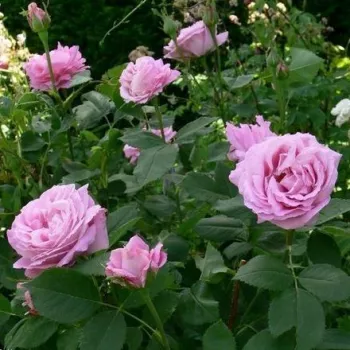
Growth and structural characteristics Upright shrub, about 110–160 cm tall and 120–180 cm wide, with dense, matt light-green foliage, relatively few prickles and a moderately vigorous, well-anchoring growth habit for borders or hedges.
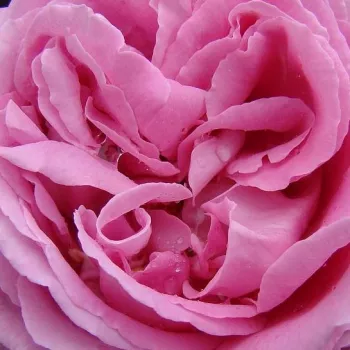
Flower morphology Very double, ball to pompon-shaped blooms with over 40 petals, usually borne singly on stems, extra-large flower size around 3.5 inches or more, and remontant with abundant second flushes.
Colour data and phenology Deep carmine-pink buds open to silky mid-pink with lilac-silver tones, fading through pastel to pale porcelain pink; outer petals RHS 65C, inner 65D, with moderate colour retention over the bloom life.
Fragrance and aroma Very strong, sweet rose fragrance with pronounced tea notes, noticeable at a distance in still air; dense petal formation gives luxurious scent but largely hides stamens and nectar from pollinators.
Hip characteristics Forms moderately abundant, ovoid red hips about 10–14 mm in diameter, adding subtle seasonal interest in late season if faded flowers are left instead of being removed for repeat bloom.
Resistance and winter hardiness Hardy to around −34 to −32 °C (RHS H7, Swedish zone 5, USDA 4a); disease resistance medium for black spot, mildew and rust; dislikes prolonged heat or drought and prefers regular watering.
Horticultural recommendations Best in fertile, well-drained but moisture-retentive soil; suit borders, specimens, hedges and large containers, with planting distances from 90 to 165 cm and occasional pest and disease checks as needed.

MRS. JOHN LAING combines season-long flowering, powerful fragrance and an upright, space-efficient habit in a durable own-root form, making it a cultured, long-term choice for refined coastal or family gardens.
Detailed product attributes

Product Identification Data

Product Name: MRS. JOHN LAING – pink historical perpetual hybrid rose - Bennett
Product Type: vivianaROSE® ORIGINAL - 2-litre own-root potted rose
Cultivar Authenticity: Verified:21.06.2025
Cultivar Quality Rating: premium silver
Item Number: [947] 40-046 (14.02.2026) vivianarose.co.uk

Name and Registration

Meaning of Cultivar Name: The name was given in honour of Sarah Wood Laing, the wife of British construction magnate John Laing.
Original Trade Name: Mrs. John Laing

Current Trade Name: Mrs. John Laing Historic rose Bennett

Rose Group: Hybrid Perpetual
Commercial Type: historic, perpetual hybrid rose
Commercial Group: Historical rose
Exhibition Category: cut flower; exhibition remontant hybrid
Collection: Historic rose

Origin and Breeding

Initial Distributor: Chas. F. Evans (USA, 1887); C. F. Newman & Sons (Australia, 1894)
Registration Year: unregistered cultivar
Breeder: Henry Bennett
Breeding Company / Institution: unknown / no data
Breeding Year: United Kingdom, 1885
Parentage: ‘François Michelon’ × unknown seedling

Awards and Honours

Competition and Show Awards: RNRS Gold Medal (1885); American Rose Society "Victorian Certificate" (1999, Buckeye District); American Rose Society "Victorian Certificate" (2000, Las Vegas Valley)

Growth and Structural Characteristics

Height: 3.6-5.2ft (110-160 cm)
Spread: 3.9-5.9ft (120-180 cm)
Growth Habit: upright
Foliage: The cultivar has dense foliage, with matt leaves in a light green shade (RHS 138C).
Prickliness: barely thorny
Self-Cleaning Description: Most spent flowers remain on the plant and require later deadheading.
Self-Cleaning Intensity: self-cleaning: weak

Flower Morphology

Flower Fullness: very double-flowered
Flower Shape: ball, pompon
Flower Size: XL (3,5 in -)
Inflorescence Type: solitary
Colour Code: ARS code: lp RHS code: 65C (outer), 65D (inner)
Repeat Flowering: It is remontant and its second flowering is also abundant.

Colour Data and Phenology

Colour: pink
Flower Colour Description: Silvery-tinged, soft mid-pink; becomes paler as it fades.
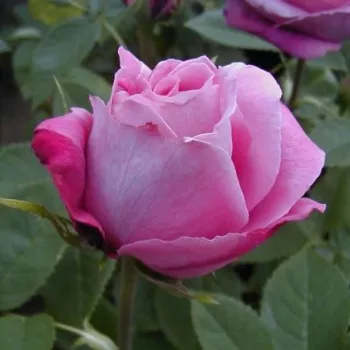
Closed Bud: Deep carmine-pink with a delicate silvery sheen at the tip.
Newly Opened Flower: Silky, mid-pink centre with lilac-silver outer tones.
Full Bloom: Uniform pastel pink with a pearlescent inner shade.
Before Fading: Pale porcelain-pink with a silvery-white fading at the edges.
Colour Fading Description: Noticeably fades: the deep carmine-pink bud shifts to mid-pink, then to pastel and finally to a pale porcelain pink, with a silvery‑whitish fading at the edges.

Fragrance and Aroma

Fragrance Strength: very strongly scented, noticeable from a distance rose
Fragrance Character: deeply sweet, tea-like, rose-like
Pollinator Attraction: Double (very full) blooms do not attract pollinators because the dense petal form hides the stamens and makes nectar and pollen inaccessible.
Pollinator-Friendly Rating: not pollinator-friendly

Hip Characteristics

Hip Shape: egg-shaped
Hip Colour: red (RHS 44A)
Hip Comment: Moderately abundant, 10–14 mm in diameter, ovoid, red (RHS 44A) rose hip.

Resistance and Hardiness

Hardiness (°C): -34–-32 °C
Heat and Drought Tolerance Description: Performance may decline in hot conditions; it does not tolerate prolonged drought and requires regular watering.
Disease Resistance: medium
  • powdery mildew – medium
  • black spot – medium
  • rust – medium

Horticultural Recommendations

Recommended Planting Distance: for mass planting 105 cm, for a hedge 90 cm, as a specimen 165 cm
Planting Density: square planting 0,9 plant/m², hexagonal arrangement 1,0 plant/m²
Partial Shade Tolerance: Tolerates partial shade
Maintenance Requirement: Maintenance requirement medium; occasionally requires pest control.
Primary Uses: border, specimen, cut flower, park, container, hedge

Comments

Strengths: Real photographs – Refined garden style
Companion Plants: Carex morrowii - Japanese sedge Vinca minor - lesser periwinkle Phlox subulata - creeping phlox
Comment: -
MRS. JOHN LAING – pink historical perpetual hybrid rose - Bennett
Silvery-tinged, soft mid-pink; becomes paler as it fades. - historic, perpetual hybrid rose - very strongly scented, noticeable from a distance rose - deeply sweet, tea-like, rose-like
Online rose purchase - historic, perpetual hybrid rose - Mrs. John Laing - pink - (3.6-5.2ft (110-160 cm))
Inflorescence: solitary Height: 3.6-5.2ft (110-160 cm) Flower shape: ball, pompon Winter hardiness: 6b pink - Chas. F. Evans (USA, 1887); C. F. Newman & Sons (Australia, 1894) historic, perpetual hybrid rose - Flower size: XL (3,5 in -) Flower size: XL (3,5 in -) - Height: 3.6-5.2ft (110-160 cm) Height: 3.6-5.2ft (110-160 cm) - Flower fullness: very double-flowered Mrs. John Laing - Roses in the garden | vivianaROSE® Original - premium silver Henry Bennett

We showcase the external appearance of the roses available for online purchase from our webshop.


Which product type is right for you?


Information

In what condition do we send the rose from our online webshop?

Let us ask ourselves the question: What do I want to use the rose for?
Flower? - Location? - Screening? - Fragrance? - Height? - Breeder? - Rose hips?

Rose purchasing information
Payment methods - Delivery costs - Delivery - Complaints handling

Care guide

Our product is a rose grown with pharmaROSA®’s unique cultivation technology!

2-litre, own-root, potted rose.
With a shoot system appropriate to the season.
With a root system that thoroughly permeates the growing medium.
Quality compliant with the requirements of the E.N.A. (European Nurserystock Association).
Supplied in unique packaging that prevents damage.
Can be planted during frost-free periods.
True-to-variety rose bush with a unique identifier.

The pharmaROSA® own-root potted rose is a well-rooted plant that supports reliable establishment when planted and cared for properly, so it can be planted whenever the soil is not frozen.


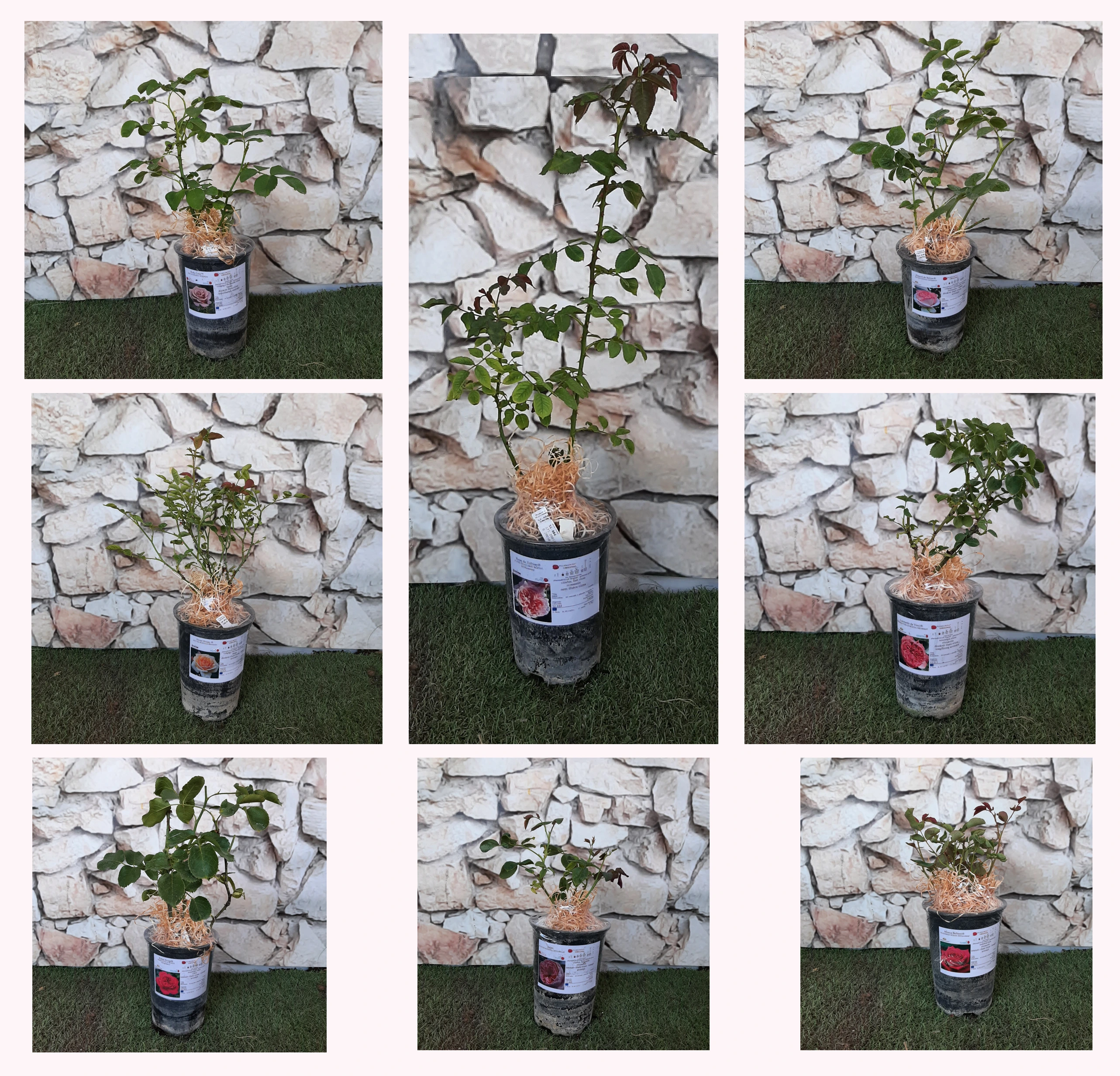
Crop overview: several varieties and growth stages in a short crop section.
Shoot system: intensive growth of fresh basal shoots on a young plant.
Root system: demonstration of a vigorous root system permeating the growing medium, by removing the pot.
Balance: mature plant with root system and shoots in harmony with each other.

Information about the videos
The video series is not a “seasonal showcase”; it illustrates the essence of pharmaROSA® own-root cultivation in a tangible way: how the plant is built up, what the root system is like and how the shoot system regenerates. The recordings were therefore made at different times and with plants at various stages of development, so mixed foliage levels and differing stages of growth may appear in the videos. They are not a ‘sample’ of the batch dispatched, but a visual explanation of how the technology works. The current condition of the rose available to order — typical for the given period and similar to what you can expect to receive in the parcel — is shown in the upper part of the product page.

pharmarosa.ptpharmarosa.hupharmarosa.dkdenisarose.frfrancescarose.itcharlotterose.bekimrose.nlpharmarosa.skpharmarosa.atpharmarosa.co.ukpharmarosa.czpharmarosa.depharmarosa.ropharmarosa.sipharmarosa.hrpharmarosa.grpharmarosa.iepharmarosa.espharmarosa.plpharmarosa.lupharmarosa.bgpharmarosa.ltpharmarosa.sepharmarosa.lvpharmarosa.eepharmarosa.fipharmarosa.ru

Product types

Pages for private customers
Garden roses for the family garden, with minimal care  → ORIGINAL®
Premium garden roses – instant impact, a truly showpiece garden  → EXTRA®
Pages for professionals and private customers
Roses for public spaces – large areas, sustainable maintenance  → NATURAL®
Roses for projects – hedge and row planting, fast implementation  → RAPID®
For professional partners only
Production – propagation material for garden roses, wholesale  → NEONATAL®

Company details

PharmaRosa Ltd.
Company registration number: 01-09-717479
VAT number: 13075314-2-43
Plant health registration no.: HU130721
Bank account (IBAN):
HU85117631891388688400000000
BIC (SWIFT): OTPVHUHB
Bank name: OTP Bank Nyrt.