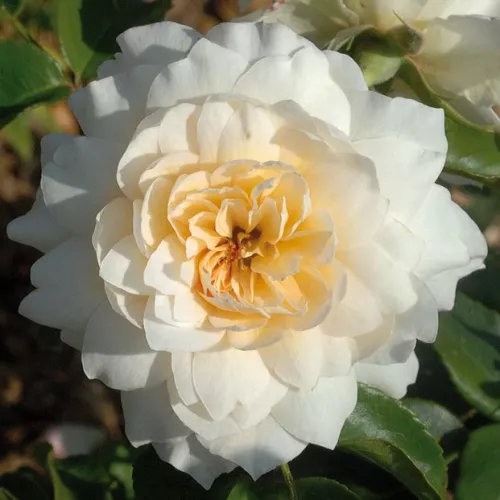
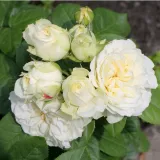
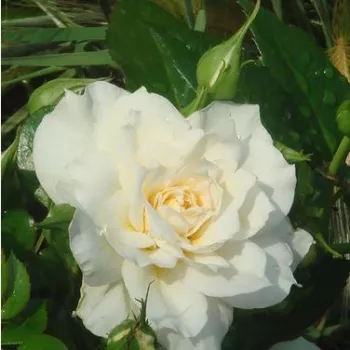
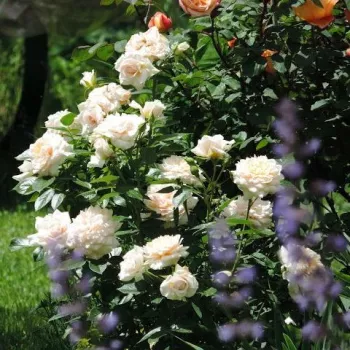
NADINE XELLA-RICCI™ – cream-white flower-bed shrub rose
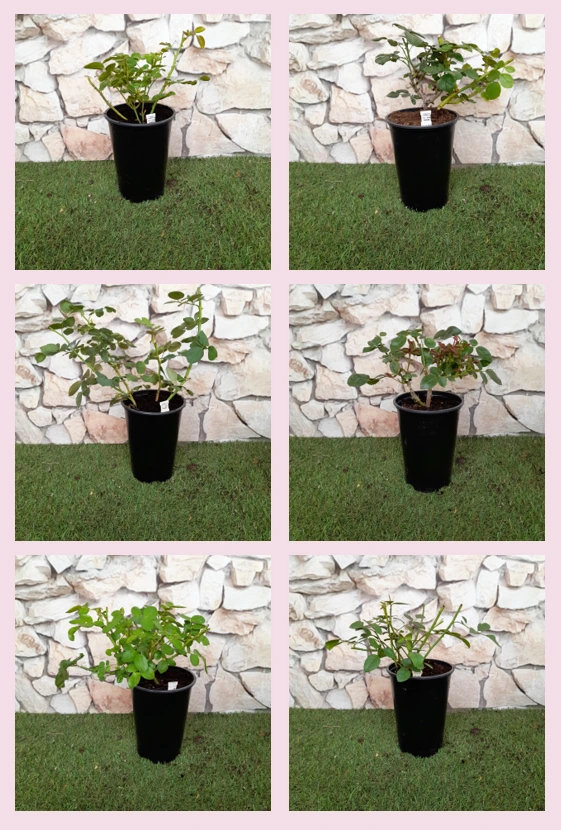
Imagine returning from a breezy beach walk to sip tea behind a living windscreen of roses: NADINE XELLA-RICCI™ brings softly creamy-white, dahlia-like blooms and a garden-filling perfume to compact coastal and town plots. This modern shrub rose stays naturally compact, making it easy to fit into smaller family beds or a large 40–50 litre pot on a sunny veranda, while its own-root form promises longevity and dependable regrowth after harsh seasons. Over the first three years it progressively builds strength – first roots, then fuller shoots, before settling into its mature character with abundant, repeating clusters of flowers. Light pruning and straightforward watering help it cope with blustery British weather, offering reassuring stability even where soil and exposure test less robust plants.
Usage options
| Target area | Reasoning |
|---|
| Coastal front garden bed (Cornwall/Devon) |
Dense branching and upright growth allow this rose to act as a low, living filter for salt‑tinged breezes, creating a calmer corner behind it without dominating views. Works well where wind and saline spray regularly challenge planting, especially for the coastal veranda owner. |
| Fragrant seating nook near patio |
The very strong, classic rose fragrance carries beautifully around a small terrace, so a short row or triangle near chairs turns everyday tea breaks into a perfumed ritual. Remontant flowering means scent returns in waves through the season for the scent-loving homeowner. |
| Compact flower bed in a family garden |
Its moderate height and 50–70 cm spread suit typical suburban borders, providing structure without overshadowing other perennials. Own‑root resilience helps the plant recover from the odd knock or child’s football, reassuring the busy family gardener. |
| Large container on a sheltered veranda |
In a 40–50 litre pot with good drainage, this shrub forms a neat, upright rose “column” of creamy blooms, ideal where soil is poor or paved over. Container cultivation simplifies water management for the time-pressed balcony dweller. |
| Low, scented hedge along a path |
Planted 35–40 cm apart, it creates a soft, shoulder‑height ribbon of foliage and flowers guiding you to the door. The sparse thorns are kinder on clothing, while repeat blooms keep the hedge attractive for months for the practical path designer. |
| Romantic mixed border with grasses |
The creamy pompoms contrast beautifully with fine panicles of ornamental grasses, and moderately dense foliage fills gaps between more airy companions. This balance of structure and lightness suits the ornamental border enthusiast. |
| Feature plant in a small front garden |
Used as a single specimen at 65 cm spacing from other shrubs, it offers a clear focal point without feeling formal. Remontant clusters draw the eye from the pavement, yet maintenance stays manageable for the low-effort style seeker. |
| Naturalistic bed with resilient companions |
Its moderate disease resistance and tolerance of heat, given sensible watering, make it a sound anchor for a mixed planting that weathers variable British summers and manages challenging exposure where wind and saline spray regularly challenge planting for the climate-aware planner. |
Styling ideas
- Coastal-calm trio – Combine with sea kale and blue Festuca to echo shingle and surf tones, using the rose as a soft screen by deck chairs – ideal for seaside veranda owners wanting an easy, breezy look.
- Cream-and-copper bed – Pair with Crocosmia ‘Lucifer’ and warm-toned gravel mulch; the fiery spikes play against the rose’s calm cream blooms – for gardeners who enjoy bold summer colour without fussy layouts.
- Soft-romantic entrance – Line a short path with closely spaced shrubs underplanted with lavender; fragrance greets visitors from ankle to shoulder – perfect for homeowners who want charm at the front door with minimal effort.
- Gravel-courtyard chic – One or two roses in large clay pots, surrounded by low, silver foliage plants, bring structure to a paved courtyard – suited to urban gardeners seeking a single, reliable statement rose.
- Mixed-park corner – Build a loose group with switchgrass and low honeysuckle for a naturalistic, slightly wild corner that still reads as cared-for – appealing to green‑minded owners favouring long-term planting over quick fixes.
Technical cultivar profile
| Parameter | Data |
|---|
| Name and registration |
Modern shrub rose, exhibition category shrub; registered as MASnaxe, marketed as Nadine Xella-Ricci™ Les Provencelles® MASnaxe; feminine given-name cultivar within the Les Provencelles® collection. |
| Origin and breeding |
Bred by Dominique Massad at Pétales de Rose, France; breeding year 2007 with unknown parentage; introduced commercially in 2007 by Pétales de Rose as a flowerbed shrub rose for wider garden use. |
| Growth and structural characteristics |
Upright, moderately dense shrub reaching about 80–100 cm tall and 50–70 cm wide, with sparsely thorned shoots and pale, slightly glossy green foliage that forms a tidy, manageable outline in beds or containers. |
| Flower morphology |
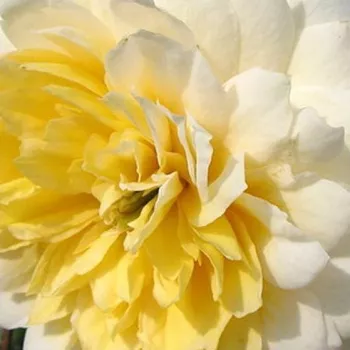
Very full, dahlia-like pompon blooms with 40+ petals, medium-sized clusters on branching stems; flowers are borne in repeated flushes through the season, with the second main wave also notably rich in blooms. |
| Colour data and phenology |
Cream-white base with pale buttery-yellow centre, ARS Wh, RHS 155C outer and 13B inner; buds ivory with lemon tones, opening milky white, then fading gradually to near off-white as the soft yellow centre gently recedes. |
| Fragrance and aroma |
Possesses a classic rose fragrance of very strong intensity, readily detectable across a small garden; dense petalling means it is primarily ornamental, with limited accessibility to pollinators for nectar and pollen foraging. |
| Hip characteristics |
Only sporadically sets small, bright red spherical hips around 10–14 mm diameter; decorative when present, but generally few in number so they do not significantly affect the plant’s overall floral performance. |
| Resistance and winter hardiness |
Rated H7, hardy to approximately −21 to −18 °C; moderate disease resistance overall, with good black spot resistance but some susceptibility to powdery mildew and rust, plus moderate heat tolerance given adequate watering. |
| Horticultural recommendations |
Best in sunny sites with well-drained soil; plant 35–40 cm apart in mass or hedge, 65 cm as specimens. Maintenance is medium, with light pruning and occasional disease checks beneficial in damp or high-pressure seasons. |
NADINE XELLA-RICCI™ offers compact structure, rich repeat flowering and a powerful classic scent in a resilient own-root form that matures gracefully over the years; consider it as a long-term, low-fuss highlight for your garden.