NAGYHAGYMÁS – pink bedding floribunda rose - Márk
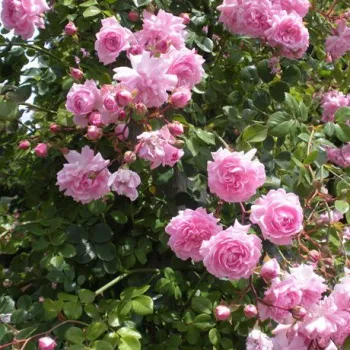
Imagine stepping onto a sunny coastal veranda where low, bushy hedges of soft pink roses shelter your tea table, giving gentle privacy and a sense of calm after a day collecting shells. NAGYHAGYMÁS settles comfortably into everyday family gardens, coping steadily with exposed, breezy corners and salt-laced winds where many roses hesitate, while its compact habit keeps it tidy in small beds or shingle strips. As an own-root plant it builds quiet, long-term resilience, regenerating well from pruning and maintaining even colour and form over the years. You can rely on one clear, generous flush of clustered blooms in early summer, reducing ongoing deadheading chores and leaving the rest of the season for relaxed enjoyment. Planted in a well-drained, sheltered spot with companions like sea kale or blue Festuca, it anchors light coastal schemes without dominating the space. Year by year the roots deepen first, then the framework fills out, until around the third season you see its settled, full character.
Usage options
| Target area |
Reasoning |
| Low coastal front-garden hedge |
The naturally bushy, 40–60 cm height makes NAGYHAGYMÁS ideal where you want a light but definite boundary along a path or drive. Its once-a-year flowering means you enjoy a clean, pink ribbon in early summer with minimal shaping afterwards, suiting those who prefer an easy seasonal routine rather than constant pruning – busy homeowners |
| Shingle or gravel bed near the sea |
This rose tolerates heat and moderate drought, settling well into free-draining, coastal-style gravel or shingle beds when combined with good planting soil around the root zone. It copes well with blustery, salt-tinged conditions, providing a dependable structure where other shrubs may struggle, especially in small front gardens exposed to onshore winds – coastal gardeners |
| Compact flowerbed in a family back garden |
The moderate spread of 75–105 cm allows you to create a softly mounded focal point without overwhelming a small lawn or play area. Planted at the recommended spacing, its mid-green leaves and uniform pink flowers form a dense, decorative block, leaving room for children’s space and seating while still giving a clearly defined rose feature – family-garden owners |
| Feature rose in a large container |
Its modest height and bushy habit work well in a 40–50 litre or larger container, where the own-root form supports long-term replanting or renewal without losing the original character. With good drainage and regular watering, it offers a neat, seasonal display on roof terraces, balconies or sunny verandas without demanding intensive care – urban balcony users |
| Informal flowering hedge along a seating area |
When planted at about 55 cm, the plants knit together into a low, informal hedge that frames your seating or tea corner without casting deep shade. The single main flush provides a concentrated period of colour, then the mid-green foliage continues to act as a calm backdrop to summer evenings, keeping maintenance relatively straightforward – relaxed entertainers |
| Mixed coastal-style border with perennials and grasses |
NAGYHAGYMÁS pairs gracefully with drought-tolerant perennials such as cranesbill and dwarf asters, and with fine-textured grasses. Its soft pink clusters contrast gently with blue, white or silver foliage, supporting a light, breezy seaside mood while its own-root strength underpins a stable framework that matures over several years – design-conscious gardeners |
| Urban green strip or front-of-house planting |
The medium maintenance level and moderate disease resistance make this cultivar suitable for modestly looked-after beds by drives, pavements or shared entrances. Once established, its tolerance of heat and occasional dryness means it stays presentable between routine waterings, giving a cared-for impression without intensive intervention – time-poor residents |
| Specimen shrub near a veranda or balcony rail |
Used as a single specimen at about 1 m spacing, NAGYHAGYMÁS creates a soft, rounded shape that reads clearly from a seat or doorway without blocking outlook. With one generous flowering period and steady foliage afterwards, it holds the scene together while allowing you to focus on light, shingle and container combinations around it – beginners |
Styling ideas
- Shell-Edge Veranda – Position a single NAGYHAGYMÁS in a 50 litre tub beside pale shingle and pots of sea kale and blue fescue for a calm, seaside sitting corner – ideal for coastal veranda owners
- Pink-Haze Border – Mass-plant along a path at 65 cm, underplanting with Geranium sanguineum to soften the line and extend colour once the main rose flush has finished – perfect for family gardens
- Front-Garden Screen – Create a low hedge between windows and pavement, combining NAGYHAGYMÁS with neat lavender clumps for privacy, scent and a tidy frontage – suited to urban terrace houses
- Gravel-Ribbon Bed – Use two or three plants in a narrow shingle strip with stepping stones, adding dwarf asters to echo their rounded form and prolong late-season interest – appealing to low-maintenance gardeners
- Coastal Courtyard Focus – Place one specimen opposite your favourite chair, flanked by tall blue verbena in pots, so the pink clusters sit at eye level against moving flower spikes – attractive for design-led homeowners
Technical cultivar profile
| Characteristic |
Data |
| Name and registration |
Current trade name NAGYHAGYMÁS – pink bedding floribunda rose – Márk; floribunda bed rose, shrub rose habit; no separate registered cultivar name; verified authenticity 23 July 2025 for vivianarose.co.uk. |
| Origin and breeding |
Bred by Hungarian rosarian Márk Gergely, breeding year 2004; parentage and breeding institution not recorded; initially distributed by PharmaRosa Ltd., with introduction and registration years not formally documented. |
| Growth and structural characteristics |
Compact, bushy shrub 40–60 cm high with a 75–105 cm spread; moderately dense, mid-green, slightly glossy foliage on moderately thorny stems, forming a low, mounded outline suited to bedding and edging schemes. |
| Flower morphology |
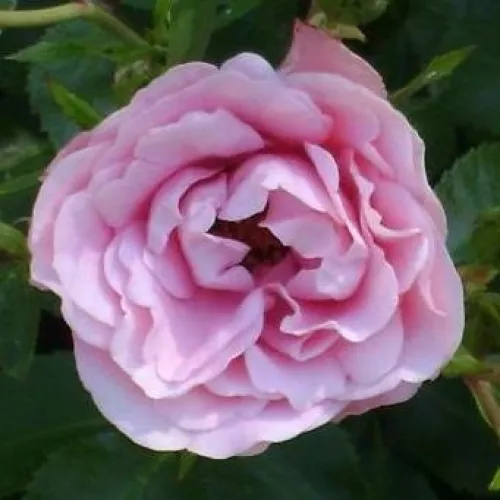
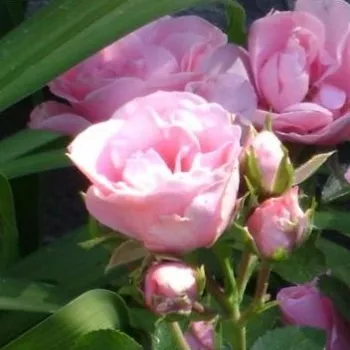
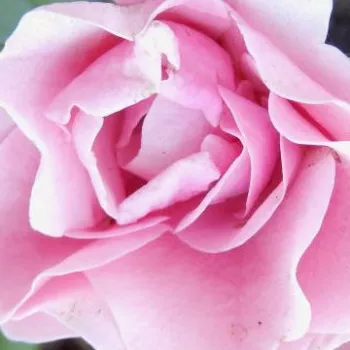
Medium-sized, cupped, double blooms (26–39 petals) carried mainly in clusters; once-flowering habit with a concentrated main flush; weak self-cleaning so spent flowers usually require deadheading for neat appearance. |
| Colour data and phenology |
Soft, pure mid-pink overall, slightly paler outer petals and more vivid centres; buds silky mid-pink; colour lightens modestly in strong sun but keeps a clean tone through full bloom and gentle fading. |
| Fragrance and aroma |
No noticeable fragrance; selected primarily for colour effect and bedding structure rather than scent, making it suitable where visual impact and compact habit are more important than perfume. |
| Hip characteristics |
Low hip formation due to double flowers; occasionally produces small, spherical orange-red hips about 7–10 mm across, adding minor late-season detail without significant ornamental weight. |
| Resistance and winter hardiness |
Rated H4, typically suitable for mild UK regions; approximate hardiness indicated to around −7 to −4 °C, with moderate resistance to black spot, mildew and rust; tolerates heat and moderate drought when established. |
| Horticultural recommendations |
Performs best in sunny positions with good drainage; suitable for flowerbeds, hedges, specimen use and urban green spaces; medium maintenance, benefiting from occasional plant protection and regular formative pruning. |
NAGYHAGYMÁS offers a compact, low hedge of soft pink clusters and good drought tolerance, and in own-root form it settles into a durable, regenerating framework over time; consider it if you prefer a calm, once-flowering rose with steady structure.