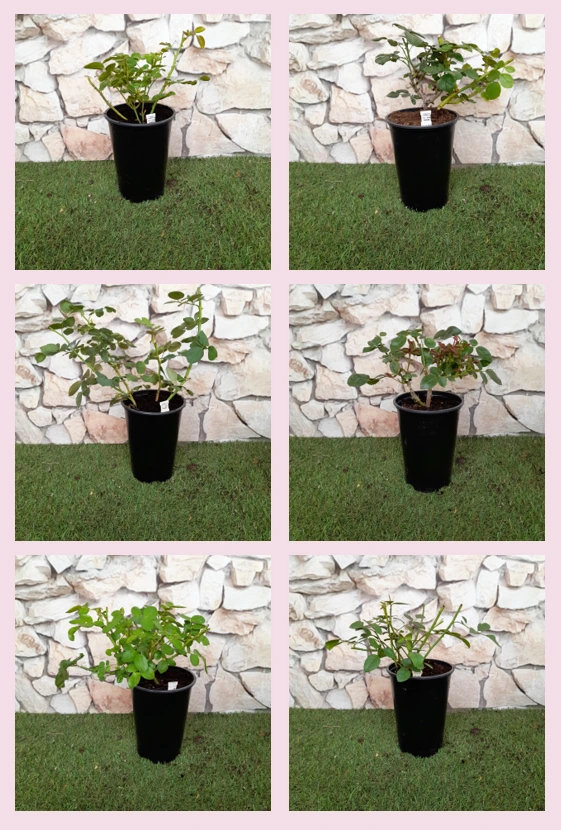
BROWNIE – orange-red bedding floribunda rose – Boerner
Imagine sipping tea on a sheltered coastal veranda as Brownie settles into a shingle bed, its warm, rusty blooms echoing driftwood tones and late-afternoon sun. This compact floribunda brings ease to planting in small family gardens, coping calmly with blustery days and salt-touched breezes thanks to its reliable roots and canopy that provide secure anchoring even where drainage is tested by heavier soils and coastal weather. Its compact habit and upright framework make it ideal for neat beds or low hedging, while the semi-double flowers add texture and a softly spicy, medium-strength fragrance around seating areas. Flower clusters repeat generously through the season for long-lasting colour in modest spaces, and the own-root form supports a long lifespan with steady regeneration, as it puts energy into roots in the first year, strong shoots in the second, and full ornamental value by the third.
Usage options
| Target area |
Reasoning |
| Coastal veranda planters (40–50 litre and above) |
Suited to larger containers where its compact, upright habit creates a calm, structured presence and warm rusty-brown flowers soften hard edges. Works well in a sheltered, sunny coastal spot, coping with brisk winds and occasional salt spray for owners of coastal-style spaces seeking ease. |
| Front garden bedding in small family plots |
Ideal for modest front gardens where reliable structure and colour are needed without complex care. Its compact spread and neat height keep paths clear, while low maintenance and disease resistance reduce spraying and fuss for busy householders wanting simplicity. |
| Low, informal flowering hedge along drive or path |
Regular spacing creates a softly defined edge, with upright stems forming a low hedge that is easy to manage. Repeating flushes of flowers give interest for much of the season, while own-root resilience supports long-term form for planners valuing durability. |
| Mixed coastal-style border with grasses and perennials |
Rusty-brown blooms pair beautifully with silver foliage and blue ornamental grasses, echoing pebbles and seaweed tones. Moderate height lets it weave among perennials without dominating, ideal for coastal-border enthusiasts who enjoy naturalistic schemes with character. |
| Family seating area in a sunny, sheltered corner |
The warm, spicy fragrance and semi-double flowers create a sensory focus beside benches and outdoor tables. Recurrent blooming extends enjoyment from early summer onwards, with minimal maintenance needed for families seeking gentle scent and colour with comfort. |
| Pollinator-friendly strip near lawns or play areas |
Semi-double flowers offer moderate accessibility to insects, adding seasonal nectar opportunities without becoming unruly or over-tall. Clustered blooms bring movement and life close to everyday spaces, suiting gardeners who want wildlife interest with manageable balance. |
| Low-input, low-chemical flower beds |
Inherent resistance to major rose diseases supports reduced spraying in typical UK conditions, fitting breathable, low-intervention garden concepts. This makes it a sound choice for those seeking reliable flowering with fewer chemical inputs and more peace. |
| Long-term structural planting in own-root rose schemes |
As an own-root rose it establishes gradually, building roots, then shoots, then mature structure, maintaining form even if cut back hard. This underpins long-lived, stable displays in family gardens where continuity matters to homeowners valuing enduring investment. |
Styling ideas
- Harbour-Edge Bed – Plant Brownie in a low ribbon along shingle paths, underplanted with sea kale and blue Festuca to mirror pebble beaches – ideal for coastal veranda owners wanting a unified, maritime feel.
- Rustic-Terrace Pots – Use one plant per 50–60 litre terracotta container, adding trailing thyme around the base for scent and softness – perfect for beginners who prefer straightforward seasonal impact with little pruning.
- Sunset-Hued Border – Combine Brownie with yellow yarrow and blue globe thistle so its rusty-brown clusters glow against cool blues and golds – suited to colour-conscious gardeners seeking a warm, evening-light palette.
- Family-Path Hedge – Line a front path at 35 cm intervals for a low hedge that frames entrances without blocking sightlines – practical for families wanting order and charm with minimal clipping.
- Breezy-Monochrome Scheme – Pair Brownie with dark grey-olive foliage shrubs and muted ornamental grasses to echo its leaf colour and flower tones – attractive to design-led homeowners favouring understated, coastal-inspired planting.
Technical cultivar profile
| Parameter |
Data |
| Name and registration |
BROWNIE – orange-red bedding floribunda rose, exhibition floribunda and shrub rose category, current trade and ARS exhibition name Brownie, unregistered cultivar, part of the bedding rose collection. |
| Origin and breeding |
Bred by Eugene S. Boerner for Jackson & Perkins Co. in the United States, 1958; introduced 1959, with parentage ‘Lavender Pinocchio’ × ‘Grey Pearl’, combining subtle, unusual colour lines. |
| Growth and structural characteristics |
Compact, upright shrub reaching about 60–80 cm in height and 50–70 cm spread, moderately thorny, with moderately dense, matt, dark grey-olive-green foliage offering tidy structure in beds and edging. |
| Flower morphology |
Semi-double, cupped flowers, 13–25 petals, borne in clusters on floribunda stems; large blooms approximately 7–10 cm, repeating freely with abundant second flush, creating sustained seasonal display. |
| Colour data and phenology |
Warm reddish-brown flowers (RHS 165A, 186A) with darker margins; tones shift from deep mahogany buds to coffee-brown, rusty hues as blooms open and fade, giving layered, evolving colour interest. |
| Fragrance and aroma |
Clearly noticeable, medium-strength scent with a warm, spicy character, best appreciated near seating areas or paths where air movement carries fragrance through sheltered, sunny parts of the garden. |
| Hip characteristics |
Produces moderately abundant, small ovoid hips, about 7–11 mm in diameter, maturing to orange-red and adding subtle seasonal interest after flowering where spent blooms are not removed. |
| Resistance and winter hardiness |
Good resistance to powdery mildew, black spot and rust under typical conditions; winter hardy to approximately −23 to −21 °C (RHS H7, USDA 6a), making it dependable across most UK regions. |
| Horticultural recommendations |
Best in full sun with reasonable drainage; suitable for beds, edging and low hedges. Recommended spacings: 35–75 cm depending on use. Maintain with light annual pruning and moderate feeding for reliable flowering. |
BROWNIE offers compact, repeat flowering, warm spicy fragrance and durable own-root growth, making it a thoughtful choice for long-lived, low-effort coastal or family garden planting.