KYBRIA – purple-cream flowerbed floribunda rose – pharmaROSA®
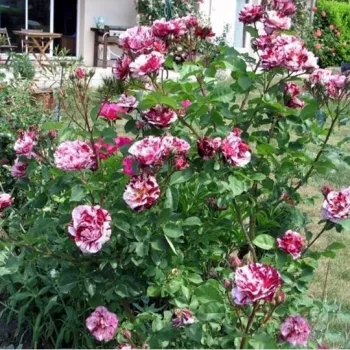
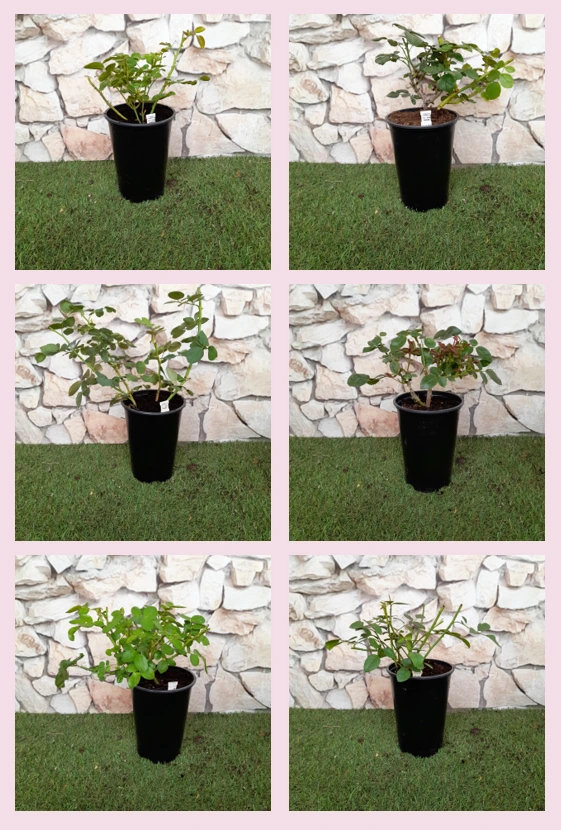
Imagine coming back from the Cornish shore, sitting down with afternoon tea as the breeze dries sea-spray from your hair: KYBRIA surrounds you with refreshing fragrance, its strong, berry-like scent carrying easily on coastal gusts. Compact, upright growth makes this floribunda naturally manageable in small shingle gardens or on a veranda, while its reliably remontant clusters ensure colour from early summer well into autumn. The crimson-and-cream marbled blooms stay pleasantly decorative even as they age, and the hardy, disease-resistant foliage remains reassuringly healthy in damp, windy weather, coping well with exposed, breezy British gardens and challenging, moisture-holding soils. Because it is supplied as an own-root plant, KYBRIA is inherently stable, recovering well if knocked back by weather or pruning, and building a long-lived framework. In its first year it concentrates on roots, in its second on building stronger shoots, and by the third season it settles into its full ornamental rhythm for many years of easy enjoyment.
Usage options
| Target area | Reasoning |
|---|
| Coastal veranda planter (40–60 litre container) |
The compact, upright habit and moderate spread make KYBRIA well suited to a single large pot on a breezy balcony or veranda, where its strong berry-like fragrance can be enjoyed at seating height after days on the beach, ideal for the relaxed coastal-style gardener and beginners. |
| Small front garden flowerbed |
Regular clusters of medium-sized, double flowers deliver a long, colourful season without complex pruning, giving reliable impact beside the front door even in modest spaces, which suits time-pressed homeowners and busy. |
| Mixed coastal-style border with grasses |
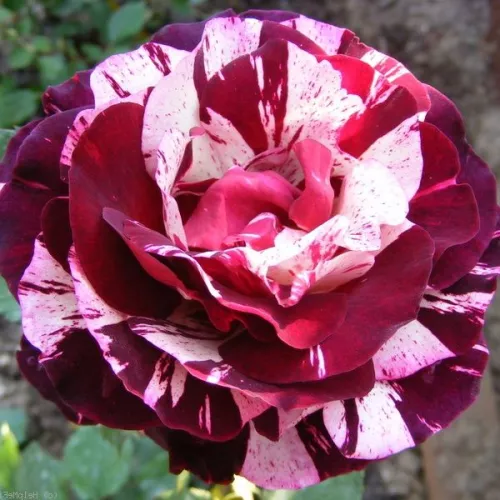
Its striking marbled crimson-and-cream blooms stand out against cool-toned gravel, Festuca and sea kale, echoing beach pebbles and seaweed tones while coping comfortably with exposed, breezy British gardens and challenging, moisture-holding soils, attractive to coastal-style lovers and enthusiasts. |
| Low informal hedge along a path |
The recommended 50–60 cm spacing allows a low, season-long flowering line that visually anchors paths in windy gardens, with the own-root character giving a durable, regenerating structure over many seasons for practical-minded family gardeners and planners. |
| Family seating area windbreak |
Planted in a loose row behind a bench, KYBRIA’s upright, moderately dense foliage helps filter the breeze, while repeat-flowering clusters provide scent during summer teatime, appealing to families wanting gentle shelter and comfort. |
| Statement rose in a feature pot |
In a 40–50 litre container, the vivid, patterned flowers become a focal point with minimal effort, and the hardy, disease-resistant foliage stays presentable for long periods, suiting design-conscious owners who prefer low-maintenance impact. |
| Easy-care bed rose in clay-based soil |
Once established, the robust root system of this own-root floribunda copes reliably with typical British clay, provided you improve drainage at planting, offering a reassuring option for gardeners with challenging plots and limited. |
| Long-lived accent near steps or gateways |
Planted as a solitary at roughly 1 m spacing, KYBRIA forms a stable, medium-height bush that ages gracefully, with replacement shoots arising from the base if older stems are pruned out, appreciated by those seeking enduring structure and longevity. |
Styling ideas
- Shingle-terrace trio – Group three KYBRIA in large pots with pale gravel mulch, echoing beach shingle tones – ideal for coastal veranda owners wanting low-effort seaside atmosphere.
- Berry-tea corner – Place KYBRIA by a bistro set, underplanted with lavender for contrast, so the strong berry-like fragrance complements afternoon tea – suited to fragrance lovers seeking simple indulgence.
- Pebble-border rhythm – Repeat KYBRIA along a curving path with blue Festuca and sea kale, letting the marbled blooms punctuate silvery foliage – for homeowners after a cohesive, coastal-inspired line.
- Family-front welcome – Plant a pair of KYBRIA by the front gate with trailing bellflower at their feet, offering colour and scent with minimal care – perfect for busy families wanting smart kerb appeal.
- Veranda-showpiece pot – Use one KYBRIA in a tall 50-litre container with Clematis ‘Amber’ weaving through for layered colour – appealing to beginners who want a bold feature without complex maintenance.
Technical cultivar profile
| Parameter | Data |
|---|
| Name and registration |
KYBRIA is a floribunda bed rose marketed as Kybria Bedding rose pharmaROSA®, a premium silver-rated, own-root garden rose for flowerbeds and containers; formal registration details and exhibition names are not recorded. |
| Origin and breeding |
Discovered in France in 2004 and later distributed by PharmaRosa® Ltd. (Hungary), this variety has unknown parentage but carries the origin guarantee of the pharmaROSA® selection, focusing on garden reliability. |
| Growth and structural characteristics |
Compact, upright shrubs reach about 70–90 cm high and 60–85 cm wide, with moderately dense, glossy mid-green foliage and moderate prickliness, forming stable, well-shaped bushes for beds, edging or large containers. |
| Flower morphology |
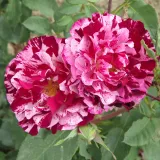
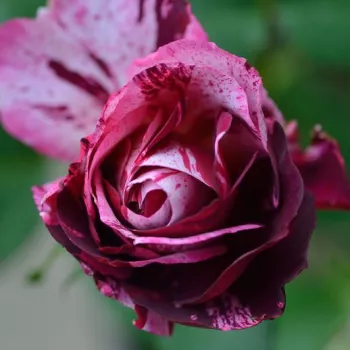
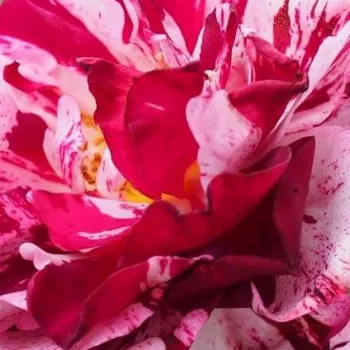
Medium-sized, double, cup-shaped blooms with 26–39 petals are carried in clusters of three to five per stem; the variety is remontant, producing a plentiful second flush and further waves of flowers through the season. |
| Colour data and phenology |
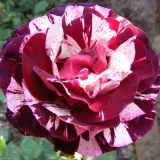
Flowers open dark wine-red with irregular cream-white striping, then mellow to chestnut with creamy yellow streaks; the marbled crimson-cream effect softens as the bloom ages but remains eye-catching until petal drop. |
| Fragrance and aroma |
The variety is strongly scented, with a fresh, berry-like character that is noticeable around seating areas; dense, double blooms offer limited nectar access, so it is chosen more for human enjoyment than pollinator support. |
| Hip characteristics |
After flowering, occasional small hips about 10–14 mm across may form; these are not a major ornamental feature but can add a discreet seasonal accent if spent blooms are not removed. |
| Resistance and winter hardiness |
Rated to approximately –26 to –23 °C (RHS H7, Swedish zone 4, USDA 5b), this rose shows notable resistance to black spot, powdery mildew and rust, contributing to low routine maintenance in typical UK climates. |
| Horticultural recommendations |
Best used in flowerbeds or low hedges at 50–60 cm spacing, or as a solitary at 1 m; in containers choose 40–50 litres or larger, improve drainage on heavy soils, and prune lightly to maintain a balanced, flowering framework. |
KYBRIA offers strong berry-like fragrance, distinctive marbled flowers and dependable hardiness in an own-root form that matures into a long-lived, low-maintenance shrub, making it a thoughtful choice for relaxed coastal or family gardens.