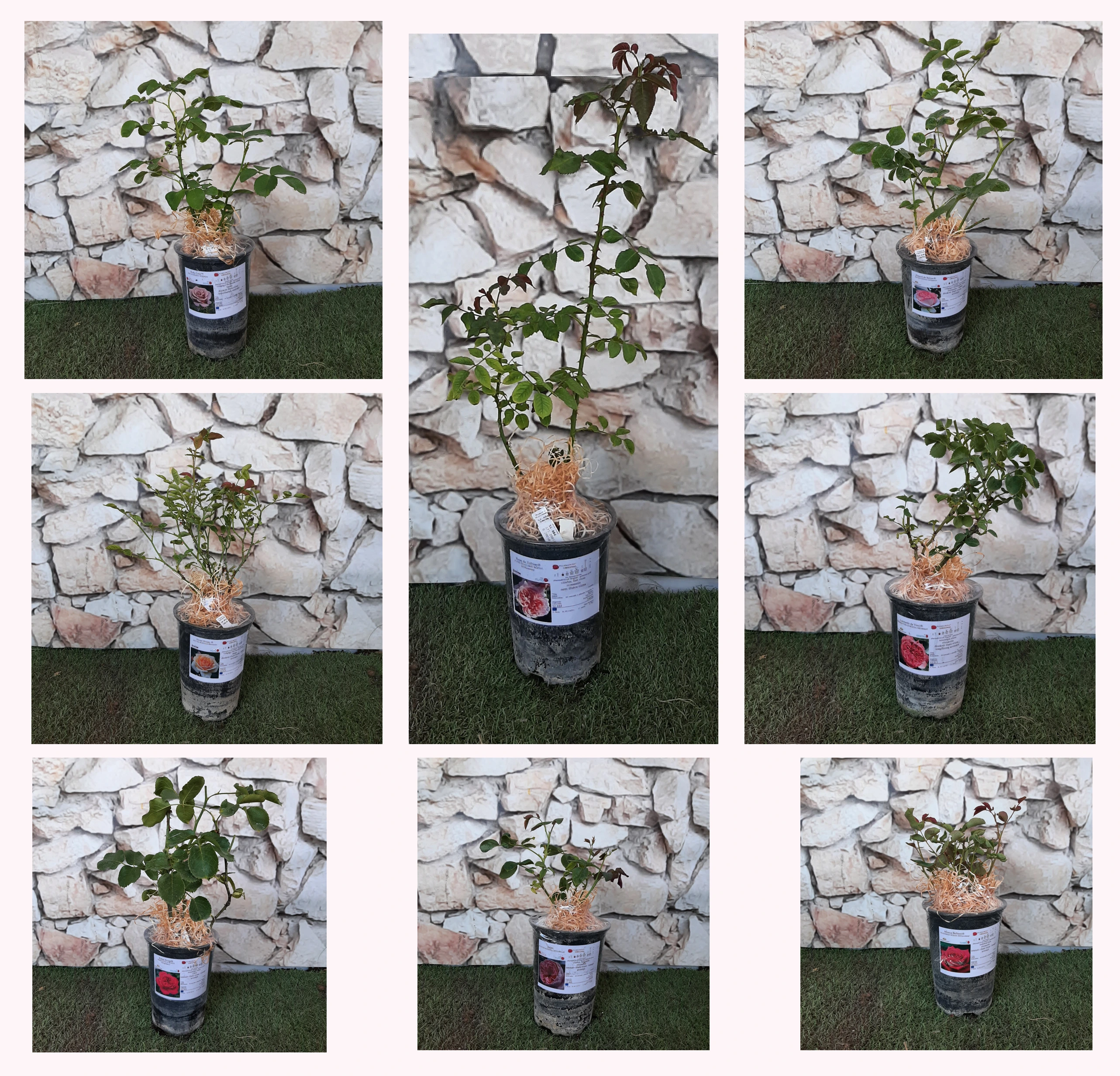
NINA WEIBULL® – dark red bedding floribunda rose – Poulsen
Imagine returning from the Cornish shore to sit behind a sheltered windbreak, rinsing salt from your hands and looking out over a low, glowing hedge of deep red roses. NINA WEIBULL® brings this quietly invigorating, refreshing mood to compact coastal gardens and verandas, coping well with blustery days and drizzle while its roots anchor securely in improved, free‑draining soil even on heavier ground, helping manage winter wet and summer dry spells with reassuring stability. Its floribunda clusters offer season‑long colour from early summer to autumn with minimal deadheading, as most spent blooms drop cleanly for you and even give way to bright hips if left in place. Over time the own‑root habit builds a resilient framework, settling in gently from strong root growth to fuller shoots and then a mature display, rewarding you with lasting longevity, low‑fuss maintenance, and a naturally welcoming, bee‑friendly habitat around your home.
Usage options
| Target area |
Reasoning |
| Small coastal front garden bed |
The bushy, compact habit and deep red clusters create a strong focal strip along shingle or gravel, while own‑root resilience copes well with exposed, breezy conditions beside the sea; ideal for busy yet design‑conscious homeowners. |
| Low flowering hedge by a veranda |
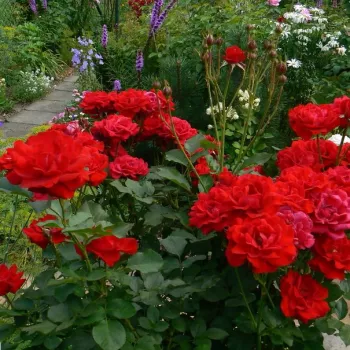
Planted at the recommended closer spacing, it forms a dense, knee‑high hedge with glossy foliage that filters wind without blocking sea views, offering a calm, sheltered tea corner for relaxed beginners. |
| Mixed border with grasses and perennials |
The semi‑double, velvety dark red flowers repeat generously, weaving colour through clumps of sea kale, feather reed grass and lavender, giving a long, textural season of interest valued by creative gardeners. |
| Family garden play‑area edge |
Stable own‑root growth and medium height create a durable, clearly defined edge that withstands occasional bumps, while natural self‑cleaning means fewer spent blooms to pick up for time‑pressed parents. |
| Bee‑friendly coastal planting strip |
The open semi‑double form exposes pollen easily, drawing bees along sunny house walls or driveways, and provides late‑season hips for wildlife, appealing to nature‑minded families. |
| Urban front garden or terrace planter |
In a 40–50 litre container with good drainage, its bushy habit and reliable reflowering give generous colour in limited space with straightforward care, a practical solution for busy urban residents. |
| Clay soil renovation strip |
Once clay has been improved with grit and compost, its own‑root system anchors securely and manages seasonal wet and dry spells with consistent top growth, reassuring cautious coastal‑zone starters. |
| Informal mass planting in small parks |
Medium maintenance and good winter hardiness make it a durable choice for repeated sweeps of colour in public or shared spaces, remaining attractive with modest attention from community‑minded neighbours. |
Styling ideas
- Harbour-Hedge Charm – run a low, single‑variety hedge along a front boundary in gravel, echoing harbour walls and moorings – suits coastal homeowners wanting simple, tidy structure.
- Veranda Glow – plant in 40–50 litre tubs with sea kale and blue fescues for a sunset palette that bounces colour off white railings – ideal for small veranda and balcony gardeners.
- Shell-Path Ribbon – line a shingle or crushed‑shell path with repeating groups, letting clusters spill softly over the edge – for families who enjoy barefoot strolls after the beach.
- Bee-Line Border – weave among salvias, verbena and ornamental grasses to create a nectar‑rich strip with movement and long bloom – for nature lovers building wildlife‑friendly gardens.
- Crimson Courtyard – mass‑plant in a sunny courtyard bed, underplant with low thyme and lavender for fragrance and easy care – for busy urban residents seeking strong colour with little fuss.
Technical cultivar profile
| Parameter |
Data |
| Name and registration |
Floribunda POULSEN bed rose; registered as POUlwei, marketed as Nina Weibull Floribunda POULSEN; ARS exhibition name Nina Weibull; feminine given‑name cultivar from the floribunda group. |
| Origin and breeding |
Bred by Svend Poulsen from ‘Fanal’ × ‘Masquerade’ for Poulsen Roser A/S; introduced and registered in Denmark in 1961, now a classic, widely grown landscape and garden variety. |
| Awards and recognition |
Recognised at Belfast Rose Trials with the RJ Frizzell Award in 2007 as Most Fragrant Rose, reflecting its enduring garden reputation and consistent performance over many decades. |
| Growth and structural characteristics |
Bushy shrub rose, typically 80–110 cm high and 50–70 cm wide; dense, dark glossy foliage, moderately thorny stems, making a compact, full plant ideal for beds, borders and low hedging. |
| Flower morphology |
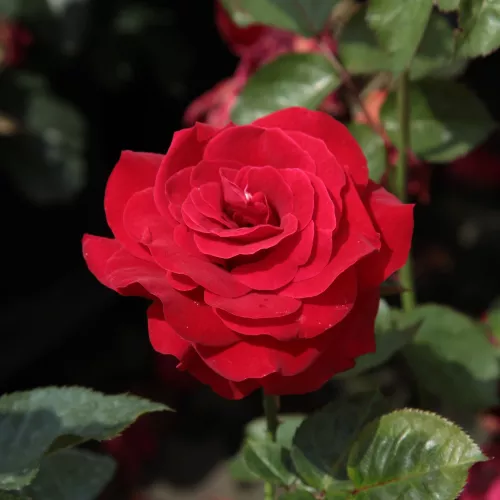
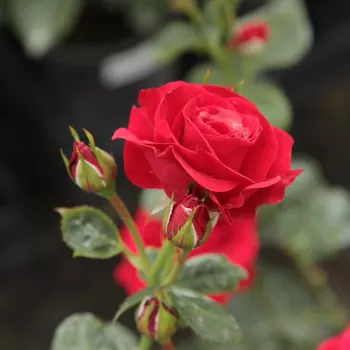
Semi‑double, cupped medium blooms with around 17–25 petals; freely produced in clusters with strong remontant habit, ensuring a generous second flush and good self‑cleaning of spent blooms. |
| Colour data and phenology |
Deep, uniform dark red blooms, RHS 53A–53B, with vivid fiery tints on opening; little fading in sun, slightly wine‑red edges with age; flowers freely from early summer into autumn in clusters. |
| Fragrance and aroma |
Fragrance is discreet and rosy, rated very weak, so it does not overwhelm sitting areas; floral display and accessible stamens are prioritised over scent, making it notably attractive to pollinators. |
| Hip characteristics |
If not deadheaded, forms small, bright red, globular hips about 8–12 mm across; moderately abundant and decorative into autumn, adding seasonal interest and potential wildlife value. |
| Resistance and winter hardiness |
Hardy to about −34 to −32 °C (USDA 4a, RHS H7, Swedish zone 5); disease resistance is medium for key foliar issues, benefitting from sensible spacing and routine monitoring in damp seasons. |
| Horticultural recommendations |
Best in full sun with improved drainage on heavy soils; medium maintenance with occasional plant protection. Ideal for beds, borders, mass planting, urban greenspaces and low, informal hedging. |
Nina Weibull® offers compact coastal resilience, long-season dark red colour and bee-friendly clusters on a durable own-root framework, making it a thoughtful choice for relaxed, enduring planting schemes.