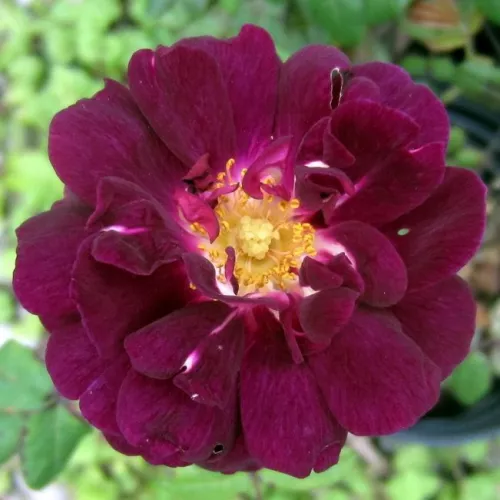
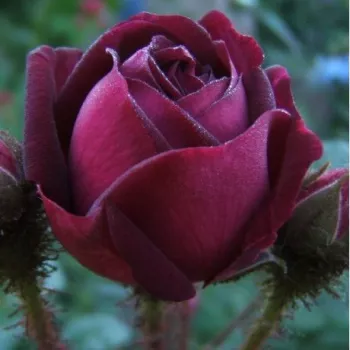
NUITS DE YOUNG – purple historical moss rose – Laffay
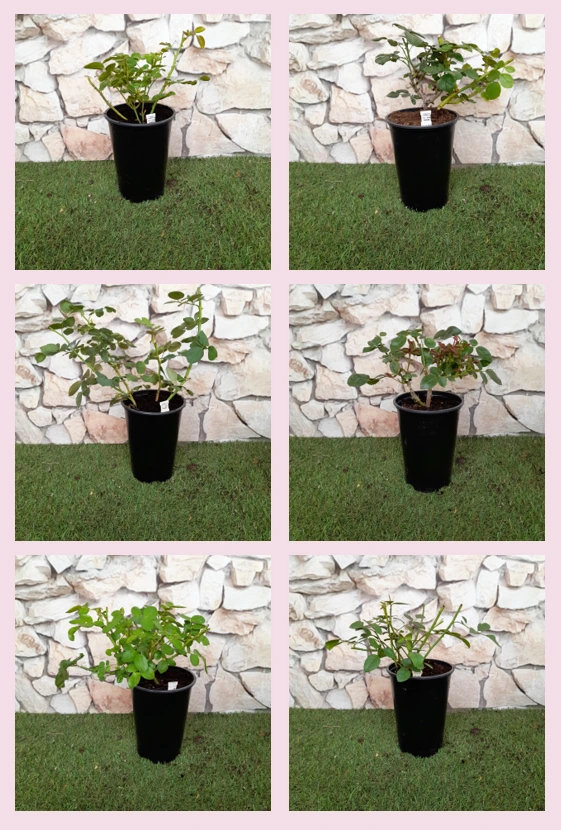
Bring a touch of antique romance to a coastal veranda or sheltered family garden with Nuits de Young, a richly scented moss rose that thrives where breezes carry a hint of sea air and helps manage strong winds and wet spells with reassuring steadiness. Its compact, upright habit suits small spaces, while the velvety, dark burgundy blossoms deliver a single, unforgettable flush in early summer. As an own-root plant, it offers quiet longevity, rebuilding itself from the base if stems are damaged and keeping your planting attractive with minimal effort. Over time, you can expect a natural progression from establishing roots in the first year, to confident shoot growth in the second, and full ornamental presence by the third, turning your shingle beds or containers into a place of evening contemplation and gentle coastal drama.
Usage options
| Target area | Reasoning |
|---|
| Small coastal veranda container (40–60 litre) |
A bushy, upright shrub with moderate height is easy to place in a large pot, giving structure without overwhelming a modest terrace. A 40–60 litre container allows good drainage and anchoring in exposed coastal spots. Ideal for the beginner. |
| Feature rose in a shingle or gravel bed |
The deep burgundy, mossed buds create a striking focal point against pale shingle and driftwood tones, echoing historical seaside charm while remaining low maintenance once established. Suitable for the coastal-style homeowner. |
| Low-maintenance family garden flowerbed |
Good disease resistance and modest care needs make it a practical choice where time is limited, yet an atmospheric once-a-year display is still desired in a mixed border. Well suited to the busy family gardener. |
| Mixed planting with salt-tolerant grasses and perennials |
Its sturdy framework partners well with sea kale, Festuca and similar plants, supporting designs that handle brisk sea breezes and periodic heavy rain on the same day. Ideal for the coastal garden enthusiast. |
| Historic-style front garden or cottage approach |
A genuine nineteenth-century moss rose with notable recognition, it lends authenticity to period-inspired schemes and creates a sense of continuity from year to year in small urban gardens. Perfect for the heritage-keen collector. |
| Lightly shaded, sheltered seating corner |
Placed where it receives good light but some shelter, its very strong fragrance can be enjoyed at close quarters during tea or reading breaks, making even a compact nook feel indulgent. Best for the scent-loving visitor. |
| Specimen shrub in a lawn pocket or park-style space |
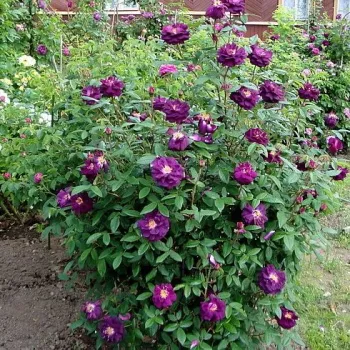
Given room at 1.8 m spacing, it forms a rounded, upright shrub that reads clearly from a distance, with dark foliage and dramatic blooms offering a calm focal point in larger green areas. A considered choice for the landscape-focused planner. |
| Pollinator-friendly corner in a family garden |
Semi-double flowers with exposed stamens offer reasonable access to nectar and pollen, adding moderate wildlife interest without complex management or high maintenance demands. A gentle option for the nature-aware beginner. |
Styling ideas
- Veranda retreat – position Nuits de Young in a single, generous container with sea kale and low Festuca at its base for a simple, breezy sitting-area accent – for coastal veranda owners seeking calm.
- Heritage border – weave it into a narrow front-garden bed with chives, old-fashioned perennials and gravel mulch to highlight its historic character – for lovers of traditional cottage style.
- Shingle focal point – anchor a small shingle bed with one shrub and a ring of compact New Zealand flax for texture and contrast – for design-conscious town gardeners.
- Parkland pocket – use as a solitary shrub in a grass pocket, underplanted with low lavender to frame the rich flower colour – for homeowners echoing informal park landscapes.
- Fragrant corner – plant near a bench in a sheltered, sunny spot where its powerful scent and mossy buds can be appreciated up close – for those who unwind outdoors after busy days.
Technical cultivar profile
| Characteristic | Data |
|---|
| Name and registration |
Nuits de Young, historical moss rose of the Heritage rose collection; ARS exhibition name Nuits de Young, unregistered cultivar, commercial type historical rose marketed under the Laffay name. |
| Origin and breeding |
Bred in France by Jean Laffay and introduced around 1845; precise parentage is unknown, but it represents classic nineteenth-century moss rose breeding and remains valued for character. |
| Awards and recognition |
Holds the RHS Award of Garden Merit (2001), indicating reliable garden performance, ornamental value and relative ease of cultivation under typical UK conditions when reasonably well sited. |
| Growth and structural characteristics |
Bushy, upright shrub reaching around 100–160 cm in height with an 80–120 cm spread; moderately dense, matt dark green foliage and notably dense prickles characteristic of moss roses. |
| Flower morphology |
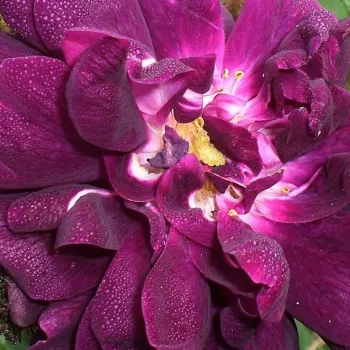
Semi-double, cup-shaped blooms in small clusters; around 17–25 petals and small flower size, usually 0.5–1.5 inches, offering a single main flowering period rather than continuous repeat. |
| Colour data and phenology |
New buds nearly blackish maroon, opening deep crimson-magenta with dark burgundy tones; in strong sun may lighten towards lilac, in cooler weather staying deeper before ageing brownish-lilac. |
| Fragrance and aroma |
Very strong, moss-rose fragrance noticeable from a distance; aromatic stems and buds enhance sensory effect, making it especially suitable where scent is a key design consideration outdoors. |
| Hip characteristics |
Produces moderately abundant spherical hips, around 10–15 mm across, in a clear orange-red tone, extending seasonal interest after flowering and providing modest wildlife and visual value. |
| Resistance and winter hardiness |
Rated H7, tolerating approximately −32 to −29 °C, with resistance to powdery mildew, black spot and rust recorded; moderate heat tolerance, needing irrigation during longer dry spells. |
| Horticultural recommendations |
Suited to flowerbeds, parks and specimen use; prefers sunny, reasonably drained sites, with spent blooms best removed; plant around 90–180 cm apart depending on hedging or solitary use. |
Nuits de Young offers historic character, powerful fragrance and reassuring hardiness in an own-root form that settles in for the long term; a thoughtful choice if you enjoy atmosphere as much as flowers.