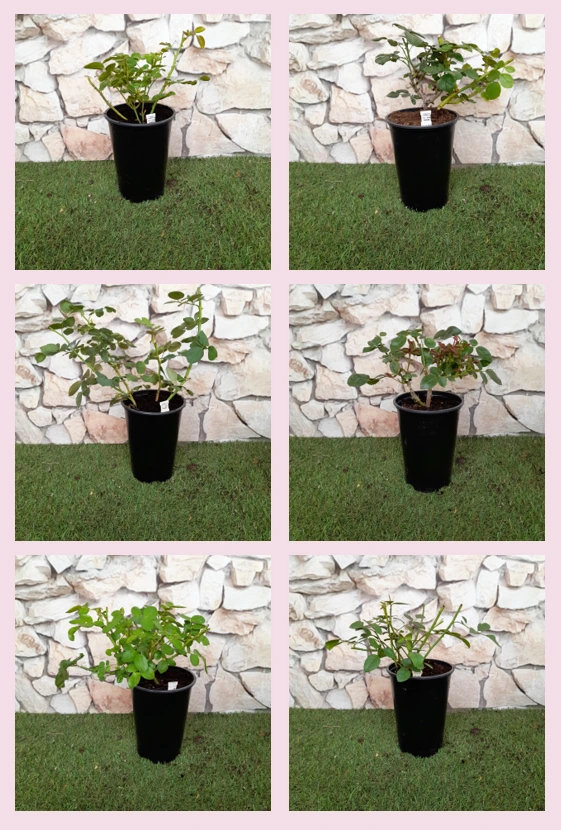
OCCHI DI FATA – white-pink bedding floribunda rose - Barni
Imagine coming home from the Cornish coast, shaking sand from your shoes and settling down with tea while Occhi di Fata nods in a salty breeze: a compact, upright floribunda that suits typical UK family plots and small verandas, giving you remontant blooms that shift from milky white to deep pink-crimson right through the summer. Its clustered flowers stay light and airy, leaving room for coastal grasses and lavender in beds or a generous 40–50 litre container, while own-root vigour and regeneration support a long-lived display with less worry about replanting. Over time you see a quiet transformation – year-one roots settling, two-year shoots filling out, and by year three a stable, reliable presence that copes steadily with coastal winds and careful water management.
Usage options
| Target area | Reasoning |
|---|
| Small coastal front garden bed |
The compact, upright habit and medium height make it easy to place along a low fence or front wall without overwhelming a modest plot, giving structured colour that echoes seaside planting for beginners and busy owners of coastal front gardens who appreciate easy-care. |
| Season-long focal point by a veranda chair |
Remontant flowering ensures a steady succession of blooms from early summer into autumn, so the seating area remains lively and romantic for months after days spent beachcombing, suiting veranda users who value long, low-effort colour and relaxed enjoyment for hobby-gardeners. |
| Colour-changing highlight in mixed border |
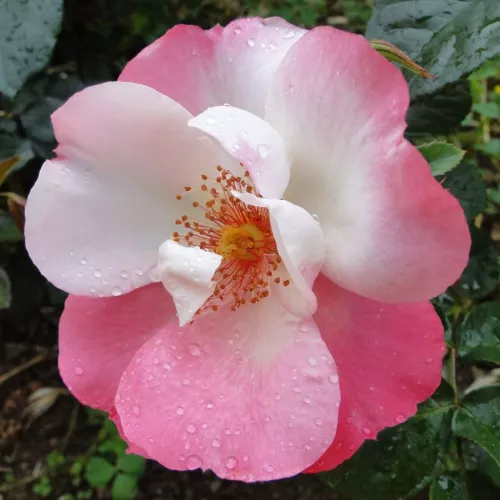
The way flowers shift from white to deep pink-crimson in sunlight adds movement and subtle drama among grasses and perennials, reflecting changing skies over the sea and appealing to design-aware gardeners seeking gentle but noticeable colour shifts for visual-impact. |
| Anchoring plant in breezy coastal bed |
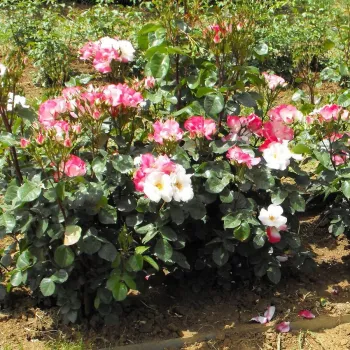
A dense, compact shrub with moderately thorny shoots helps create a stable framework that stands up respectably to sea breezes while marking out paths and edges, ideal for those wanting shape and structure without complex pruning, especially family-gardeners. |
| Pollinator-friendly strip near seating |
The single, open flowers with accessible stamens provide easy forage for bees, so even a small salt-tolerant strip can support pollinators as you sit with a cup of tea, suiting nature-loving households who want wildlife interest close by and value pollinator-support. |
| Large container on sheltered coastal veranda |
In a 40–50 litre container with good drainage, its compact roots adapt well, giving reliable flowering on verandas that look out to sea, particularly where soil is poor, attracting those who need portable, space-efficient planting with minimal fuss and appreciate container-gardening. |
| Long-lived feature in family garden bed |
The own-root form supports a longer lifespan and stable ornamental value, quietly rebuilding from the base if stems suffer wind damage or hard pruning, which reassures homeowners who want a reliable, enduring rose rather than frequent replacements, especially long-term-planners. |
| Coastal-style planting with grasses and herbs |
Combining well with Festuca, sea kale and lavender, this compact bed rose helps evoke shingle and dune landscapes while still fitting the scale of an average UK garden, coping steadily with the demands of breezy, moisture-conscious coastal plots for coastal-style-lovers. |
Styling ideas
- Veranda-Nook – Place one plant in a deep 40–50 litre pot beside a bistro table, underplanted with trailing thyme to enjoy its mild fragrance and repeat blooms – ideal for coastal veranda users who relax outdoors after work.
- Shingle-Drift – Set in a gravel or shingle bed with Festuca and sea kale to echo a soft beach palette while the colour-changing flowers add focus – suited to gardeners recreating Cornwall or Devon coastal moods at home.
- Butterfly-Ribbon – Plant a low ribbon along a front path, threading in wallflowers for spring and Occhi di Fata for summer continuity – perfect for busy families wanting easy seasonal colour without complicated schemes.
- Tea-Corner – Combine with lavender and a compact dogwood in a small border near a seating area so bees, scent and shifting flower tones enliven tea breaks – for homeowners who treasure a calm, lived-in garden corner.
- Seaside-Mix – Group three plants in a mixed border with ornamental grasses for movement and long-season bloom, letting the rose act as a steady anchor – ideal for beginners wanting a simple yet characterful coastal-style bed.
Technical cultivar profile
| Property | Data |
|---|
| Name and registration |
Floribunda bed rose; Collection Le Farfalle. Registered as BARfata, marketed as Occhi di Fata. The name means “Fairy Eyes”, from the Italian Occhi di Fata. |
| Origin and breeding |
Bred by Enrico Barni, Rose Barni, Pistoia, Italy. Parentage unknown. Bred, registered and introduced in 2004, initially distributed by Rose Barni in the Italian market. |
| Awards and recognition |
Gold (first prize) in the Floribunda category at La Tacita International Trials for New Roses in 2009, confirming strong garden and exhibition performance under trial conditions. |
| Growth and structural characteristics |
Upright, compact shrub typically 60–85 cm high and 50–75 cm wide, with dense, slightly glossy dark green foliage and moderate prickliness, forming a tidy, structured presence in beds or large containers. |
| Flower morphology |
Single, cup-shaped flowers opening fairly flat, medium-sized at 1.5–2.75 inches, borne in clusters. Petal count low at 5–12, enhancing the simple, airy look and leaving stamens easily accessible. |
| Colour data and phenology |
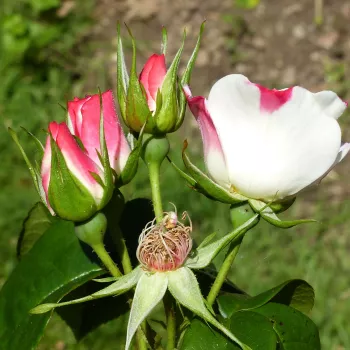
Base colour milky white (RHS 155C outer), with pink deepening towards crimson (70A inner) in sun. Newly opened blooms are pale, then darken, creating a clear gradient and moderate overall colour retention. |
| Fragrance and aroma |
Fragrance of mild intensity with a gentle rosy character rather than a strong perfume. Best appreciated at close range on still, warm days, complementing rather than dominating nearby scented plants. |
| Hip characteristics |
Forms moderately abundant, spherical hips around 8–12 mm across, coloured orange-red. Adds a discreet autumn accent and potential interest for wildlife in low-maintenance family gardens. |
| Resistance and winter hardiness |
Hardy to about −21 to −18 °C (RHS H7; USDA 6b; Swedish zone 3). Disease resistance medium to powdery mildew and black spot, very sensitive to rust, so regular plant protection is advisable. |
| Horticultural recommendations |
Best in full sun with well-drained soil; water during prolonged drought. Recommended spacings: 40 cm for massing, 35 cm for hedging, 65 cm as specimen. Suitable for beds, borders, groups and well-sized containers. |
Occhi di Fata offers compact structure, season-spanning colour and pollinator-friendly single blooms, and in its own-root form it builds a durable, regenerating framework that rewards patient gardeners; an attractive choice to consider for your coastal-inspired garden.