PANVESON – mauve hybrid tea rose – PANveson
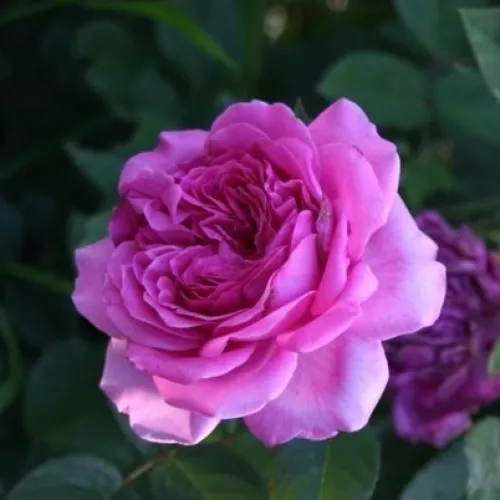
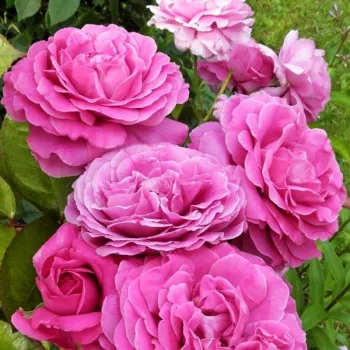
On a breezy afternoon by the coast, PANVESON settles into your family garden as a refined yet reliable presence, its mauve blooms glowing softly against dark green leaves. This hybrid tea’s strong, citrusy fragrance rises clearly even on cooler winds, bringing a sense of refreshment to a small shingle bed or sheltered veranda. In a suitably drained spot it copes steadily with blustery, salt‑tinged conditions, giving you a calm, upright structure that anchors pots and borders. Large, high‑centred flowers appear on long, straight stems, ideal for cutting, while the own‑root form promises quiet longevity, good regeneration after pruning, and a smooth development from establishing roots in year one, stronger shoots in year two and full ornamental presence by year three.
Usage options
| Target area | Reasoning |
|---|
| Coastal veranda in large containers |
In a 40–50 litre container, PANVESON’s upright habit and steady root system give a composed focal point that copes reliably with breezy, salt‑tinged conditions on Cornish or Devon balconies and terraces, suiting style‑conscious veranda owners. |
| Small front garden specimen by the path |
The tall, high‑centred blooms read clearly from the pavement, while the long, straight stems keep the plant tidy and easy to integrate beside a path or gate, which appeals to busy but design‑aware homeowners. |
| Cutting bed for perfumed indoor bouquets |
Large, double, exhibition‑style flowers on single stems cut cleanly and hold well in the vase, their strong, fresh citrus fragrance filling the house and rewarding those who enjoy arranging flowers as relaxed hobby‑gardeners. |
| Shingle or gravel strip in a coastal garden |
Set into a free‑draining, shingle‑style bed, PANVESON’s own‑root endurance and ability to anchor itself against wind give long‑term structure and colour in exposed plots, reassuring practical coastal gardeners. |
| Mixed rose and perennial border |
The clear, silvery mauve flowers weave elegantly between sea kale, Festuca and lavenders, their unusual tone lifting softer grasses and foliage, which suits visually adventurous coastal‑style lovers. |
| Part‑shaded side return or courtyard |
Tolerant of partial shade, PANVESON keeps producing scented blooms where many hybrid teas would sulk, providing a refined vertical element for narrow spaces valued by space‑conscious urban dwellers. |
| Long‑term feature in a family garden |
As an own‑root rose, PANVESON ages steadily without graft‑fail worries, rebuilding from the base after hard pruning and giving stable ornamental value over many seasons, reassuring planning‑minded families. |
| Formal pair in entrance pots |
Planted as a matching duo in generous containers, the upright habit and regular flowering create a composed, welcoming look at the front door with relatively simple routine care for aesthetically focused beginners. |
Styling ideas
- Seaside Veranda Duo – two PANVESON in 50 litre tubs flanking a bistro set, underplanted with silver Festuca to echo shingle and sea spray – for relaxed coastal veranda owners
- Mauve Cutting Row – a short, straight line of bushes in a sunny corner, spaced for easy access, dedicated to perfumed stems for the house – for flower‑arranging hobby gardeners
- Lavender Drift Border – PANVESON dotted amongst low Lavandula and sea kale, the silvery mauve petals picking up soft blue and grey foliage tones – for lovers of cool, coastal palettes
- Formal Entrance Pair – two container‑grown plants framing a doorway, with pale gravel mulch and a dwarf pine behind for evergreen contrast – for design‑led homeowners
- Shingle Island Feature – a single PANVESON rising from a small gravel island with Liatris and gypsophila, giving airy movement around a calm mauve centre – for small‑garden experimenters
Technical cultivar profile
| Property | Data |
|---|
| Name and registration |
Hybrid tea rose PANveson, marketed as PANVESON – mauve tea-hybrid rose – Panozzo; ARS exhibition name Sourire de Perigueux; group and commercial type hybrid tea rose. |
| Origin and breeding |
Bred by Bernard Panozzo in France and introduced in 2007 by Star de Doué; parentage unknown, but selected for refined hybrid tea form and distinctive silvery mauve colouring. |
| Growth and structural characteristics |
Upright, moderately thorny bush reaching about 80–120 cm tall and 50–70 cm wide, with moderately dense, slightly glossy dark green foliage giving a neat, vertical garden presence. |
| Flower morphology |
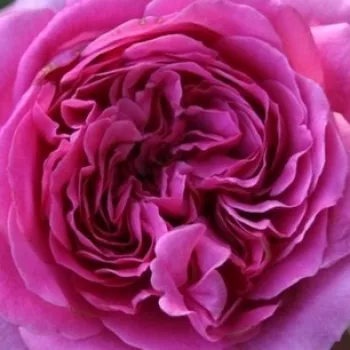
Large, fully double, high‑centred hybrid tea blooms with 26–39 petals, mostly borne singly on stems; remontant, with a notably abundant second flush following the main summer flowering. |
| Colour data and phenology |
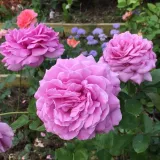
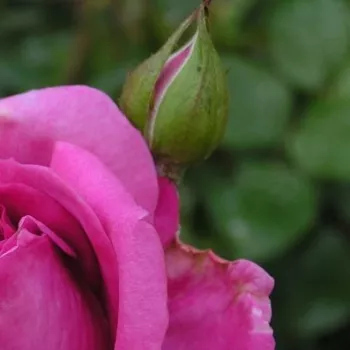
Silvery veiled mauve with lilac shades; buds deep bluish mauve, opening to greyish‑lilac and pastel lavender‑mauve before fading, RHS 76C–76D, with a soft, silky sheen across the petals. |
| Fragrance and aroma |
Strong, long‑lasting scent with a fresh, citrusy floral character; fragrance is noticeable outdoors in still conditions and becomes particularly prominent when flowers are cut for indoor enjoyment. |
| Hip characteristics |
Hip formation generally poor due to the fully double flowers; where present, small 10–14 mm ellipsoidal red hips may appear, adding modest late‑season interest without significant seeding. |
| Resistance and winter hardiness |
Fully hardy to approximately −21 to −18 °C (RHS H7, USDA 6b, Swedish Zone 3); disease resistance moderate to low, with susceptibility to rust and moderate sensitivity to black spot and mildew. |
| Horticultural recommendations |
Best in well‑drained soil with regular feeding and protective spraying; suitable for beds, edging, specimens and cutting, at 50–90 cm spacing depending on use and about 3 plants per m² for massing. |
PANVESON offers silvery mauve, strongly scented hybrid tea blooms on long stems, combining elegant cutting quality with durable own-root performance for gardeners who would enjoy a quietly distinctive coastal-style rose.