PAPAGENA™ – orange bedding floribunda rose - McGredy
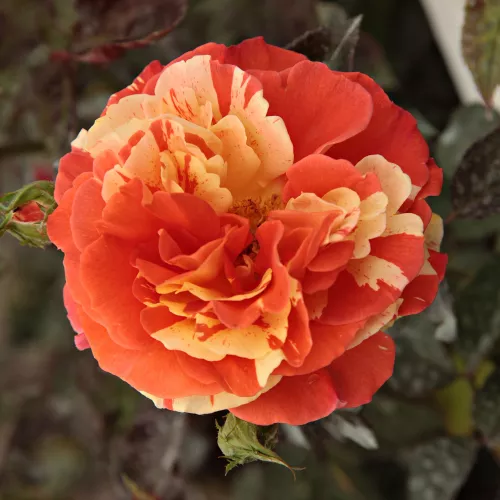
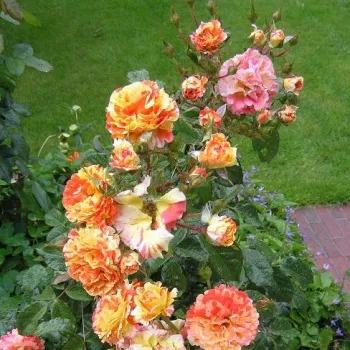
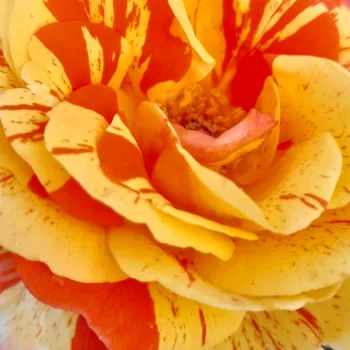
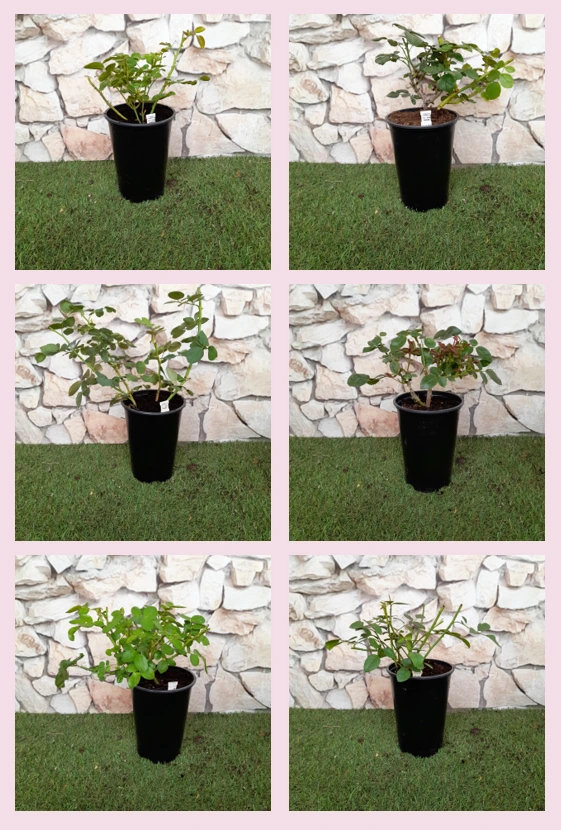
Imagine sitting out with afternoon tea, looking over a low, glowing drift of colour as PAPAGENA™ flickers between vivid orange and lemon-yellow stripes, echoing beach-hut sunshine on a blustery Cornish day. This compact floribunda takes coastal breezes and changeable weather in its stride, helping roots anchor securely even where soil is heavy but well-drained. Flowering in generous flushes from early summer, it keeps the border lively without demanding constant attention, so you mostly just water, deadhead and enjoy. As an own-root rose it is bred for longevity, quietly building a stronger base each season: year one focuses on roots, year two on fuller shoots, and by year three you can expect its full ornamental impact in your family garden. In a 40–50 litre pot on a veranda, its upright yet bushy habit stays manageable, creating a wind-filtering screen of glossy dark foliage and bright blooms that feel as refreshing as sea breeze.
Usage options
| Target area | Reasoning |
|---|
| Small coastal front garden bed |
Compact height and bushy structure make PAPAGENA™ ideal for a neat, low-maintenance front bed that still gives strong colour from the street. Its reliable disease resistance reduces the need for spraying, even in damp sea air, suiting beginners. |
| Feature rose in a 40–50 litre veranda container |
In a large pot it forms an upright, slightly arching bush that is easy to keep in shape on a veranda. Regular watering and occasional feeding are usually enough for a long flowering season, making it appealing for busy-owners. |
| Shingle or gravel planting near the house |
Works well in a free-draining shingle or gravel strip, where the bright orange-and-lemon blooms lift the neutral stone and echo a relaxed seaside palette. Rooting on its own stock supports long-term stability for low-effort gardeners. |
| Mixed border with perennials in family garden |
The semi-double, medium-sized flowers repeat generously in clustered heads, threading vivid colour through perennials without overwhelming them. Its manageable size and good resistance mean less fuss for family-gardeners. |
| Lightly shaded side garden or passage |
Tolerates partial shade, so it can brighten a side path or the more sheltered parts of a coastal plot where sun is limited for part of the day. This flexibility suits space-conscious homeowners. |
| Low, colourful wind-filter along a terrace |
Planted in a line, the upright yet bushy habit makes a soft, flowering barrier that breaks the force of onshore winds without blocking the view, particularly useful where regular breezes shape planting choices for veranda-owners. |
| Statement planting with silver and blue foliage |
The fiery striped blooms contrast beautifully with sea kale, blue Festuca or lavender, creating a “girly coastal” effect that feels playful rather than formal, attractive for style-focused gardeners. |
| Long-term low-care specimen near seating area |
As an own-root rose it can regenerate from the base if cut back hard, maintaining ornamental value over many years with modest pruning and feeding, reassuring for time-poor owners. |
Styling ideas
- Seaside-border – combine PAPAGENA™ with blue Festuca and sea kale in a shingle strip to echo coastal tones – ideal for relaxed family front gardens.
- Veranda-screen – plant one rose per 40–50 litre pot along a railing for a low, colourful wind-filter – perfect for balcony and terrace dwellers.
- Girly-glow – underplant with creeping thyme and soft pink annuals to create a playful, beach-hut feel – appealing to romantic coastal-style lovers.
- Sunset-mix – weave through herb clumps of sage and silvery foliage for a warm, evening-hued border – good for hobby gardeners who enjoy simple combinations.
- Pathway-highlight – repeat plant at recommended spacing along a side path to brighten partial shade – suited to beginners wanting clear, easy structure.
Technical cultivar profile
| Parameter | Data |
|---|
| Name and registration |
Floribunda bed rose; registered as MACoranlem, marketed as Papagena™ Bedding rose MACoranlem, also known in exhibition circles as Oranges ’n’ Lemons™. |
| Origin and breeding |
Bred by Samuel Darragh McGredy IV from ‘New Year’ × unknown seedling; raised by McGredy Roses International, introduced 1992 in New Zealand and 1995 in the USA. |
| Awards and recognition |
Recognised on trial with the Royal National Rose Society Trial Ground Certificate in 1993 and named joint Breeders Choice the same year, confirming its garden performance. |
| Growth and structural characteristics |
Upright, slightly arching, bushy shrub reaching about 100–140 cm high and 65–95 cm spread; dense, glossy dark green foliage and moderate prickliness give a robust, filled appearance. |
| Flower morphology |
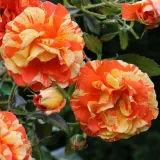
Semi-double, cup-shaped blooms opening fairly flat, 13–25 petals, medium size in clustered trusses; remontant with abundant second and subsequent flushes through the season. |
| Colour data and phenology |
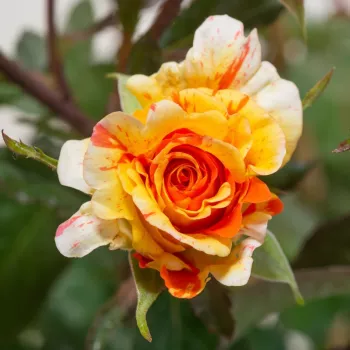
Vivid orange base with pure lemon-yellow stripes (RHS 28A outer, 14B inner); buds deep orange-red, colours softening to pinkish orange and creamy yellow streaks as blooms mature. |
| Fragrance and aroma |
Mild, fresh citrus fragrance that is noticeable at close range without being overpowering; semi-double form offers some stamen access, giving only modest pollinator interest. |
| Hip characteristics |
Occasional small spherical hips, around 8–12 mm, in orange-red tones; produced sparsely because the semi-double, repeat-flowering habit favours continued blooming over fruiting. |
| Resistance and winter hardiness |
Rated hardy to approximately –21 to –18 °C (RHS H7, USDA 6b, Swedish zone 3); good resistance recorded to black spot, powdery mildew and rust in normal garden conditions. |
| Horticultural recommendations |
Suited to beds, borders, parks, specimens, hedging and large containers; plant about 55 cm apart in groups or 50 cm in hedges, with regular watering during prolonged dry spells. |
PAPAGENA™ – orange bedding floribunda rose - McGredy offers long-season striped colour, dependable disease resistance and durable own-root growth, making it a thoughtful choice for relaxed family and coastal gardens.