PARADE – deep pink climbing rose - Boerner
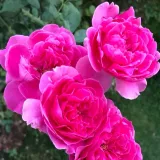
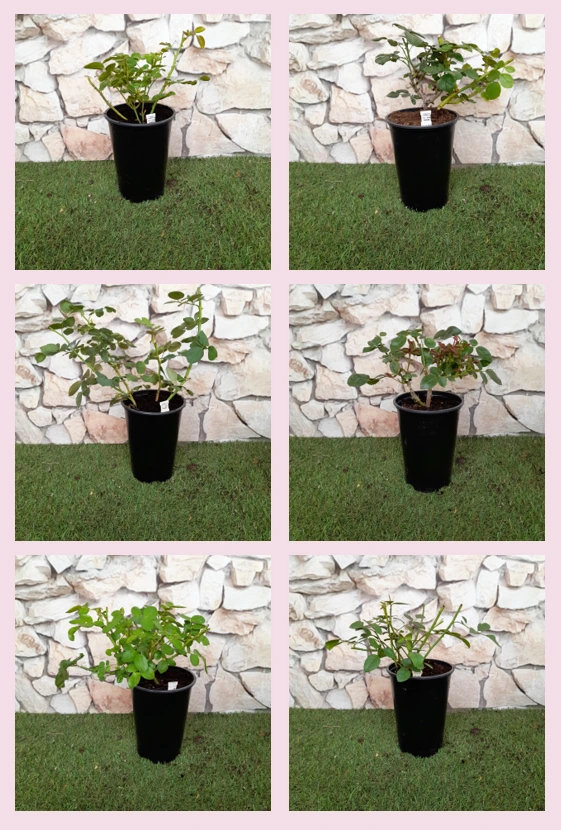
Imagine a sheltered coastal veranda where the air feels salty, the breeze windy and the light distinctly sunny, while Parade clothes a fence or pergola in deep pink clusters that bloom again and again with reassuring ease. This large-flowered climber combines reliable flowering with a naturally disease-resilient constitution, so routine care stays pleasantly simple, even when Atlantic gusts test your planting and good anchoring helps the structure stand firm against coastal weather. Its own-root form settles in steadily for a long, stable life, building roots in year one, stronger shoots in year two and a full ornamental presence by year three, turning a modest start into a quietly satisfying garden investment for relaxed, low-effort gardening.
Usage options
| Target area |
Reasoning |
| Coastal family garden fence |
Trains easily along standard garden fencing, giving dense, glossy foliage and abundant deep pink clusters that repeat flower, while its good disease resistance keeps maintenance low and predictable for the busy-coastal-homeowner. |
| Veranda windbreak in Cornwall/Devon |
Ideal for a verandah trellis where you want shelter from onshore breezes without losing light; its climbing habit and strong framework create a living screen that copes well with blustery coastal weather for the relaxed-seaside-sitter. |
| Compact pergola near seating area |
Covers a small to medium pergola with strongly scented blooms at nose level, bringing classic rose fragrance to your tea corner while avoiding fussy care routines, suiting the fragrance-loving-beginner. |
| Small urban garden boundary |
Vertical growth frees up ground space in tight plots, yet the plant remains manageable in height and spread when pruned annually, making it practical for narrow London or city gardens and the space-conscious-owner. |
| Large container on sheltered balcony |
Can be grown in a sturdy 40–50 litre container with a simple support, provided regular watering is given; its repeat flowering ensures colour from early summer well into autumn for the low-effort-container-gardener. |
| Long-term feature on an arbour |
The own-root form supports a long lifespan and reliable regeneration from the base, so even after hard pruning or weather damage it re-forms a strong framework, rewarding the patient-garden-planner. |
| Informal flowering screen by patio |
Dense foliage and cluster-flowered heads create a soft visual barrier without feeling heavy; deadheading encourages further flushes, giving a colourful backdrop from one season to the next for the family-entertainer. |
| Clay-soil garden with improved drainage |
Performs well where drainage has been sensibly improved in heavier soils, establishing a firm root system that anchors the plant and stands up to wind, reassuring the . |
Styling ideas
- Seaside-Veranda Arch – Train Parade over a compact metal arch by a shingle seating area, underplanted with sea kale and blue Festuca to echo coastal textures – ideal for seaside-style lovers.
- Pink-Garden Screen – Use along a boundary trellis with Alchemilla mollis at the base to soften edges, creating a romantic, low-fuss privacy curtain – perfect for busy family gardens.
- Balcony-Statement Pot – Plant in a 50 litre container with a slim obelisk, pairing with trailing silver foliage plants to highlight the vivid deep pink blooms – suited to urban veranda owners.
- Fragrant-Tea Pergola – Let it clothe two sides of a small pergola, combining with lavender in the border for scent at different heights – for those who enjoy unhurried afternoon tea outdoors.
- Cornish-Cottage Walkway – Train along a low wall or rail beside a path, interplanting with airy perennials such as Knautia macedonica ‘Red Knight’ – attractive to romantic, informal-planting enthusiasts.
Technical cultivar profile
| Parameter |
Data |
| Name and registration |
Large-flowered climbing rose registered as ‘Parade’, also traded as Parade Climbing rose Parade; American Rose Society approved exhibition name Parade; verified cultivar authenticity for this listing. |
| Origin and breeding |
Bred by Eugene S. Boerner, Jackson & Perkins Co., United States, from ‘New Dawn’ seedling × ‘World’s Fair’; introduced in 1953 as an unregistered but commercially established climbing rose cultivar. |
| Awards and recognition |
Holds the RHS Award of Garden Merit for reliable garden performance and ornamental value; also awarded first prize, Climber category, Kansas City Rose Society Show in 2001, confirming exhibition potential. |
| Growth and structural characteristics |
Vigorous climbing habit reaching about 300–450 cm in height and 200–310 cm spread, with dense, mid-green glossy foliage and moderate thorns; forms a strong framework when trained on supports. |
| Flower morphology |
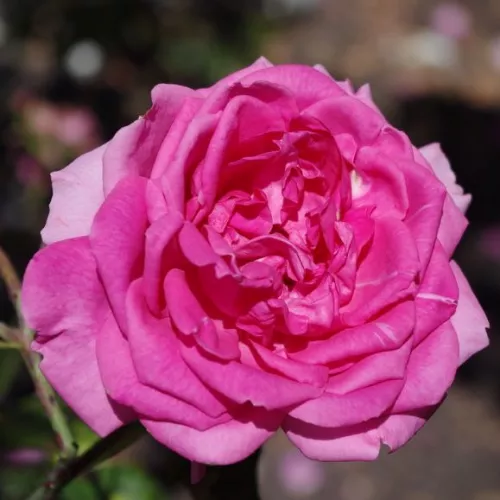
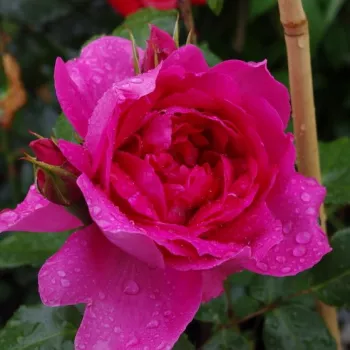
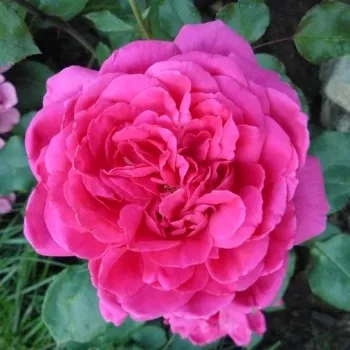
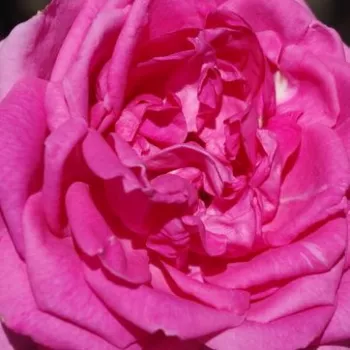
Fully double, cup-shaped blooms, typically large (around 2.75–3.95 in), borne in clusters on the stems; petal count generally 26–39, with remontant flowering providing abundant first and second flushes. |
| Colour data and phenology |
Rich deep pink blooms (RHS 58A outer, 58B inner) with cyclamen-tinged buds; colour moderates slightly in strong sun, remains vivid in cooler weather, edges lightening as flowers mature through successive flushes. |
| Fragrance and aroma |
Classic rose fragrance with a strong, clearly perceptible scent around seating height; primarily ornamental rather than pollinator-focused due to fully double blooms concealing stamens and limiting insect access. |
| Hip characteristics |
Hip production is generally scarce because of double flowers; occasionally develops small spherical orange-red hips about 10–15 mm in diameter, adding a discreet seasonal accent rather than a major display. |
| Resistance and winter hardiness |
Good resistance to powdery mildew, black spot and rust under normal garden conditions; hardy to approximately −21 to −18 °C (RHS H7, USDA 6b, Swedish Zon 3) with routine UK winter protection measures. |
| Horticultural recommendations |
Best planted in sun with improved drainage, especially on heavier soils; suitable for fences, pergolas, arches and arbours at 145–270 cm spacing; prefers regular watering during extended dry spells for full vigour. |
PARADE offers richly scented, repeat deep-pink flowering on a space-saving climber with long-lived own-root reliability, making it a thoughtful choice for relaxed, enduring structure in your family garden.