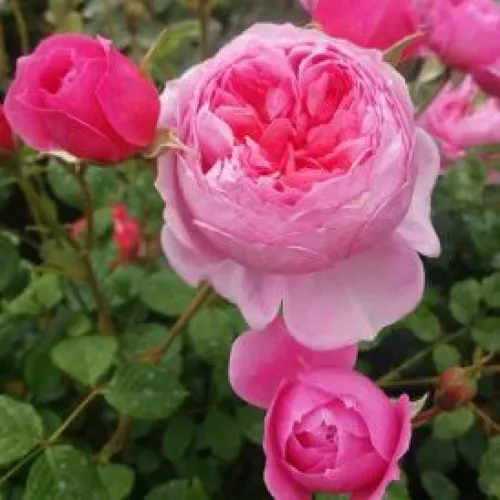
PARC DE LA BELLE – pink climbing rose – Dittière
Bring a sense of seaside refreshment to your garden with PARC DE LA BELLE, a softly pink climbing rose that feels perfectly at home beside shingle, decking or a sunny veranda. Its medium, double blooms carry a clear, fruity fragrance, repeated generously from early summer onwards, giving you colour and scent just when you want to relax outdoors. Dense, dark green foliage creates a natural windbreak effect, helping your seating area feel more sheltered while coping well with brisk, salty breezes along exposed coasts. Own-root growing gives reassuring stability and long-term endurance, with the plant steadily improving rather than tiring after a few years. In the first year it quietly builds roots, in the second it gains confident height, and by the third season it settles into its full ornamental rhythm on pergola, fence or balcony rail.
Usage options
| Target area | Reasoning |
|---|
| Coastal veranda screen |
Use PARC DE LA BELLE along railings or trellis to create a soft, semi-transparent screen that filters wind without feeling heavy, while tolerating brisk, salty coastal breezes and giving a relaxed seaside feel for beginners. |
| Family garden pergola |
Train it over a modest pergola or arch where its repeat-flowering habit provides pink shade and gentle scent all summer, forming a long-lived framework that becomes more impressive every year for busy homeowners. |
| Small shingle or gravel garden |
Planted into well-prepared pockets among shingle, this climber lifts colour and height without stealing ground space, combining well with low, drought-tolerant perennials to keep maintenance simple for coastal-style lovers. |
| Large container on balcony or patio |
In a 40–50 litre container with a sturdy obelisk, its compact spread and steady vertical growth make it ideal for tight spaces, giving reliable flowers and foliage without overwhelming the area for urban gardeners. |
| Wall-trained feature near seating |
Against a sunny, sheltered wall, its pastel pink pompon blooms and fresh fruity scent create a charming backdrop for outdoor dining, with own-root growth ensuring the framework can be renewed if stems age for relaxed hosts. |
| Romantic entrance arch |
Planted in pairs at a gate or path entrance, it forms an inviting arch of soft pink flowers, making everyday comings and goings feel special while remaining manageable in size for hobby gardeners. |
| Clay soil family garden |
With good drainage added, its strong root system anchors well in heavier soils, supporting a durable, leafy structure that copes with typical British weather patterns over many years for practical families. |
| Low-maintenance mixed border backdrop |
Used at the back of a border, the dense, glossy foliage and vertical habit give structure behind perennials, while its gradual own-root development offers stable ornamental value with modest seasonal care for time-poor beginners. |
Styling ideas
- Coastal veranda nook – Train PARC DE LA BELLE up a slim trellis beside outdoor chairs, underplanting with blue Festuca and sea kale for a relaxed, shingle-beach feel – ideal for coastal-style lovers.
- Romantic pergola – Combine it on a light timber pergola with white Liatris and lavender, letting the pink blooms and fragrance frame a small seating area – perfect for couples and small families.
- Shingle courtyard – In a gravelled space, pair this climber on a wall with rosemary and knotweed Persicaria for textural contrast and easy upkeep – suited to busy urban homeowners.
- Balcony statement pot – Plant one in a 50‑litre container with an obelisk, adding trailing thyme at the base for a scented, vertical accent – great for compact patios and balconies.
- Cottage-style entrance – Flank a gate with two plants trained over an arch, underplanted with soft pink and white perennials for a welcoming, storybook arrival – appealing to hobby gardeners.
Technical cultivar profile
| Trait | Data |
|---|
| Name and registration |
PARC DE LA BELLE – pink climbing rose – Dittière; large-flowered climber in the Climbing rose collection, commercial type climbing/rambling rose; ARS exhibition name registered as Parc de la Belle. |
| Origin and breeding |
Bred by Jean-Pierre Dittière in France and introduced in 2005 through Roseraie Jardirose and Les Chemins de la Rose; distributed by Pépinières Jardirose and Pétales-de-Roses for garden use. |
| Growth and structural characteristics |
Medium climber reaching about 170–260 cm in height with a 70–110 cm spread; dense, glossy dark green foliage, moderately thorny stems and a climbing habit suitable for training on supports. |
| Flower morphology |
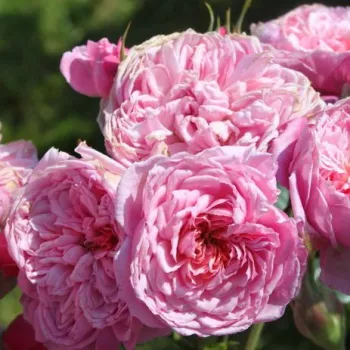
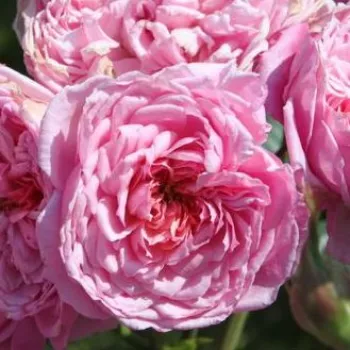
Double, ball to pompon-shaped blooms with 26–39 petals and large flower size; mostly solitary flowers on stems, remontant with an abundant second flush under good garden conditions. |
| Colour data and phenology |
Soft pink petals (RHS 65B outer, 65C inner) with a subtly warm tone; newly opened flowers are mid-pink, then lighten to pale pastel shades, with gradual fading in strong sunlight yet generally good colour retention. |
| Fragrance and aroma |
Fresh, fruity fragrance of medium strength, clearly perceptible at close range; best enjoyed near paths or seating where air movement can carry the scent, adding to the rose’s ornamental appeal. |
| Hip characteristics |
Due to its double flowers, hip set is usually light; when present, it bears small, spherical red hips about 10–14 mm in diameter, adding a modest late-season decorative element. |
| Resistance and winter hardiness |
Hardy to approximately −21 to −18 °C (RHS H7, USDA 6b, Swedish zone 3); disease resistance is modest, with notable sensitivity to powdery mildew and rust and moderate susceptibility to black spot. |
| Horticultural recommendations |
Prefers a sunny, well-drained site with support for climbing; maintenance needs are higher, requiring regular monitoring and treatment for fungal diseases, plus deadheading where self-cleaning is weak. |
PARC DE LA BELLE offers romantic repeat-flowering height, a fresh fruity scent and a long-lived own-root framework for small verandas or pergolas, making it a thoughtful choice for gardeners seeking lasting coastal charm.