PENELOPE HOBHOUSE – white park rose – Scarman
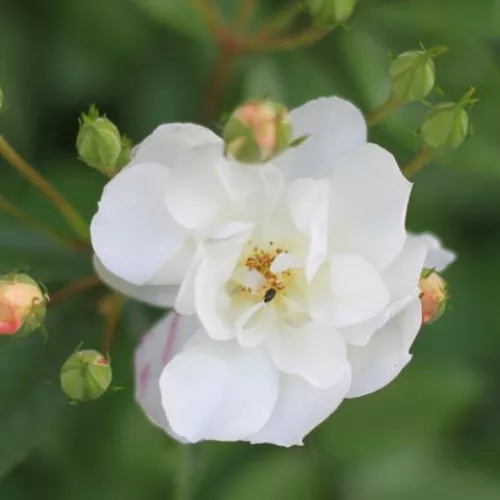
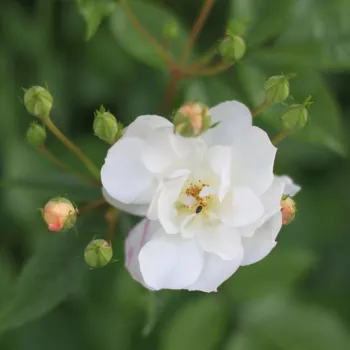
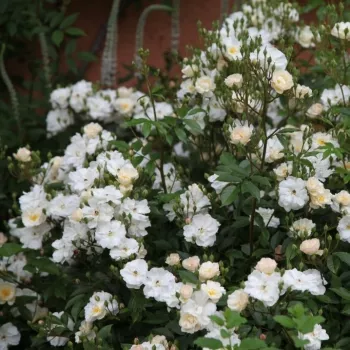
Bring a sense of coastal refreshment to your family garden with PENELOPE HOBHOUSE, a graceful Hybrid Moschata shrub rose that shrugs off breezy, damp weather and copes reliably with exposed, windy conditions near the sea. Its bushy, lightly thorned framework and semi-double milky-white blooms with a golden eye offer effortless elegance from summer onwards, while the medium, musky fragrance drifts pleasingly across a shingle terrace or courtyard veranda. This own-root form is bred for a long, stable garden life, regenerating well from the base for lasting structure and ornamental value. It settles in steadily – first building roots, then pushing stronger shoots, and by the third year giving you its full, softly romantic display with very little extra work.
Usage options
| Target area |
Reasoning |
| Small coastal family garden hedge |
The bushy, 130–200 cm habit and dense foliage create a light, informal boundary that moves with the wind rather than fighting it, ideal along drives or paths in Cornish or Devon gardens where you need structure without fussy clipping for the time-poor beginner. |
| Feature rose for a shingle or gravel bed |
Its semi-double white flowers with a golden centre read clearly against pebbles, while the sparse thorns and natural form fit a relaxed “seaside meadow” look that sits happily with sea kale and ornamental grasses for the design-conscious homeowner. |
| Large container on a sheltered veranda |
In a 40–50 litre pot, this rose forms an airy screen of foliage and flowers, giving privacy and a soft musky scent for outdoor seating, yet needing only modest pruning and watering routines that suit the busy urban gardener. |
| Pollinator-friendly focal point near seating |
Semi-double blooms offer accessible pollen around the golden stamens, drawing in bees while still looking refined, so you can enjoy gentle movement and life around your terrace without high-maintenance borders, perfect for wildlife-curious families. |
| Against a warm wall as a loose, low climber |
Its flexible, bushy shoots can be fanned onto wires to 2 m, giving vertical interest and repeat flushes of white flowers without the strict tying and training of a true climber, appealing to relaxed, low-effort gardeners. |
| Long-lived structure in a mixed border |
The own-root form builds a durable framework, with first year establishment, second year top growth and third year full display, so it matures into a reliable backbone among perennials for planners who value steady, long-term results. |
| Low-intervention rose for damp, breezy plots |
High disease resistance to black spot, mildew and rust keeps foliage clean in showery, changeable weather, meaning little spraying or worry even where air circulation is imperfect, an advantage for health-conscious, time-poor owners. |
| Seasonal interest with hips for autumn texture |
Moderately abundant orange-red hips follow the main flowering, giving gentle colour and form into late season and supporting a naturalistic, informal style that suits those who like subtle, evolving gardens. |
Styling ideas
- Shingle-softened hedge – plant a loose row along a gravel drive, underplant with sea kale and Festuca for movement – ideal for coastal-living families wanting privacy without a harsh solid fence.
- Romantic veranda pot – one plant in a 40–50 litre container with trailing Campanula at the base – suits balcony or veranda owners who want fragrance and bloom from a single, easy-care feature.
- White-and-lavender border – combine with low Hemerocallis and Lavandula for a pale, airy mix – for homeowners who like a calm, “girly” seaside palette that still feels grown-up.
- Soft wall fan – guide stems on discreet wires beside a doorway or French windows – perfect for those wanting a cottagey entrance with minimal training and pruning effort.
- Naturalistic autumn strip – weave through ornamental grasses and Gypsophila so the orange-red hips glow among seedheads – for gardeners who appreciate subtle seasonal shifts more than formal displays.
Technical cultivar profile
| Characteristic |
Data |
| Name and registration |
PENELOPE HOBHOUSE – white park rose – Scarman; Hybrid Moschata shrub rose from the Park – shrub rose collection, marketed as a versatile park rose for garden and landscape use. |
| Origin and breeding |
Bred by John Scarman, Germany, 2003, from Rosa moschata × Rosa soulieana ancestry; introduced and initially distributed by Scarman Roses (Germany) in the same year. |
| Growth and structural characteristics |
Bushy shrub, 130–200 cm high and 120–180 cm wide, with dense, light green, slightly glossy foliage and comparatively sparse prickles, forming a relaxed yet substantial garden presence. |
| Flower morphology |
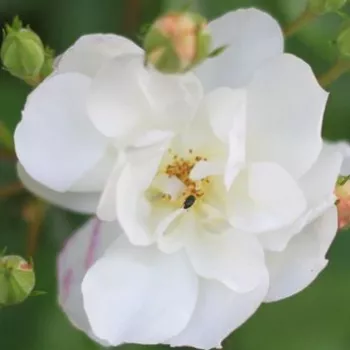
Semi-double, cup-shaped blooms with 13–25 petals, small-flowered individually yet borne in large clusters; remontant with a particularly abundant second flush under normal garden conditions. |
| Colour data and phenology |
Milky-white to creamy petals from softly pink buds; ARS white, RHS 155C outer and 155D inner; faint pink blush when opening, then pure white with a clear golden-yellow staminal centre in full bloom. |
| Fragrance and aroma |
Fresh, musky fragrance of medium strength, clearly noticeable near the plant in still air; semi-double structure and scent together provide useful pollinator attraction in mixed plantings. |
| Hip characteristics |
Moderately abundant ellipsoidal hips, 10–16 mm in diameter, colouring orange-red in late season; contribute gentle ornamental value and wildlife interest after the main flowering period. |
| Resistance and winter hardiness |
Rated H7, hardy to about −21 to −18 °C and USDA zone 6b; good resistance to black spot, powdery mildew and rust, maintaining foliage quality with modest care in typical UK gardens. |
| Horticultural recommendations |
Suited to borders, hedges, specimens, large containers and low climbing against supports; plant 90–165 cm apart depending on use, in well-drained soil with regular watering during prolonged dry spells. |
PENELOPE HOBHOUSE combines easy-care health, repeat flowering and long-lived own-root reliability in a versatile shrub rose that suits coastal verandas and family gardens alike, making it a thoughtful choice for your next planting decision.