PHILATELIE™ – red-white hybrid tea rose - McGredy
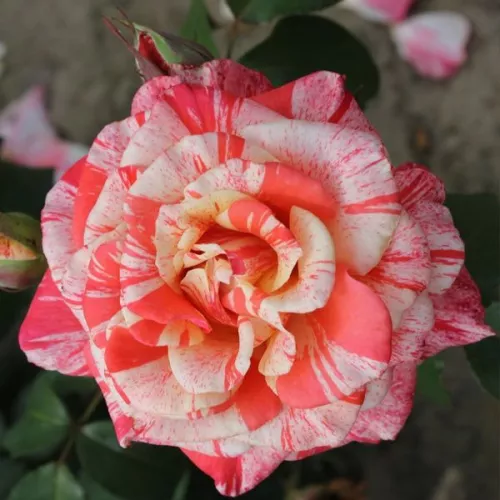
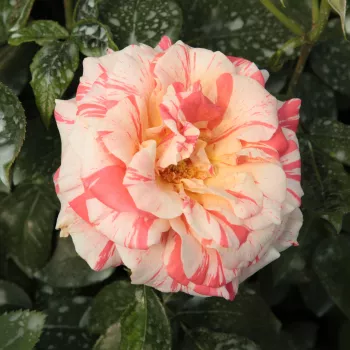
Imagine stepping onto a sunny coastal veranda after a windy walk, sea air still on your skin, and being greeted by upright stems topped with raspberry blooms streaked in crisp snow-white. PHILATELIE™ settles well into coastal-style family gardens, coping reliably with blustery weather where good drainage helps roots stay secure and anchored. In a modest shingle bed or a generous patio container, its high-centred, exhibition-style flowers offer a quietly dramatic focus with each elegant, long-stemmed bloom. As an own-root plant it promises steady regeneration, maturing from root-building in year one, fuller shoots in year two and a confident, stable display by year three. Plant it once, then enjoy its longevity, medium-care maintenance needs and reliable remontant flowering through the season, especially where you want showbench-quality blooms without specialist skills.
Usage options
| Target area |
Reasoning |
| Feature rose for small coastal front gardens |
The upright habit and moderate spread make PHILATELIE™ easy to place in compact, wind-prone Cornish or Devon front gardens, where its exhibition-style flowers read clearly from the street yet the bush stays manageable for hobby gardeners and beginners. |
| Statement rose in large patio containers |
In a 40–50 litre container with free-draining compost, this rose offers high-impact blooms on strong stems while remaining simple to look after; own-root vigour helps it recover from any weather damage, ideal for busy veranda owners who prefer low-fuss style. |
| Cutting garden for home arranging |
Long, straight stems with high-centred, show-quality blooms make it a natural for casual home flower arranging, giving you weekend vase material without a specialist cutting plot, well suited to creative homeowners who enjoy bringing the garden indoors. |
| Remontant focal point in family borders |
Repeated waves of large, double flowers provide a reliable focal point through summer, so the border never feels empty between flushes, supporting families who want consistent colour without replanting or complicated seasonal redesigns. |
| Specimen rose in shingle or gravel beds |
The strong colour contrast stands out against pale gravel, while its medium maintenance needs and robust structure cope with exposed, breezy spots where sensible drainage keeps the root system stable, reassuring coastal-style lovers seeking resilient beauty. |
| Low-pollen ornamental near seating areas |
The double flower form and limited pollen access make this rose primarily ornamental rather than a pollinator magnet, a discreet advantage for seating or veranda areas used by hay-fever sufferers, allergy-aware families and comfort-focused garden users. |
| Structured planting with grasses and perennials |
The upright, moderately leafy framework partners well with fine-textured grasses and compact perennials, giving a clear backbone without overwhelming neighbouring plants, ideal for design-conscious beginners aiming for a composed but achievable planting scheme. |
| Long-term investment planting for committed gardeners |
As an own-root hybrid tea selected for medium maintenance and solid hardiness, PHILATELIE™ rewards regular but not intensive care, evolving into a long-lived, dependable feature for thoughtful coastal gardens and other committed owners over the years. |
Styling ideas
- Coastal-veranda duo – Pair PHILATELIE™ in a 50 litre pot with blue Festuca for a breezy, seaside feel – for veranda owners wanting colour with minimal upkeep.
- Shingle-showpiece – Set a single plant in pale gravel with sea kale for contrast and structure – for coastal-style lovers designing a simple, striking focal point.
- Tea-and-roses corner – Flank a small seating area with two bushes and low lavender edging – for hobby gardeners seeking a calm, scented tea spot.
- Grasses-and-roses mix – Combine with airy ornamental grasses to soften its formal blooms – for beginners aiming at a naturalistic but tidy border.
- Cutting-strip border – Run a short row along a sunny fence for easy stem picking – for home arrangers who like reliable vase flowers close to the back door.
Technical cultivar profile
| Parameter |
Data |
| Name and registration |
Hybrid tea rose, registered as MACcastlet, marketed as PHILATELIE™ – red-white hybrid tea rose - McGredy; ARS exhibition name Philatelie, in the hybrid tea commercial group. |
| Origin and breeding |
Bred by Samuel Darragh McGredy IV in New Zealand from Tournament of Roses × Port Ludlow; introduced in Europe by Rosen-Union e.G. in 2000, registration completed in 1989. |
| Growth and structural characteristics |
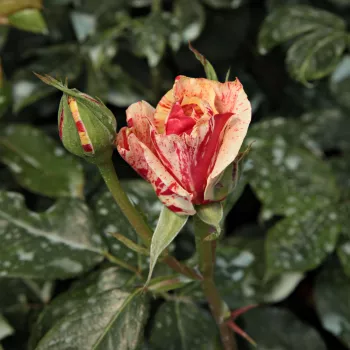
Upright plant 110–150 cm tall, spreading 60–90 cm, with moderately dense, dark green, leathery foliage and moderate prickliness; self-cleaning behaviour not documented for this cultivar. |
| Flower morphology |
Large, double, high-centred hybrid tea blooms with 20–30 petals, mainly borne solitary on long stems; remontant, producing a generous second flush and further repeats in favourable seasons. |
| Colour data and phenology |
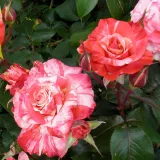
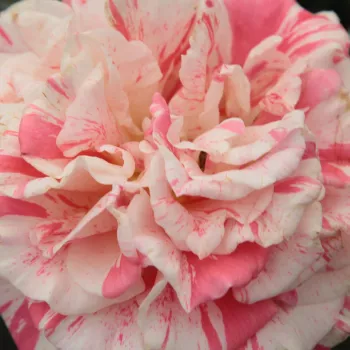
Striking raspberry-red and snow-white striped flowers (ARS RB; RHS 46A outer, 155D inner); colours remain vivid as they open, later softening as reds pale and whites take on a light cream tint. |
| Fragrance and aroma |
Very weakly scented rose with a barely noticeable, slightly sweet fragrance character; primarily grown for its visual impact and cut-flower quality rather than for strong perfume in the garden. |
| Hip characteristics |
Hip set generally limited because of the double flowers, but may occasionally produce small, spherical, orange-red hips 12–17 mm across, forming a modest autumn accent where present. |
| Resistance and winter hardiness |
Rated H7 and USDA Zone 5b, tolerating approximately −26 to −23 °C; medium overall disease resistance, with good resistance to powdery mildew and black spot, and moderate susceptibility to rust. |
| Horticultural recommendations |
Best in full sun with fertile, well-drained soil; medium maintenance, needing routine feeding, deadheading and occasional pest and disease checks; plant 40–75 cm apart depending on border, hedge or specimen use. |
PHILATELIE™ offers vivid raspberry-and-white blooms on upright, remontant stems, combines long-term own-root reliability with medium, manageable care, and will suit you if you value enduring structure and elegant cutting stems in a family garden.