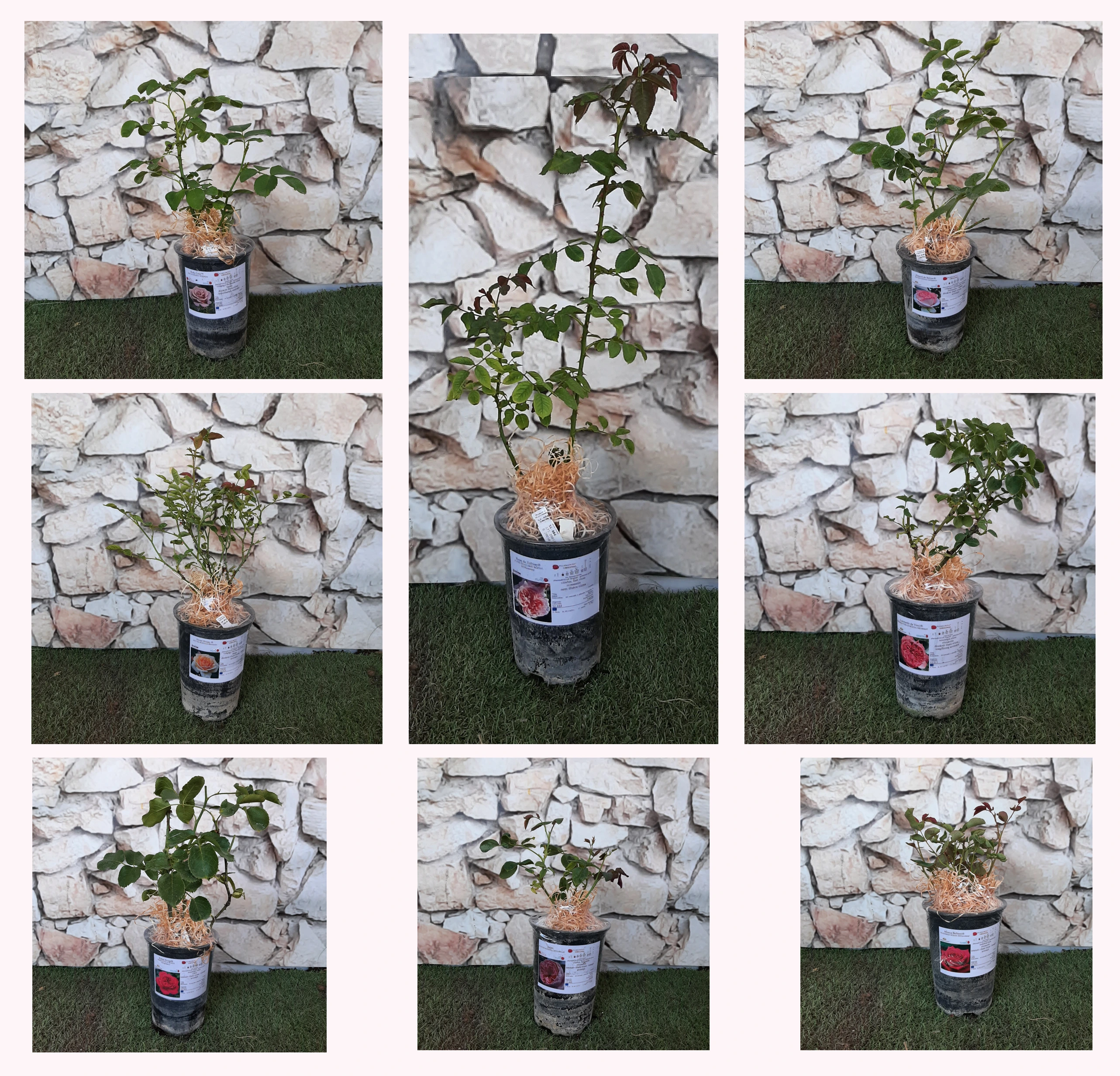
KORIZONT – coral-pink climbing rose – Kordes
Imagine stepping onto your veranda after a windswept coastal walk, sheltered behind a living screen of coral-pink blooms: KORIZONT brings a relaxed, summery atmosphere to compact family gardens without demanding expert care. This own-root climber anchors itself steadily in breezy sites and copes well with exposed, shingly plots where thoughtful drainage keeps roots comfortable in heavy soil. Over time its glossy, dark green foliage clothes walls, fences and pergolas, while the long, remontant flowering season offers a refreshing succession of colour and a strong, slightly sweet fragrance from early summer well into autumn. The AGM-backed reliability of KORIZONT means that, with simple planting and occasional pruning, you can enjoy a long-lived, self-renewing rose: roots establishing in the first year, vigorous framework in the second, and full ornamental impact by the third – a quietly satisfying investment for low-fuss coastal-style gardens.
Usage options
| Target area | Reasoning |
|---|
| Small coastal veranda climber |
KORIZONT’s moderate height and tidy climbing habit make it ideal for framing a compact veranda or balcony rail without overwhelming the space, while its strong, slightly sweet fragrance enhances evening seating areas for beginners. |
| Family garden fence and screen |
Used along a boundary fence, this vigorous climber quickly forms a leafy, coral-pink screen that softens hard lines and offers both privacy and seasonal interest with limited maintenance for busy. |
| Wind-filtering pergola or arch |
On a pergola or arch, KORIZONT’s flexible canes can be trained to create an airy wind-filter rather than a solid barrier, suiting breezy sites where good soil preparation supports roots in heavy ground for homeowners. |
| Long-season flower backdrop |
The remontant flowering, with an abundant second flush, provides months of coral-pink colour behind seating areas or lawns, giving reliable display from early summer into autumn for gardeners. |
| RHS-backed low-risk choice |
The RHS Award of Garden Merit signals tested robustness and performance in UK conditions, making KORIZONT a reassuring option when you want dependable growth and flower quality for newcomers. |
| Simple, medium-maintenance rose project |
With good self-cleaning and only occasional plant protection needed, this rose suits those comfortable with basic pruning and watering but not looking for high-input gardening for hobbyists. |
| Own-root, long-lived structure plant |
As an own-root climber, KORIZONT can regenerate from its base after damage or hard pruning, gradually building a stable framework that keeps its ornamental value for many seasons for planners. |
| Large decorative container on sheltered patio |
In a minimum 40–50 litre container with free-draining compost, KORIZONT’s moderate vigour is easy to manage, its glossy foliage and coral-pink clusters giving a strong vertical accent beside seating for urbanites. |
Styling ideas
- Sunset Screen – Train KORIZONT along a veranda balustrade with sea kale and silver-leaved Festuca below for a warm, coastal sunset palette – ideal for seaside terrace owners.
- Cornish Arch – Clothe a simple timber arch in coral-pink blooms, underplanting with Lavandula for scent layering and informal charm – perfect for romantic cottage-style gardeners.
- Shingle Backdrop – Use KORIZONT as a tall, flowering backdrop to shingle and driftwood features, pairing with Delosperma cooperi for low, sparkling colour – for lovers of minimalist beach gardens.
- Urban Pergola – On a small city pergola, combine KORIZONT with Crocosmia ‘Lucifer’ and Gypsophila repens to create a light, airy canopy of coral, red and white – suited to style-conscious balcony owners.
- Patio Column – Grow KORIZONT in a 50-litre pot with a slim obelisk, flanked by pots of compact grasses and herbs for a neat, fragrant vertical accent – great for time-poor beginners.
Technical cultivar profile
| Parameter | Data |
|---|
| Name and registration |
Climbing rose from the Summer Wine line; registered as KORizont, marketed as Korizont – coral-pink climbing rose – Kordes, with ARS exhibition name ‘Summer Wine’. |
| Origin and breeding |
Bred by Reimer Kordes, W. Kordes’ Söhne, Germany, from ‘Coral Dawn’ × unknown seedling; bred 1980, registered 1982, introduced commercially in 1985 for garden use. |
| Awards and recognition |
Holds the RHS Award of Garden Merit, Royal National Rose Society Trial Ground Certificate (UK, 1982) and Eugene Rose Society Show recognition in the climber category (1999). |
| Growth and structural characteristics |
Vigorous climber with moderately dense, glossy dark green foliage; height typically 250–400 cm with 120–200 cm spread, moderately thorny canes suited to training on supports. |
| Flower morphology |
Large-flowered clusters on corymbose inflorescences; flat, single to semi-double blooms with 5–12 petals, around 7–10 cm across, self-cleaning well after flowering for tidy presentation. |
| Colour data and phenology |
Warm medium coral-pink with slight yellow near petal base; buds open dark coral, lightening towards pale pinkish-yellow as blooms age, with generally good colour retention in strong sun. |
| Fragrance and aroma |
Strongly scented for a climber, with a distinct, slightly sweet rose fragrance noticeable on warm, still days; provides enjoyable scent around seating and entrance areas in summer. |
| Hip characteristics |
Occasionally forms small, spherical red hips about 10–15 mm across, adding a modest decorative touch in late season where flowers have been left un-deadheaded. |
| Resistance and winter hardiness |
Hardy to approximately -21 to -18 °C (RHS H7, USDA 6b); good black spot resistance with moderate susceptibility to mildew and rust, benefits from watering in prolonged drought. |
| Horticultural recommendations |
Best on walls, fences, arches and pergolas at 140–250 cm spacing; thrives in sun or light shade with well-drained soil and medium care, including occasional pruning and plant protection. |
KORIZONT offers fragrant coral-pink screens, long-season flowering and dependable, regenerating own-root growth, making it a thoughtful choice for relaxed coastal-style gardens and sheltered family verandas.