PLAISANTERIE – pink park rose - Lens
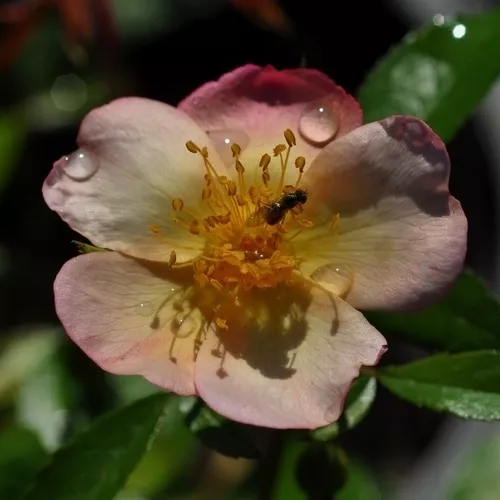
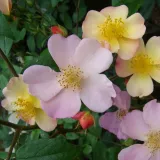
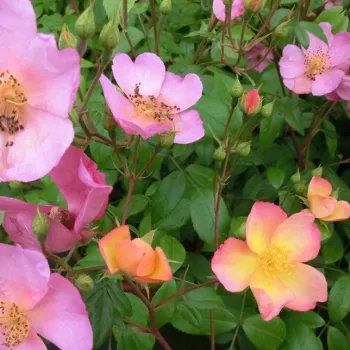
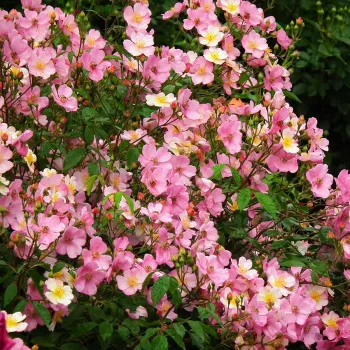
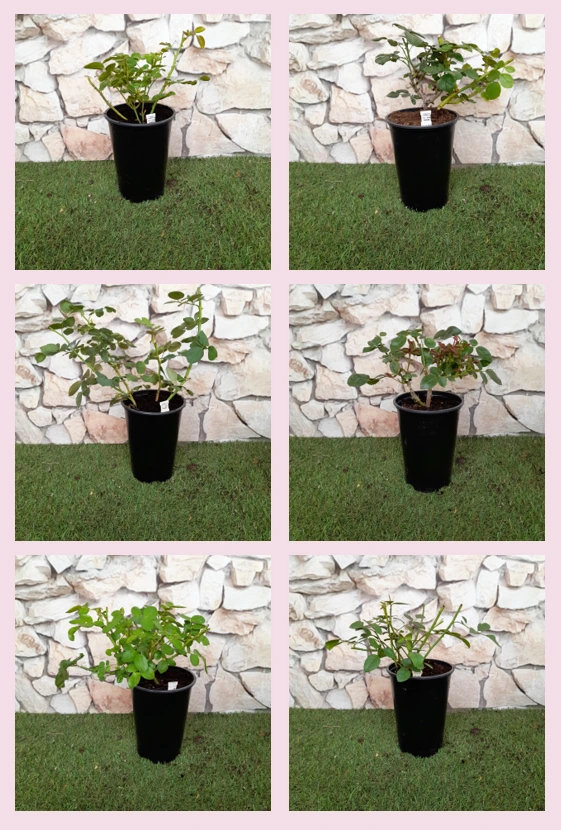
With its shifting seaside colours and airy clusters, PLAISANTERIE gives your garden a sense of movement and light, turning a simple fence or veranda screen into a playful coastal retreat. This hybrid musk shrub climbs gently, offering coverage without overwhelming smaller family gardens, while its naturally self-cleaning flowers save you from constant deadheading. The dainty single blooms change from warm yellowish pink to richer pink and purple tones, creating a soft, romantic backdrop for tea after a windswept walk. Own-root plants anchor themselves steadily over time, giving a reassuringly stable structure in breezy UK gardens where good drainage keeps roots comfortable after heavy coastal rain. In a large 40–50 litre container or free in the ground, this rose forms a relaxed screen that fits modern verandas and family seating areas. Year by year it matures from building roots, to developing shoots, to displaying its full ornamental character, so you can enjoy a long-lived, gently evolving landscape feature with very little fuss.
Usage options
| Target area |
Reasoning |
| Climbing screen on coastal veranda |
The climbing habit and generous height let this rose form a soft, wind-filtering screen on railings or balustrades without feeling heavy. Its colour-shifting flowers echo seaside light, while stable own-root growth supports long-term structure for coastal-style lovers. |
| Tall, airy specimen in a family garden |
As a single specimen, the elegant open growth and 150–210 cm height create a focal point that does not dominate a modest lawn or patio. Self-cleaning flowers reduce tidying, and own-root resilience helps it age gracefully for busy homeowners. |
| Loose hedge or boundary along a path |
Planted at hedge spacing, its moderately thorny canes and moderate density define a boundary while still letting light through. Repeating flushes of bloom add interest over the season, supporting a long-lived informal edge for family-garden planners. |
| Large container on sheltered balcony or terrace |
In a 40–50 litre container, PLAISANTERIE provides vertical colour where ground space is limited. Own-root plants adapt well to pot life, rebuilding if winter or wind cause damage, which suits smaller urban spaces and beginner gardeners. |
| Soft cover for pergola, arch, or light framework |
The manageable climbing habit allows you to guide stems over a small pergola or arch, giving dappled shade without the weight of a large climber. Recurrent flowering maintains impact all summer for romantic seating areas. |
| Flowering accent against fences and walls |
Trained along a fence, the colour transition from orange buds to pink and purple tones creates continual visual change. Good self-cleaning keeps the display fresh with little work, an advantage for time-poor gardeners. |
| Mixed border with perennials and grasses |
The light, open framework weaves easily among perennials such as Lychnis, Lythrum, and Phlox, adding height without shading them out. Repeated smaller blooms keep the border lively through summer for informal border enthusiasts. |
| Cut stems for informal indoor arrangements |
Although flowers are small and unscented, the varied colours on each stem lend charm to casual vases. Repeated flowering provides regular material through the season, while stable own-root plants keep supplying stems for home arrangers. |
Styling ideas
- Shingle-veranda screen – Train PLAISANTERIE along a simple timber balustrade above shingle, underplanted with sea kale and blue Festuca for a breezy Cornish feel – ideal for coastal-style veranda owners.
- Pastel tea corner – Let its pink clusters frame a bistro set, paired with lavender in large pots and soft grey containers, for an easy-care nook – perfect for weekend tea drinkers.
- Romantic path hedge – Space plants loosely beside a garden path and interplant with airy grasses, giving a light, fluttering hedge effect – suited to families wanting gentle enclosure.
- Balcony feature pot – Grow one plant in a 50 litre container with trailing thyme at the rim, allowing canes to fan against railings – good for city dwellers with limited ground.
- Playful mixed border – Combine with Lythrum and Phlox in a sunny border, using its shifting bloom colours as a moving backdrop – appealing to hobby gardeners who enjoy colour change.
Technical cultivar profile
| Parameter |
Data |
| Name and registration |
Shrub, Hybrid Musk park rose; registered as LENtrimera, marketed as PLAISANTERIE Park - shrub rose LENtrimera; ARS exhibition name PLAISANTERIE for show shrub classes. |
| Origin and breeding |
Bred by Louis Lens in Belgium, 1988, from ‘Trier’ × Rosa chinensis ‘Mutabilis’; introduced and registered in 1996 by Lens Roses NV / Louis Lens N.V. in continental Europe. |
| Awards and recognition |
Recognised as a Classic shrub rose at the Mother Lode Rose Society show in 2001, reflecting its value for exhibition as a show shrub with distinctive colour play. |
| Growth and structural characteristics |
Vigorous, climbing shrub reaching about 150–210 cm high and 170–230 cm wide, moderately thorny, with moderately dense, slightly glossy green-bronze foliage and a relaxed, trainable framework. |
| Flower morphology |
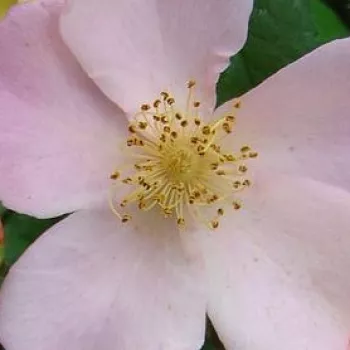
Small, single to lightly semi-double flat flowers, 5–12 petals, borne in clusters; remontant with a notably abundant second flush, and generally good self-cleaning of spent blooms. |
| Colour data and phenology |
Strongly changeable colour: orange buds open yellowish-pink, deepen to medium pink and finally pink–purple; ARS PB, RHS 54A–54B; colour retention modest with deliberate fading effects. |
| Fragrance and aroma |
No noticeable fragrance; flowers are effectively unscented. Simple blooms and partly concealed stamens offer only moderate attraction to pollinating insects in mixed planting schemes. |
| Hip characteristics |
Produces bottle-shaped, orange-red hips in moderate numbers, around 8–12 mm in diameter, adding light autumn interest where spent clusters are left unpruned after flowering. |
| Resistance and winter hardiness |
Hardy to about −21 to −18 °C (RHS H7, USDA 6b, Swedish zone 3); disease-sensitive, especially to powdery mildew and rust, so benefits from thoughtful siting and regular protection. |
| Horticultural recommendations |
Best as specimen, pergola, fence or wall rose at 120–220 cm spacing; tolerates partial shade; needs high-maintenance plant protection and consistent watering during hot, dry periods. |
PLAISANTERIE offers playful colour change, self-cleaning clusters, and a long-lived own-root framework that matures steadily over time; consider it if you want a relaxed, evolving rose presence in your garden.