POMPONELLA® – deep pink Märchenrosen® floribunda bedding rose
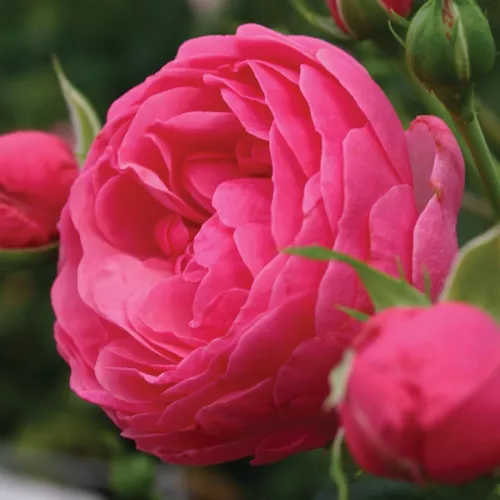
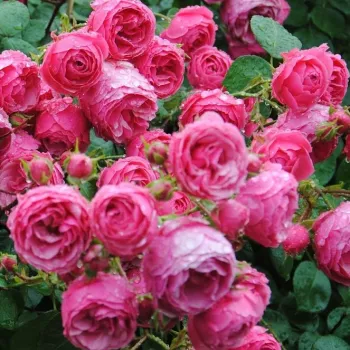
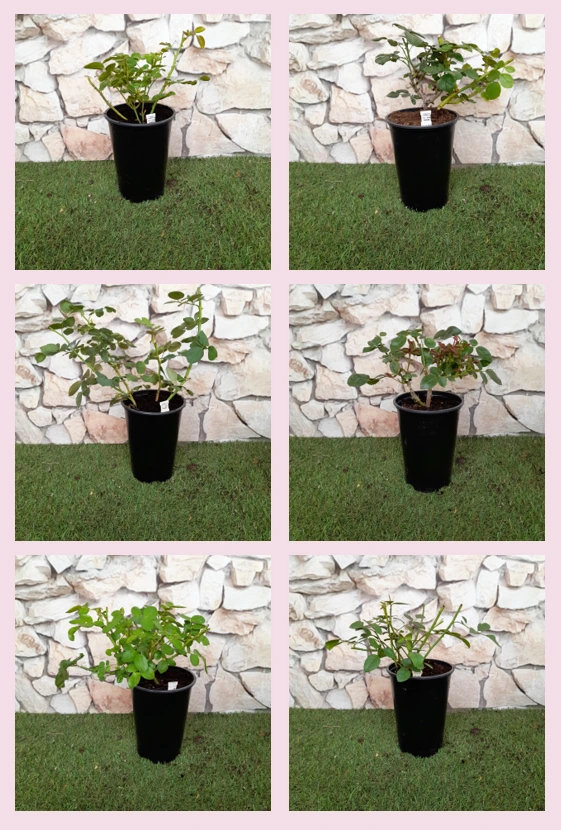
Imagine settling down with afternoon tea on a sheltered coastal veranda while Pomponella settles into the salty breeze, its tight, globular blooms forming a romantic pompon veil above glossy leaves. This compact, upright rose is perfectly sized for family gardens and balcony pots, creating reliable impact without demanding complicated care. Its strong, modern breeding delivers excellent disease resistance, so foliage stays healthy even in damp, windy weather and occasional salt-laden air from the sea. Clusters of deep pink flowers appear again and again through summer, building up a long-lasting display that looks charming in shingle beds with sea kale and fescues or in a 40–50 litre container by the back door. Grown on its own roots, it settles securely, regenerates well after pruning and offers a genuinely long garden lifespan for busy owners. In the first year it focuses on roots, the second on bushy shoots, and by the third it reveals its full ornamental character.
Usage options
| Target area | Reasoning |
|---|
| Small coastal veranda containers (40–50 litres) |
Its compact, upright habit and dense foliage make it ideal for larger pots where space is limited but you still want a strong presence near seating areas; the own-root form anchors securely in a deep container and builds up steadily for coastal-style beginners. |
| Family front garden bed by the drive |
Clusters of deep pink pompon blooms repeat through the season, giving reliable colour with only light deadheading; excellent disease resistance keeps it looking smart at the front of the house for busy homeowners. |
| Low flowering hedge along a path |
Its bushy structure and 70–95 cm height create a low, child-friendly hedge, with rounded blooms that soften edges without blocking light, forming a long-lived, manageable boundary for family-garden owners. |
| Mixed coastal-style shingle border |
This rose copes well with breezy, exposed beds when the soil is improved for drainage, making it suited to gardens where gusty showers and salt-tinged air are regular visitors, an attractive option for Cornwall-Devon gardeners. |
| Urban patio in heavy clay soil |
In towns with dense, moisture-holding soils, it thrives if planted slightly raised with added grit, then needs only modest ongoing care; once established the own-root system supports a stable, long-term shrub for time-poor city dwellers. |
| Romantic “girly” seating corner |
The ball-shaped, fairytale-style flowers and rich pink colour create an immediate sense of charm around a bench or bistro set, especially combined with lavender or low grasses, suiting romantic veranda users. |
| Low-maintenance repeat-flowering border |
Medium self-cleaning and strong remontant flowering give months of colour with only occasional tidy-ups, so even without regular deadheading you still enjoy an attractive, evolving border, well suited to casual hobby gardeners. |
| Wildlife-friendly yet ornamental corners |
While the very double flowers are mainly ornamental, the small orange-red hips that follow add seasonal interest and subtle wildlife value into autumn, making a neat compromise for aesthetic-focused gardeners. |
Styling ideas
- Coastal-Veranda Duo – Plant Pomponella in a 50-litre container with blue Festuca and sea kale for a breezy seaside feel on decking or balconies – ideal for coastal-style lovers.
- RomanticBorder – Weave it through a narrow border with pale foxgloves and soft geraniums to create a long-flowering, storybook edge – perfect for those wanting a “girly” corner.
- LowHedgeCharm – Line a front path with repeated Pomponella plants to form a neat, low flowering hedge that welcomes guests – suited to family homes with children and pets.
- UrbanContainer – Use a single rose in a large terracotta pot with gravel mulch to give structure and colour on patios with limited bed space – great for busy urban balcony owners.
- ParklandPocket – Group three plants in a triangle among ornamental grasses for a soft, naturalistic island bed that still looks polished – appealing to hobby gardeners upgrading tired lawns.
Technical cultivar profile
| Property | Data |
|---|
| Name and registration |
Pomponella® Märchenrosen® (KORpompan), floribunda bedding rose, ARS exhibition floribunda; trade names Pomponella® / Märchenrosen®; registered cultivar name KORpompan, approved exhibition name Pomponella™. |
| Origin and breeding |
German-bred by W. Kordes & Sons, introduced and registered in 2005; parentage undocumented; developed within the Märchenrosen® collection for ornamental, healthy, compact garden performance in temperate climates. |
| Awards and recognition |
Highly decorated ADR rose with Gold Standard certification in the UK; winner of Geneva Gold Medal 2005, Lyon Grande Rose du Siècle 2006, plus multiple certificates and medals across major European rose trials. |
| Growth and structural characteristics |
Compact upright, bushy shrub 70–95 cm high and 55–85 cm wide; dense, dark green glossy foliage; moderately thorny stems; medium self-cleaning so occasional deadheading keeps bushes neat in prominent plantings. |
| Flower morphology |
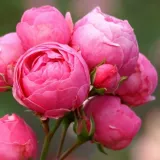
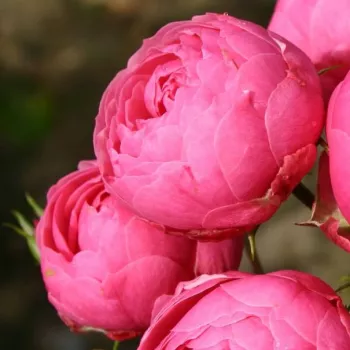
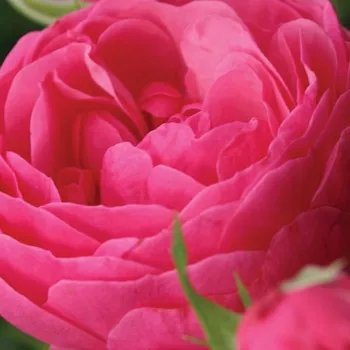
Medium-sized, very double ball-shaped pompon blooms borne in clusters; over 40 petals per flower; strong remontant habit with an abundant second flush; good stem coverage for a full, colourful display in season. |
| Colour data and phenology |
Deep raspberry-pink flowers, RHS 57B–57C; buds glossy crimson-pink, opening vivid then gently fading toward powder-pink in strong sun; excellent colour retention and uniformity across the shrub through repeated flushes. |
| Fragrance and aroma |
Delicate, very light rosy scent that is often barely noticeable in the garden; grown primarily for its visual impact rather than perfume, making it suitable where strong fragrance is not desired near seating areas. |
| Hip characteristics |
Produces small spherical orange-red hips, around 6–10 mm in diameter, in moderate quantities after flowering; decorative in late season and lightly supportive to wildlife without overwhelming the plant’s tidy outline. |
| Resistance and winter hardiness |
Excellent overall disease resistance, notably against black spot, powdery mildew and rust; hardy to approximately −26 to −23 °C (RHS H7, USDA 5b), coping well with typical UK winters when planted in suitable conditions. |
| Horticultural recommendations |
Best in full sun with well-drained yet moisture-retentive soil; plant 40–50 cm apart for hedges, wider for specimens; water regularly in prolonged drought; suit borders, edging, containers and low informal hedging schemes. |
Pomponella® offers compact, repeat-flowering fairytale blooms, strong health and dependable own-root longevity, making it a thoughtful choice for relaxed coastal-style gardens and low-fuss family spaces.