POPCRON – white dwarf miniature rose – Morey
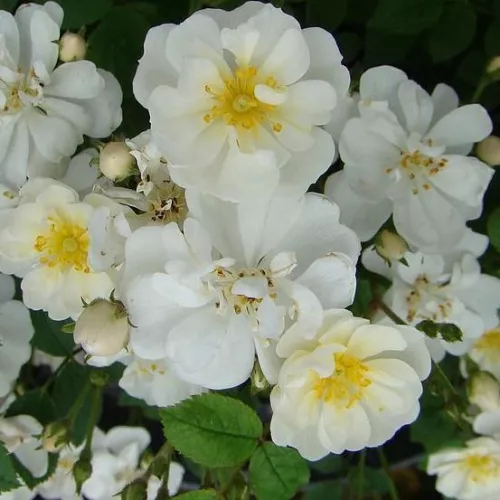
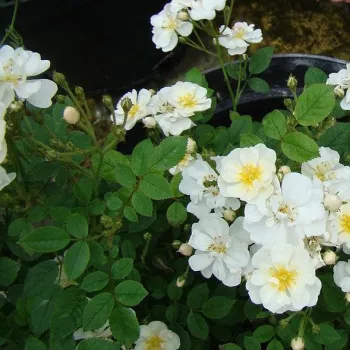
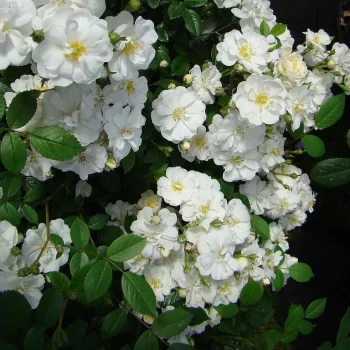
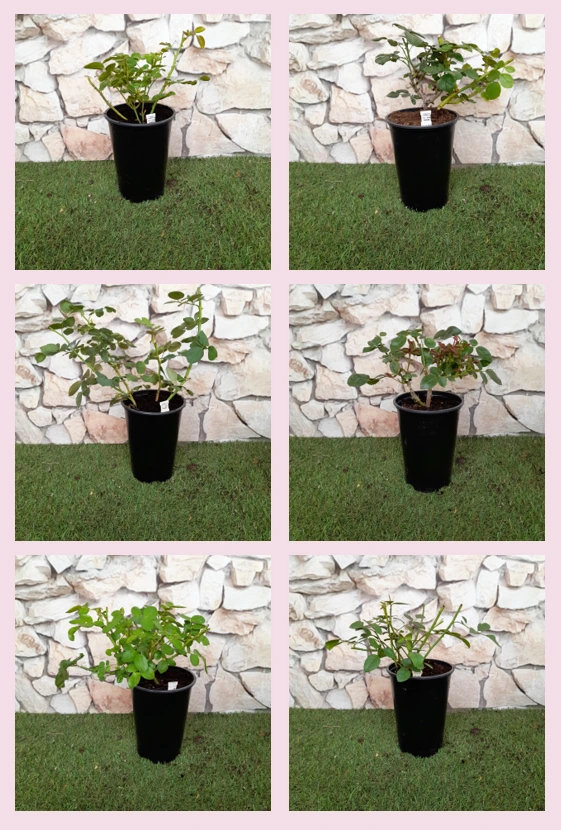
On a breezy Cornish afternoon, Popcorn brings a low, foaming edge of pure white blossom to your veranda or shingle border, echoing surf on pebbles as it shrugs off coastal winds and salt‑laden air with reassuring resilience. This compact, almost thornless miniature rose offers dense, glossy foliage and clusters of snowy blooms that stay clean, bright and decorative for a long season, ideal where space is at a premium but you still want a real garden presence. As an own‑root plant, it develops a quietly robust framework below soil level, ready to reward you with a natural progression from settling roots to stronger top growth and finally full ornamental value in its third season. Plant it in a sunny, well‑drained spot or a generous 40–50 litre container, add a little care with watering in dry spells, and you will find its calm, white flowering rhythm and gentle, slightly sweet scent perfectly suited to relaxed coastal living, whether you are a beginner or a time‑pressed garden owner.
Usage options
| Target area |
Reasoning |
| Coastal veranda container (40–50 litres) |
The compact, dwarf habit and moderate root system suit a substantial 40–50 litre pot, where glossy foliage and snowy clusters create a neat, wind‑tolerant accent. Own‑root vigour helps it recover from winter and coastal exposure for beginners. |
| Shingle or gravel forecourt near the sea |
Low, dense growth anchors well in free‑draining shingle with added compost, while good colour retention keeps flowers bright against pale stones, even in salty breezes and frequent rain and wind along exposed coasts for coastal‑gardeners. |
| Edging for small family beds and paths |
Its 35–45 cm height and 50–70 cm spread form a tidy edging that children can pass without snagging, thanks to the almost thornless stems. Repeating white clusters frame play lawns and paths without demanding complex pruning for families. |
| Miniature hedge around seating or tea corner |
Regular spacing at 35–40 cm creates a low, airy hedge of white sprays, ideal for enclosing a sheltered seating nook. Medium maintenance means only occasional pest checks, while own‑root durability supports a long‑lived garden outline for homeowners. |
| Feature in a white‑and‑silver coastal scheme |
The pure, steadfast white blooms combine beautifully with sea kale and silvery grasses, giving a cool, reflective look in bright seaside light. Modest fragrance adds refinement without overpowering neighbouring plants for stylish‑gardeners. |
| Wildlife‑friendly corner with soft colours |
Semi‑double flowers offer some access to pollen for visiting insects, while the compact outline leaves room for companion perennials that extend nectar through the season, making a gentle, wildlife‑aware planting for nature‑lovers. |
| Long‑season accent on a sunny balcony |
Provided it receives full sun and steady watering, its remontant habit delivers repeated waves of bloom, with outstanding white colour stability. The own‑root base supports recovery from missed deadheading or brief neglect for busy‑owners. |
| Neat front‑garden display for year‑round structure |
The dense, dark‑green foliage and compact framework give structure outside the flowering flushes, while robust winter hardiness down to typical UK lows keeps plants dependable over many years with routine but simple care for new‑gardeners. |
Styling ideas
- Coastal cushion – Mass plant along a shingle path with sea kale and blue Festuca for a low, foam‑on‑the‑shore effect – for seaside veranda owners wanting an easy, wind‑resistant border.
- White balcony box – Grow one plant in a 40–50 litre tub with trailing silver Helichrysum for a compact, long‑flowering feature – for urban residents with limited outdoor space.
- Mini hedge – Line a small seating area with evenly spaced plants, underplanting with low Gypsophila for a frothy, girlish summer room – for families creating a pretty tea corner.
- Wildlife ribbon – Thread plants through a strip of Liatris and Persicaria to mix neat white sprays with soft spikes and wildlife interest – for nature‑minded gardeners who like gentle order.
- Front‑door welcome – Pair one specimen either side of a doorway in tall pots, echoing white shells and surf against painted masonry – for homeowners seeking a clean, low‑effort entrance.
Technical cultivar profile
| Parameter |
Data |
| Name and registration |
Miniature, dwarf rose marketed as Popcorn – Mini – dwarf rose – Morey; ARS exhibition name ‘Popcorn’; no separate registered cultivar name recorded for this selection. |
| Origin and breeding |
Bred by Dennison H. Morey, Jackson & Perkins Company, USA, from ‘Katharina Zeimet’ × ‘Diamond Jewel’; introduced and registered in 1973, representing a classic American miniature line. |
| Awards and recognition |
Proven on the show bench as a miniature “one spray” rose, with ARS and CRS awards for best miniature spray at multiple North American rose society shows in the late 1990s and early 2000s. |
| Growth and structural characteristics |
Compact, bushy plant 35–45 cm tall and 50–70 cm wide, with dense, dark green, glossy foliage and an almost thornless framework; ideal for edging, containers and small formal or informal features. |
| Flower morphology |
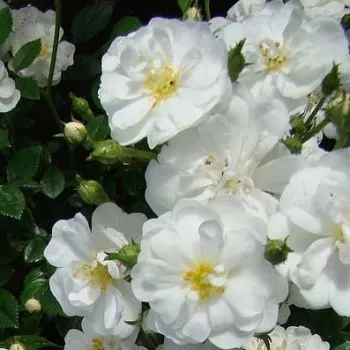
Semi‑double, cupped blooms with 13–20 petals, borne in clusters on short shoots; small flowers around 0.5–1.5 inches across, remontant with a strong second flush when grown in a sunny, well‑kept position. |
| Colour data and phenology |
Radiant pure white blooms, ARS code W, RHS 155D; buds creamy‑white with a butter‑yellow sheen, opening to snowy white with silky surface, holding colour well and only matting slightly as they age. |
| Fragrance and aroma |
Light, slightly sweet scent; fragrance is present but discreet, complementing rather than dominating nearby plants or seating areas; semi‑double form offers moderate pollinator appeal in mixed plantings. |
| Hip characteristics |
Hip set tends to be sparse due to semi‑double flowers; when present, hips are small, 5–7 mm in diameter, globose and orange‑red, with limited ornamental impact compared with the main flowering display. |
| Resistance and winter hardiness |
Hardy to approximately −26 to −23 °C (RHS H7, USDA 5b, Swedish Zone 4); medium resistance to powdery mildew and black spot, good rust resistance; appreciates regular watering and avoidance of drought. |
| Horticultural recommendations |
Best in full sun with well‑drained soil; suitable for beds, edging and containers; spacing 35–65 cm depending on use; medium maintenance with occasional disease control and consistent irrigation in dry weather. |
POPCRON offers compact proportions, long‑season white flowering and reassuring hardiness in an own‑root form that matures steadily over the years; consider it if you seek a calm, enduring accent for a modest outdoor space.