POSTILLION ® – yellow park rose - Kordes
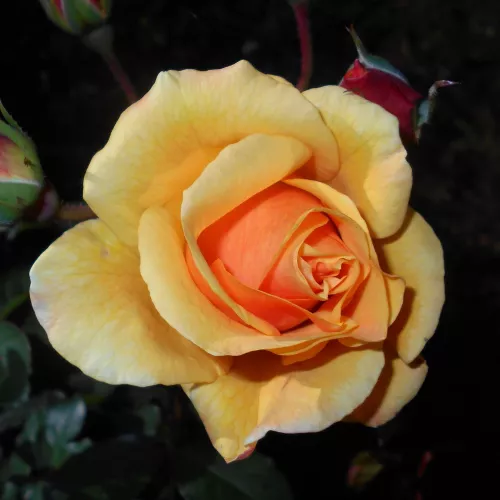
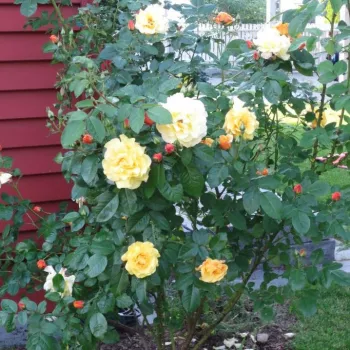
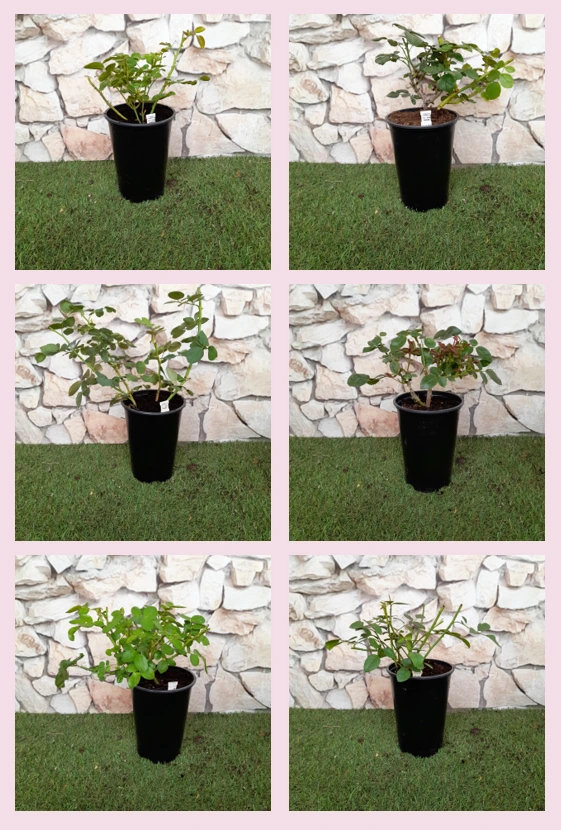
Let the glowing amber-yellow of Postillion bring a sense of coastal refreshment to your family garden, with semi-double clusters that repeat freely from early summer well into autumn. This upright, park-shrub habit gives natural structure for boundaries or wind-filtering screens, while its H7 hardiness anchors it securely through typical British winters and unsettled shoulder seasons. On its own roots it offers dependable longevity, regenerating steadily after harsh weather and settling into a stable outline over time. You can enjoy its strong, classically rosy fragrance from a sheltered seating area or veranda, even where breezes carry a hint of salt spray and frequent blustery showers test less robust plants. In a large container of at least 40–50 litres, good drainage and occasional feeding are usually enough to support its medium-maintenance care needs. Expect a gradual development: first the invisible roots establish, then in the second year the framework of shoots fills out, leading by the third season to the full ornamental value of a mature, glowing coastal-style shrub.
Usage options
| Target area | Reasoning |
|---|
| Small coastal front garden hedge |
The upright yet moderately compact habit and 120–180 cm height make it ideal for a low, informal hedge that filters wind without feeling oppressive. Regular repeat flowering in warm yellow tones keeps the frontage cheerful for months with only medium pruning and basic plant protection, suiting busy homeowners. |
| Sheltered veranda or terrace in a large container |
In a 40–50 litre or larger pot with free-draining compost, the own-root plant establishes securely and copes well with sun and reflected heat. The strong fragrance and generous flower size make it a fine choice beside outdoor seating, while moderate care needs are compatible with casual gardeners. |
| Family back-garden focal shrub |
Its park-shrub character provides a clear, upright framework that anchors mixed borders and gives year-round structure. Semi-double clusters of golden-yellow blooms draw the eye from a distance, while the gradual three-year build-up from roots to mature shrub rewards patient new gardeners. |
| Mixed coastal-style border with perennials |
The rich yellow and warm orange undertones weave easily among blues, whites, and soft grasses. Once established, it forms a reliable flowering backbone that, with sensible soil preparation and drainage, copes well with blustery, rain-lashed conditions often found in seaside gardens, appealing to coastal enthusiasts. |
| Season-long colour for medium-sized gardens |
As a remontant shrub with abundant second flush, it offers a notably long flowering window from early summer into autumn. This extended display reduces the need for many short-season plants and simplifies planning in compact family spaces, a benefit for time-poor gardeners. |
| Cut flowers from the home garden |
Large, cup-shaped blooms on reasonably long stems work well for informal indoor arrangements. The strong, classic rose scent carries indoors, turning a single shrub into a regular source of fragrant stems without the complexity of a dedicated cutting patch, satisfying home florists. |
| Long-term planting for low-turnover borders |
The own-root form supports a long-lived shrub that regenerates from the base after harsh winters or occasional neglect, maintaining a stable ornamental presence. This durability means borders can be refreshed around it rather than replanted entirely, which suits long-term planners. |
| Lightly shaded side path or boundary |
Tolerance of partial shade allows planting where sun is limited for part of the day, such as side passages or between houses. Flowering remains reliable with morning or afternoon light, so less-than-ideal aspects can still gain colour and scent, encouraging practical homeowners. |
Styling ideas
- Harbour-Hedge – run a loose hedge along a front boundary, interplanting with Festuca and sea kale for a soft, dune-like feel – ideal for coastal-style families.
- Veranda-Glow – place one plant in a 50–70 litre pot beside seating, underplanted with trailing Lobularia for scent at ankle-height – perfect for evening tea drinkers.
- Sunset-Ribbon – weave Postillion through a border of lavender and blue perennials to echo seaside sunsets – suited to colour-loving beginners.
- Golden-Screen – use a staggered row near a patio to filter breezes, underlined with low grasses for movement – good for wind-exposed garden owners.
- Cutting-Corner – dedicate a back-of-border spot with Phlox and Rudbeckia to harvest richly coloured, fragrant stems – appealing to home arrangers.
Technical cultivar profile
| Parameter | Data |
|---|
| Name and registration |
Grandiflora–Floribunda shrub rose registered as KORtionza, marketed as Postillion ® – yellow park rose, with American Rose Society exhibition name ‘Postillion’ for show and cataloguing purposes. |
| Origin and breeding |
Bred by Reimer Kordes (W. Kordes’ Söhne) in Germany from ‘Westerland’ × ‘Lichtkönigin Lucia’; breeding year 1985, registered 1997 and commercially introduced in 1998. |
| Awards and recognition |
Holds ADR certification awarded in 1996 for overall garden performance, plus silver medals at Kortrijk in 1994 and Madrid in 1995, confirming strong ornamental and horticultural quality. |
| Growth and structural characteristics |
Upright park-shrub habit reaching about 120–180 cm high and 60–100 cm wide, with moderately dense, glossy dark green foliage and moderate prickliness; may need light shaping in family gardens. |
| Flower morphology |
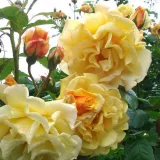
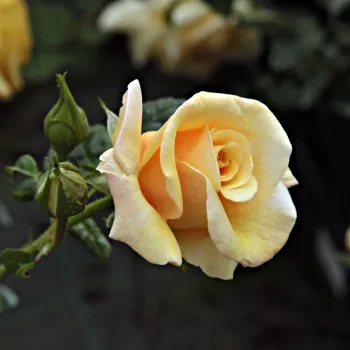
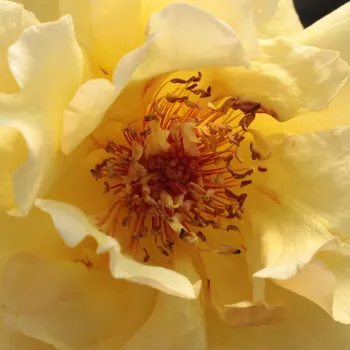
Semi-double, large cup-shaped blooms with roughly 13–25 petals, produced in clusters; remontant with an abundant second flush, giving generous coverage of flowers during the main season. |
| Colour data and phenology |
Flowers open vivid amber-yellow with subtle orange tones, then fade to softer golden yellow with creamy hints; colour may lighten further in intense sun, creating a varied, sun-washed coastal palette. |
| Fragrance and aroma |
Strong, long-lasting scent with a classic rose character; semi-double form offers moderate pollen access, giving only partial value for pollinators rather than a dedicated wildlife-planting option. |
| Hip characteristics |
Occasionally forms small, ovoid red hips 9–15 mm across, adding discreet late-season interest without dominating the plant or significantly affecting overall flowering performance. |
| Resistance and winter hardiness |
Hardy to about –26 to –23 °C (RHS H7; Swedish zone 4; USDA 5b), with good black spot resistance and medium tolerance to mildew and rust; heat-tolerant but needs watering in prolonged dry spells. |
| Horticultural recommendations |
Best at 50–90 cm spacing, in well-drained soil; maintenance is medium, with periodic pruning and occasional plant protection, and suitability for hedges, borders, specimens, parks and urban planting. |
POSTILLION ® – yellow park rose - Kordes offers long-season golden colour, structural height and lasting own-root resilience, making it a thoughtful choice for relaxed coastal-inspired gardens and family spaces you plan to enjoy for years.