POUSTINIA™ – cream-white bedding floribunda rose - Orye
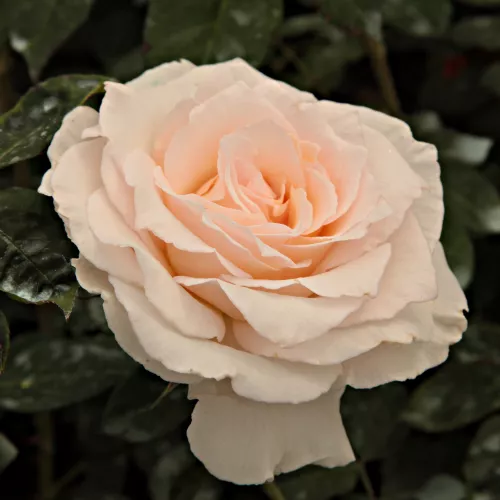
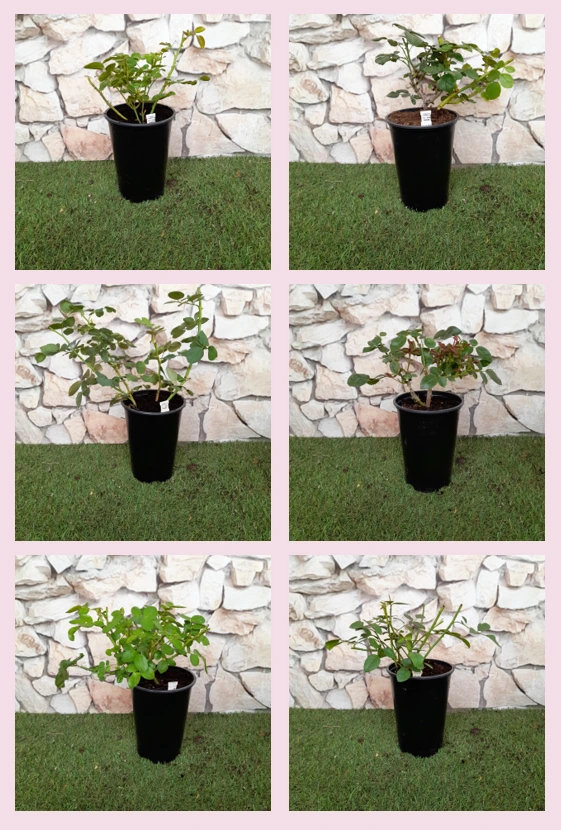
Imagine stepping onto your coastal veranda after a blustery walk, the air still tangy with sea spray, and being greeted by clusters of creamy blooms on a compact, quietly confident shrub that feels made for such moments. Poustinia™ settles in easily, thriving where gardens are shaped by breeze and light rain, offering reassuring poise even in windy spells with its bushy, well-anchored habit and dependable health. Its strong, fruity fragrance drifts around seating areas, while the soft cream-and-peach flowers repeat all season, giving months of gentle colour in a small space. As an own-root rose, it establishes steadily, promising a long-lived, stable display that suits busy gardeners. Think of it as a calm, low-effort companion for your shingle or gravel beds: Year 1 for roots, Year 2 for fuller shoots, Year 3 for confident ornamental presence and reliable flowering in your salt-tinged retreat.
Usage options
| Target area | Reasoning |
|---|
| Small coastal front garden bed |
The compact, bushy habit and modest height allow Poustinia™ to sit neatly behind low shingle or gravel edging without overwhelming a narrow Cornish or Devon frontage, while its stable own-root structure promises a long-lived presence for time-pressed homeowners and beginners. |
| Veranda container (40–60 litre) |
In a large pot with good drainage, Poustinia™ offers a concentrated, long-season display of cream-white clusters, making the most of limited space and tolerating reflected heat from paving, ideal for those wanting an easy statement rose on a sunny veranda and urbanites. |
| Low, fragrant seating-area hedge |
Planted at hedge spacing, its repeat-flowering clusters create a low scented screen around a terrace, with strong fruity fragrance carried on the breeze and minimal pruning needs, well suited to relaxed family gathering spots and hobby-gardeners. |
| Mixed coastal-style border with grasses |
Among Festuca, sea kale or low lavender, the dense foliage and bushy frame anchor the planting visually, while good disease resistance keeps the display tidy despite damp air and changeable weather, pleasing design-conscious yet busy homeowners. |
| Clay-based, improved coastal soil |
Given a well-drained planting pocket in heavier soil, Poustinia™ responds with resilient growth and reliable clusters, its durability well-suited to British conditions where wetter spells and breezy exposure meet typical family plots and practical-minded gardeners. |
| Part-shade side path or alley |
The cultivar tolerates partial shade, so a side passage with only a few hours of sun can still carry a season-long display of pale, light-catching blooms, gently brightening a transitional space for time-poor but style-aware residents. |
| Cut-flower corner near the back door |
Robust, double, cluster-flowered stems in soft cream and peach tones cut well for informal jugs indoors, while the strong, fruity scent enhances the sense of luxury from a small planting, rewarding occasional picking by relaxed home-florists and enthusiasts. |
| Sheltered coastal nook as wind-softening feature |
Placed where buildings or fencing filter strong gusts, its bushy shape and reliable health maintain an attractive, low-maintenance focal point through salty, windy, sunny spells, echoing the character of local weather yet remaining manageable for coastal-style lovers. |
Styling ideas
- Veranda-Nook – Large 50–60 litre terracotta or stone-effect pot with free-draining compost, paired with trailing lobelia to soften the rim – ideal for balcony and veranda owners seeking easy long-season colour.
- Shell-Border – Short row along a shingle or shell mulch strip, interplanted with low Festuca and sea kale to echo the seaside, with Poustinia™ providing the scented, creamy focal points – suited to coastal family gardens.
- Tea-Spot – Two or three shrubs framing a small seating area, underplanted with creeping gypsophila for a frothy base that highlights the bushy form and fragrance – perfect for those who enjoy quiet afternoon tea outdoors.
- Soft-Hedge – Informal low hedge along a path or driveway, spacing regular and tidy, giving a continuous ribbon of pale flowers that stays compact without intricate clipping – for homeowners wanting structure with minimal upkeep.
- Romantic-Mix – Mixed bed with Crocosmia for contrast and a few lavender clumps, using Poustinia™ as the calm, pale anchor that flowers repeatedly – appealing to beginners who want a styled look without complicated plant choices.
Technical cultivar profile
| Parameter | Data |
|---|
| Name and registration |
Floribunda bedding shrub rose; registered as ORYbie, marketed as Poustinia™ Bedding rose ORYbie, ARS exhibition name Poustinia, belonging to the bed rose commercial group. |
| Origin and breeding |
Bred in Belgium in 1994 by Jozef Orye from the cross Sweet Love × Pascali, registered 1995 and introduced after 1995, with Lens Roses (Belgium) as the initial distributor. |
| Awards and recognition |
Decorated at leading European trials: Bagatelle silver medal and Lyon first prize in 1994, Kortrijk and Le Roeulx gold medals in 1998, Monza bronze medal 2000, Hradec Králové certificate 2001. |
| Growth and structural characteristics |
Bushy, compact shrub 80–100 cm tall and 50–70 cm wide, slightly thorny with dense, mid-green, moderately glossy foliage; suited to bedding, low hedging and container use in average family gardens. |
| Flower morphology |
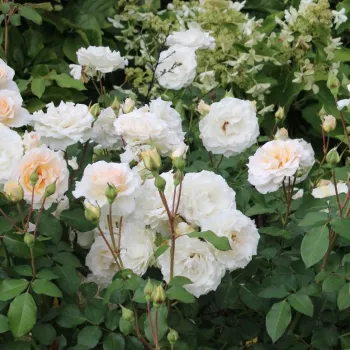
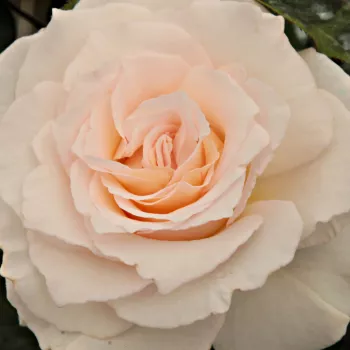
Large, double, cluster-flowered blooms with 26–39 petals, cup-shaped and remontant, producing generous repeat flushes; individual flowers around 7–10 cm, useful for cutting and massed bedding effects. |
| Colour data and phenology |
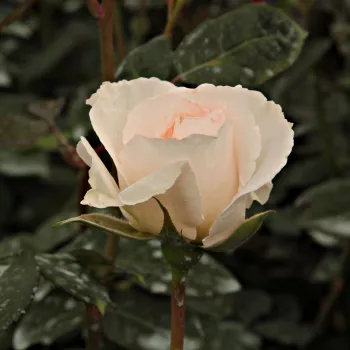
Cream-white outer petals (RHS 155B) with a peach inner tone (RHS 23B); buds pastel with apricot tips, opening cream and then fading to soft creamy white with a delicate residual peach mid-tone at the centre. |
| Fragrance and aroma |
Strong, rich fruity fragrance characteristic of well-scented floribundas; suitable for planting near seating, entrances or paths where air movement will carry the scent, adding sensory interest throughout the flowering season. |
| Hip characteristics |
Rose hip set is generally low because of the full double form, though occasional small spherical red hips 8–12 mm in diameter may appear, adding a discreet late-season accent without dominating the shrub. |
| Resistance and winter hardiness |
Shows good resistance to black spot, powdery mildew and rust; tolerates heat and moderate drought, with hardiness to about −21 to −18 °C (RHS H7, Swedish Zone 3, USDA 6b), dependable under typical UK conditions. |
| Horticultural recommendations |
Low-maintenance shrub for beds, specimens, containers and cutting; plant at 35–65 cm spacing, in well-drained soil or 40–60 litre pots, suitable for partial shade and for gardeners seeking reliable performance with little intervention. |
POUSTINIA™ offers compact, repeat-flowering creamy clusters, strong fruity fragrance and durable own-root growth that matures steadily over the years; an excellent choice if you seek a resilient yet quietly elegant garden rose.