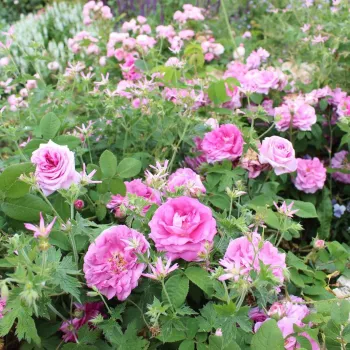
PRÉSIDENT DE SÈZE – lilac-pink historic Gallica rose - Hébert
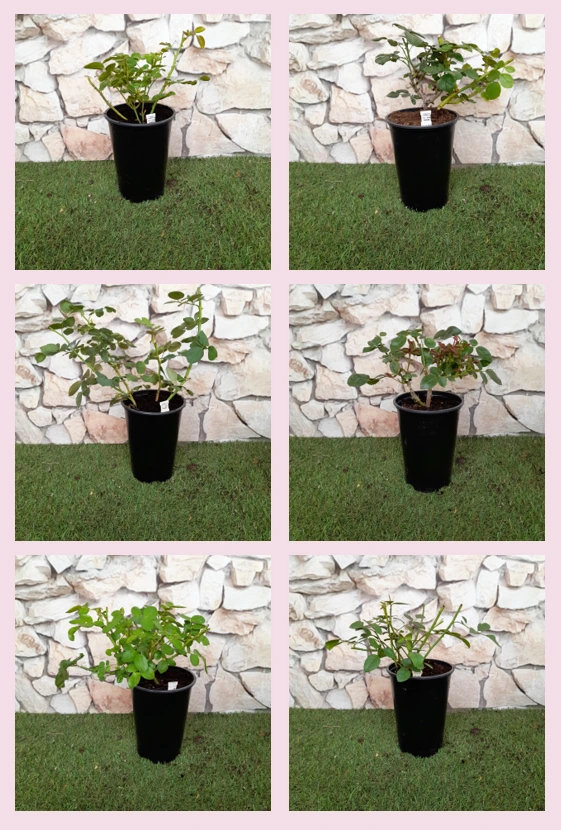
Step onto your veranda after a blustery walk and let PRÉSIDENT DE SÈZE wrap you in a soft, lilac-pink haze of heritage charm and character. This historic Gallica shrub rose brings once-a-year abundance that feels like a summer holiday concentrated into a single, unforgettable display. Its bushy habit and deep root system help it stand firm in breezy, exposed gardens, quietly coping with gusty coastal conditions and changeable British weather. Own-root plants mature steadily, building up a strong framework that offers long-term stability with relatively modest maintenance. In a typical family garden it fits easily into mixed borders or a small flowering hedge, ideal where you want impact without constant fuss. Expect a gentle development over seasons – roots first, then top growth and, by the third year, its full ornamental presence unfolds.
Usage options
| Target area |
Reasoning |
| Small coastal front garden |
The bushy, moderate-sized framework suits narrow front borders where you need structure without overwhelming the space, while the shrub’s firm anchoring copes well with exposed, breezy, salt-tinged situations for coastal-style lovers. |
| Family back-garden border |
As a medium shrub with moderately dense foliage, it slots neatly into mixed borders, giving height without shading everything out, with once-a-season flowers that feel special rather than demanding for busy homeowners. |
| Romantic “girly” corner by a seating area |
The lilac-pink, very double rosettes and strong, long-lasting scent create a soft, feminine focal point beside a bench or bistro set, ideal for quiet tea breaks and evening wind-down moments for veranda enthusiasts. |
| Flowering backdrop for shingle or gravel planting |
A bushy habit and firm root system give a solid backdrop behind lower perennials in free-draining shingle or gravel, pairing beautifully with silver foliage and coastal textures for informal stylists. |
| Feature shrub in a large container (40–50 litres) |
In a substantial pot of 40–50 litres, it becomes a moveable feature for verandas or patios; own-root growth helps it recover from occasional stress and keeps the plant durable over many seasons for container gardeners. |
| Low, informal summer hedge |
Planting at hedge spacing creates a low, semi-open screen; the dense thorns discourage unwanted shortcuts through the garden while the flowering flush provides a once-a-year highlight for practical planners. |
| Partially shaded side return or alley |
Suitable for partial shade, it copes with light levels often found between houses, still producing a satisfying show of blooms without constant intervention or specialist care for time-poor beginners. |
| Traditional cottage-style border with perennials |
The strong perfume and historic character give classic cottage charm, combining well with Nepeta and other soft perennials, while moderate disease resistance keeps upkeep manageable for hobby gardeners. |
Styling ideas
- Seaside Veranda Nook – Place one specimen in a large 40–50 litre container with gritty compost, add a bistro set and soft throws, ideal for coastal-style lovers enjoying scented tea after blustery walks.
- Romantic Cottage Band – Thread along a sunny border with Nepeta and airy grasses to frame a path, perfect for homeowners seeking classic charm without intricate pruning regimes.
- Shingle-Edge Backdrop – Use as a flowering screen behind shingle, sea-kale and low Festuca, suited to those wanting structure and summer drama in windy, exposed spots.
- Perfumed Patio Focus – Position a single shrub near French doors so fragrance drifts indoors on breezy days, appealing to busy families who want maximum sensory reward from one key plant.
- Historic Feature Corner – Combine with a weathered bench and heritage-style pots for a timeworn look, ideal for gardeners who love period character but prefer a straightforward care routine.
Technical cultivar profile
| Parameter |
Data |
| Name and registration |
Historic Gallica shrub rose marketed as PRÉSIDENT DE SÈZE, also known as Hébert; heritage rose of unregistered status, listed in collections as a traditional historical cultivar. |
| Origin and breeding |
Old French Gallica rose introduced in 1828, bred by Madame Hébert; parentage unknown, typical of many early nineteenth-century varieties preserved through garden and collection use. |
| Growth and structural characteristics |
Bushy, upright shrub reaching around 110–170 cm high and 90–140 cm wide; moderately dense, matt grey-green foliage and densely thorned stems give a solid, traditional shrub presence. |
| Flower morphology |
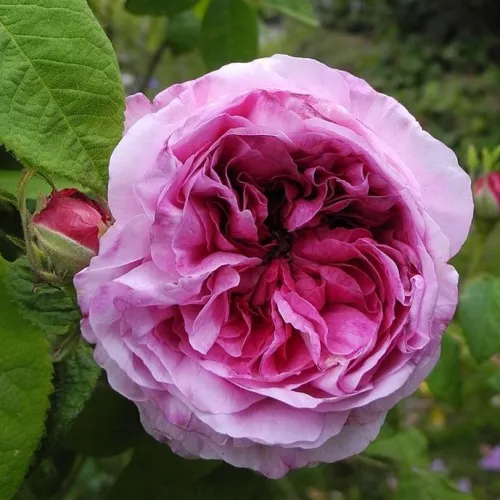
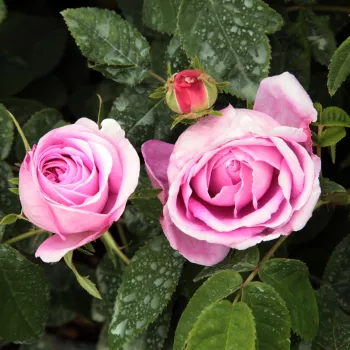
Large, very double, rosette-shaped blooms with over 40 petals, carried mainly in clusters; once-flowering habit provides a concentrated early-summer display rather than repeat flushes. |
| Colour data and phenology |
Lilac-pink flowers with deeper crimson-purple centre; colour lightens in heat yet holds longer in cool spells, following RHS 65C outer and 71A inner tones, with a frosted, greyish-lilac fade. |
| Fragrance and aroma |
Strong, long-lasting perfume with a classic old-rose character; heavily double blooms offer a rich scent experience, though stamens are partially concealed and less accessible to pollinators. |
| Hip characteristics |
Develops moderate numbers of spherical hips, around 12–18 mm in diameter; hips ripen to red and can add discreet, seasonal decorative interest after flowering has finished. |
| Resistance and winter hardiness |
Hardy to about −32 to −29 °C (RHS H7, USDA 4b); moderate general disease resistance with good black spot tolerance but some susceptibility to powdery mildew and rust in pressure years. |
| Horticultural recommendations |
Suited to borders, hedging and solitary planting; prefers well-drained soil with regular watering in dry spells, plus occasional deadheading and plant protection within a normal maintenance regime. |
PRÉSIDENT DE SÈZE offers strong fragrance, compact historic charm and durable own-root growth that rewards patient planting with many seasons of characterful flowering, making it a thoughtful choice for understated coastal or cottage gardens.