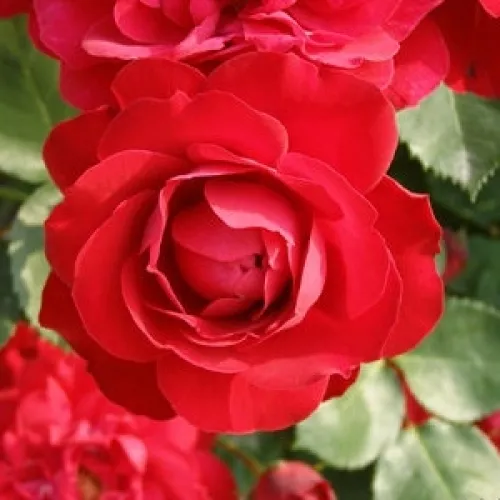
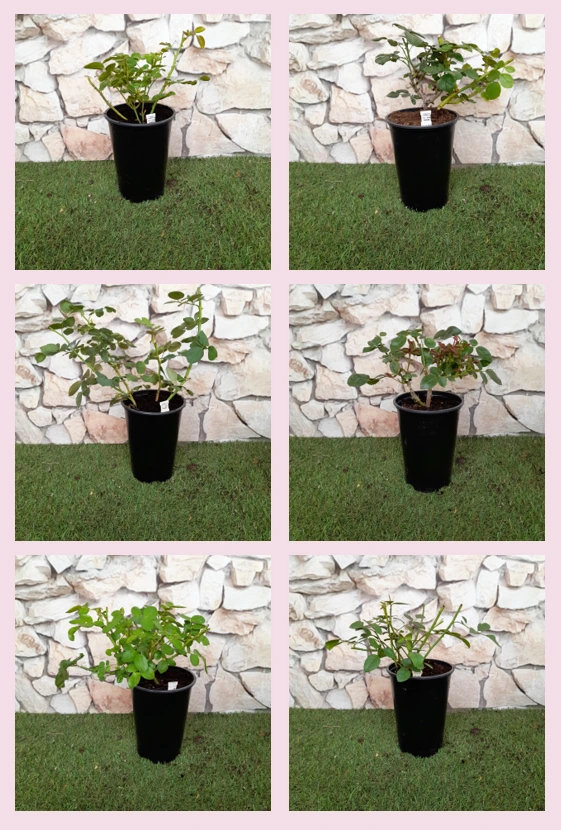
PRESTIGE DE BELLEGARDE – red bedding floribunda rose - Ève
Imagine stepping back from a breezy coastal walk to a sheltered corner of your garden, where compact clusters of vivid red blooms create a calm, wind-buffered nook and help manage strong breezes that sweep in from the sea. Prestige de Bellegarde is a reliable floribunda that fits beautifully into small family gardens and coastal-style verandas, offering generous flowering from mid-season right through late summer without demanding intricate pruning. Its compact habit and mid-green, slightly glossy foliage give a neat, ordered look even in tighter plots or shingle beds, and it settles steadily into place as its own roots establish for a long-lived, low-fuss display. In a 40–50 litre container on a balcony or patio it anchors itself well, while in open ground it copes calmly with brisk rain and seaside winds, maintaining its bright colour and shape so borders stay composed rather than blown about. You can plan this rose into a long-term scheme with confidence: in the first year it concentrates on strong roots, in the second on building leafy shoots, and by the third it typically reaches its full ornamental value as a stable, enduring part of your garden scene.
Usage options
| Target area |
Reasoning |
| Coastal veranda container, 40–50 litres |
Its naturally compact, bushy growth and dense foliage make it well suited to a generous 40–50 litre pot, where roots can anchor deeply and the plant remains steady in exposed spots with brisk coastal air movement, ideal for the busy veranda-owner. |
| Small family front garden border |
With a modest 60–90 cm height and 50–70 cm spread, it fits cleanly into front gardens without overwhelming paths or windows, providing bright, repeat red clusters that stay tidy with only straightforward seasonal care, reassuring for the time-pressed homeowner. |
| Low bedding in mixed planting |
The bushy habit and mid-green, slightly glossy foliage create an even backdrop for companion plants, while the clear red flowers offer structure and rhythm along the bed, suiting those who want order without complex design, especially the aspiring beginner. |
| Long-term family garden plan |
As an own-root plant, it regenerates well from the base and is not reliant on a graft union, so it can be integrated into a bed that you expect to keep for many years with stable ornamental value, appealing to the forward-looking planner. |
| Repeat-flowering summer display |
This floribunda offers remontant flowering, with a second flush that is also abundant, supporting a long season of colour in typical UK summers with only routine deadheading and feeding, reassuring for the colour-focused gardener. |
| Family seating area windbreak |
The dense foliage and bushy frame provide a soft visual screen around a bench or tea corner, gently filtering views and airflow while keeping the area bright, suiting those who want shelter without heavy structures, such as the comfort-seeking family. |
| Wildlife-friendly mixed border |
Occasional small, red hips and a structured shrub form contribute winter interest and modest support to local wildlife as part of a wider planting, attractive for those keen on subtle ecological value, typically the nature-aware owner. |
| Clay-soil coastal family garden |
Planted with attention to drainage, its bushy structure and reliable framework respond well to typical British coastal conditions, helping beds look composed even under strong, wet winds from the sea, reassuring for the exposed-garden householder. |
Styling ideas
- Seaside-terrace – Place a single plant in a 50 litre tub with pale shingle mulch and a low bench to create a red focal point on a breezy veranda – ideal for coastal-style enthusiasts.
- Shingle-border – Combine with sea kale and blue Festuca in a free-draining strip, using its compact red clusters to punctuate silvery foliage – suitable for small family front gardens.
- Tea-corner – Line a seating nook with a short row at 40 cm spacing, giving a soft, living edge that frames a table and chairs – appealing to those who enjoy relaxed afternoon breaks.
- Classic-bedding – Mass-plant in a squared layout near a path to create a formal block of bright red, balanced by low lavender for scent and structure – perfect for lovers of traditional layouts.
- Wildlife-thread – Slot one or two plants into a mixed border with Alyssum and verbena, letting occasional hips and steady structure complement more nectar-rich perennials – suited to gentle wildlife gardeners.
Technical cultivar profile
| Property |
Data |
| Name and registration |
Floribunda bed rose registered as EVEprest, traded as Prestige de Bellegarde. Part of the bedding rose collection and accepted for exhibition as a shrub and cut-flower type. |
| Origin and breeding |
Bred by André Ève in France in 1974, registered in 1992 and introduced after that date by Les Roses Anciennes André Ève, continuing a classic French floribunda line. |
| Awards and recognition |
Awarded the Rose d’Or (Gold Rose) at the Orléans trials in 1976, confirming its bedding performance and ornamental quality in competitive European rose evaluations. |
| Growth and structural characteristics |
Bushy, compact shrub reaching about 60–90 cm high and 50–70 cm wide, with dense, mid-green, slightly glossy foliage and moderate prickles, forming a well-filled, low-maintenance bedding rose. |
| Flower morphology |
Semi-double, cup-shaped clusters with 17–25 petals, medium-sized blooms around 4–7 cm across, borne in floribunda trusses and repeating well through the season with abundant second flushes. |
| Colour data and phenology |
Clear, vivid red blooms (RHS 46A) from bud to full flower, maintaining brightness with only slight darkening before petals fall, providing consistent, non-fading colour across clusters in summer. |
| Fragrance and aroma |
| Hip characteristics |
Produces occasional small, spherical hips 10–14 mm wide, coloured red (RHS 53A), which can add subtle late-season interest and modest wildlife value in mixed borders and family gardens. |
| Resistance and winter hardiness |
Rated RHS H6 and hardy to approximately –18 to –15 °C, with medium resistance to black spot, mildew and rust, performing reliably with basic preventative care in most UK garden conditions. |
| Horticultural recommendations |
Best in sunny sites with well-drained soil; spacing 35–65 cm depending on use. Suitable for borders, edging, hedging, containers and cutting, with medium maintenance and occasional pest control. |
Prestige de Bellegarde offers compact, repeat red flowering and enduring structure in an own-root form that settles in for many years, making it a thoughtful choice for quietly confident coastal and family gardens.